Having been raised harvesting Alaska wildberries you’d think I would be a pro at making jams and jellies. Truth is, I really stink at it. It always comes out syrupy. It’s like you have to have some sort of instinctual jam-making knowledge passed down through the generations.
But in reality all it takes is a lot of stirring. My mom has been making jam since she moved here in 1982. I turned to her for this segment of “Harvesting Anchorage.”
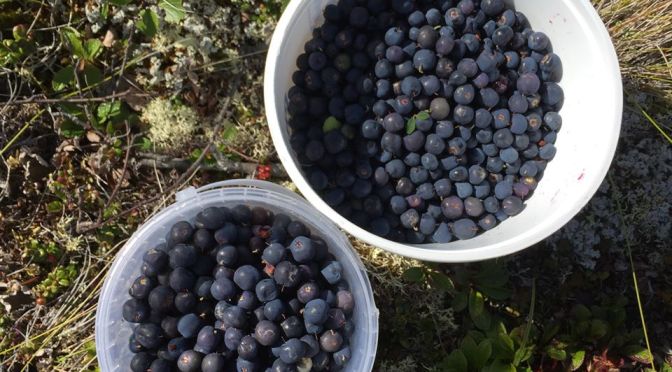
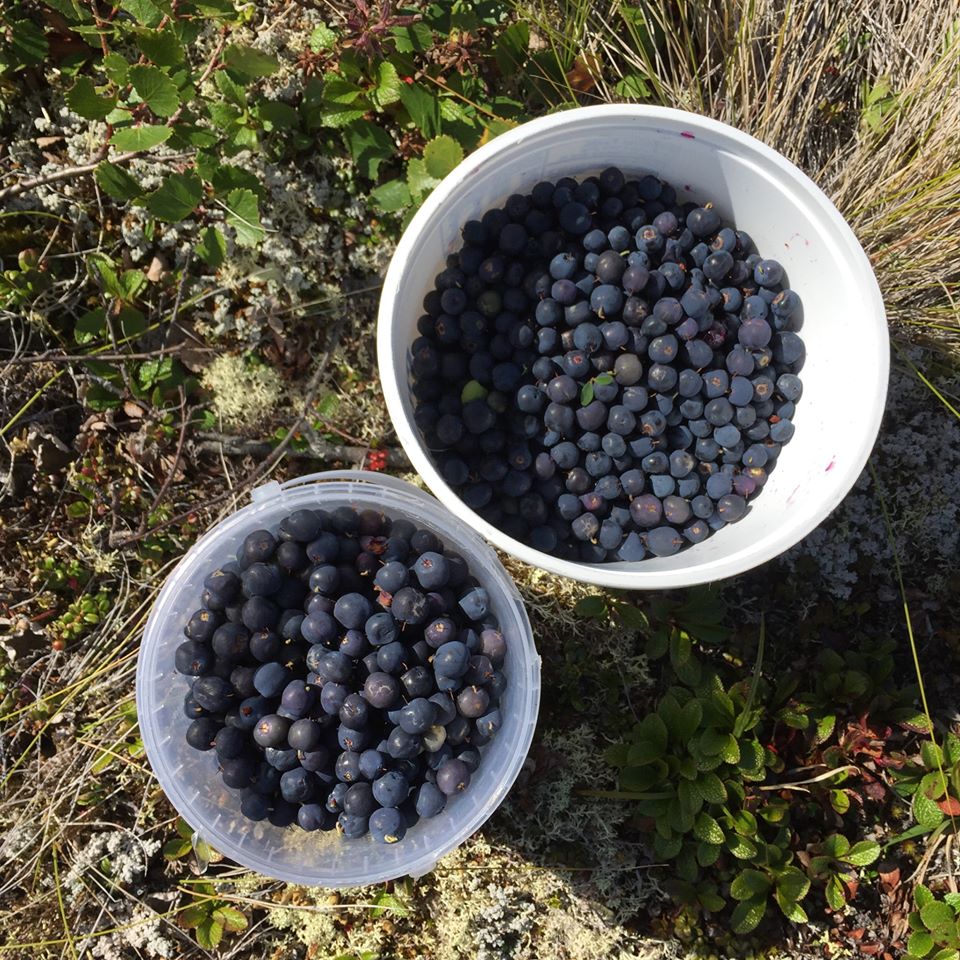
It was a bluebird day in Anchorage as we made our way to our super-secret blueberry spot. The only downside of picking berries on a sunny day is they are harder to see — but I’m not complaining!
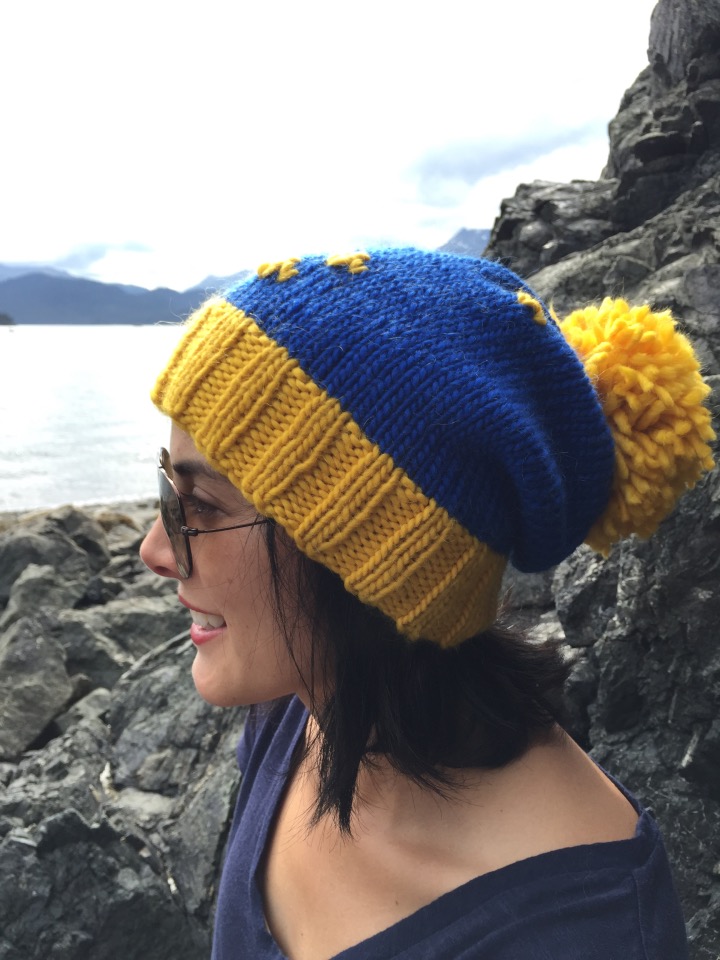
Earlier this summer I made a patriotic hat that I just knew I’d wear at least once before fall. Sure enough it was cool and rainy on the Fourth of July. I was finishing up the pom pom of my Old Glory Hat last month before meeting with my friend Fernanda about some flower arrangements. She lit up when she saw the stars and stripes; she was gaga for the giant pom pom.
She offhandedly suggested I made an Alaska flag hat. I was up for the challenge.
I started this hat on a road trip to Homer where I would be meeting Fernanda and a group of people on Yukon Island for a writing retreat with Julia O’Malley.
By the time my carpool arrived in Homer I was finishing up the North Star.
I think I’ll be making quite a few of these babies.
Alaska Flag Hat — A Free Knitting Pattern
If you’re wanting to knit this pattern with a different needle size and different weight yarn, I am unable to adjust the pattern for you. This pattern is written for a specific needle size and yarn weight.
Materials:
Lamb’s Pride bulky in Lemon Drop and Blue Boy
Size US 10 circular needle
Size US 10 double pointed needles
Darning needle
Place marker
Abbreviations:
CO – cast on
K2, P2 – knit 2, purl 2
st st – stockinette stitch
K2tog – knit two stitches together
Directions:
CO 72 st. K2, P2 ribbing for 13 rounds. Place marker.
Switch to blue and knit in st st for 36 rounds or until piece measures 8 inches total length.
Begin decreasing as follows:
*K2tog, k6*, repeat till end of round.
K 1 round
*K2tog, k5*, repeat till end of round.
K 1 round
*K2tog, k4*, repeat till end of round.
K 1 round. While doing this, transfer to the double points as you go so there are about 11 stitches on each needle (four in all).
*K2tog, k3*, repeat till end of round.
K 1 round
*K2tog, k2*, repeat till end of round.
K 1 round
*K2tog, k1*, repeat till end of round.
*K2tog*, repeat till end of round. Cut yarn leaving an 8-inch tail. Weave in all ends.
Big Dipper Motif:
Stitching motifs as I knit is hard for me because I end up pulling the yarn too tightly behind the work. Instead, you’ll be top-stitching the design. It’s super simple to learn. I was a bit disappointed that I didn’t learn this technique sooner as it’s much easier than fair isle or intarsia when it comes to non-repeating motifs. I recommend the tutorial from Wool and the Gang (pronounce “wool” with a British accent and it then it’s a play on words).
I made this chart by layering the actual constellation on top of graph paper. Yay science! That being said, you can rough it a little if you feel as though the spacing isn’t quite right. I ended up shifting the front star slightly. This is really a guideline.
I started with the lowest star on the dipper. It really doesn’t matter where you start the motif, but I eyeballed it so that beginning of the round was in the back. Some of the stars I did individually, gently double-knotting the ends as I went. But for the handle of the dipper I was able to continue without breaking the yarn. Triple knot the ends on the inside of the hat and trim.
Giant pom pom:
I used a small book to make the pom pom. Wrap yellow yarn around the book several times till it’s borderline too bulky to handle. Be sure not to wrap it too tightly so that you are able to slide it off the book easily. Gently remove the book. Take a 24-inch piece of yellow yarn and double it over. Tie this around the middle of the loops as tightly as possible. Double knot it. Use fabric scissors to trim pom pom to your liking, but be sure not to trim the long pieces you used to tie it together. Use these long pieces to sew the pom pom to the hat using the darning needle. Tie ends on the inside of the hat and trim.
The perfect slouch
And, because I’m feeling patriotic, here’s the Alaska state song depicting our glorious flag.
Alaska’s Flag Written by Marie Drake
Composed by Elinor Dusenbury
Eight stars of gold on a field of blue –
Alaska’s flag. May it mean to you
The blue of the sea, the evening sky,
The mountain lakes, and the flow’rs nearby;
The gold of the early sourdough’s dreams,
The precious gold of the hills and streams;
The brilliant stars in the northern sky,
The “Bear” – the “Dipper” – and, shining high,
The great North Star with its steady light,
Over land and sea a beacon bright.
Alaska’s flag – to Alaskans dear,
The simple flag of a last frontier.
Every summer I look forward to the week of our wedding anniversary; and not because I’m a hopeless romantic — because it’s sockeye salmon season on the Kenai River.
My husband is never here to celebrate our anniversary during the second week of July because he’s dipnetting three hours away.
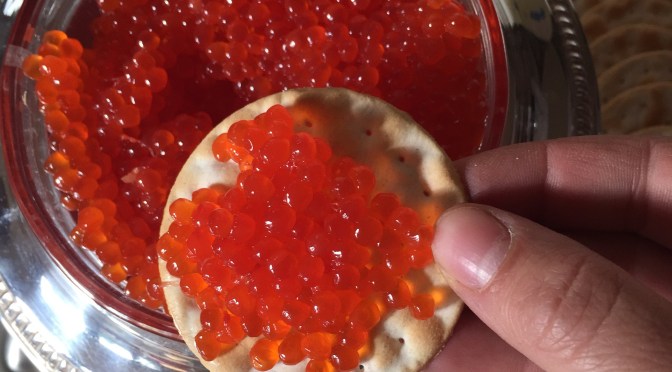
And although I love a good fresh grilled salmon steak (last night we grilled them over alder branches), it’s the roe that I crave. We usually brine the roe in a simple salt and water solution and serve them with crackers and white wine. You can read my post from last year about wild salmon caviar.
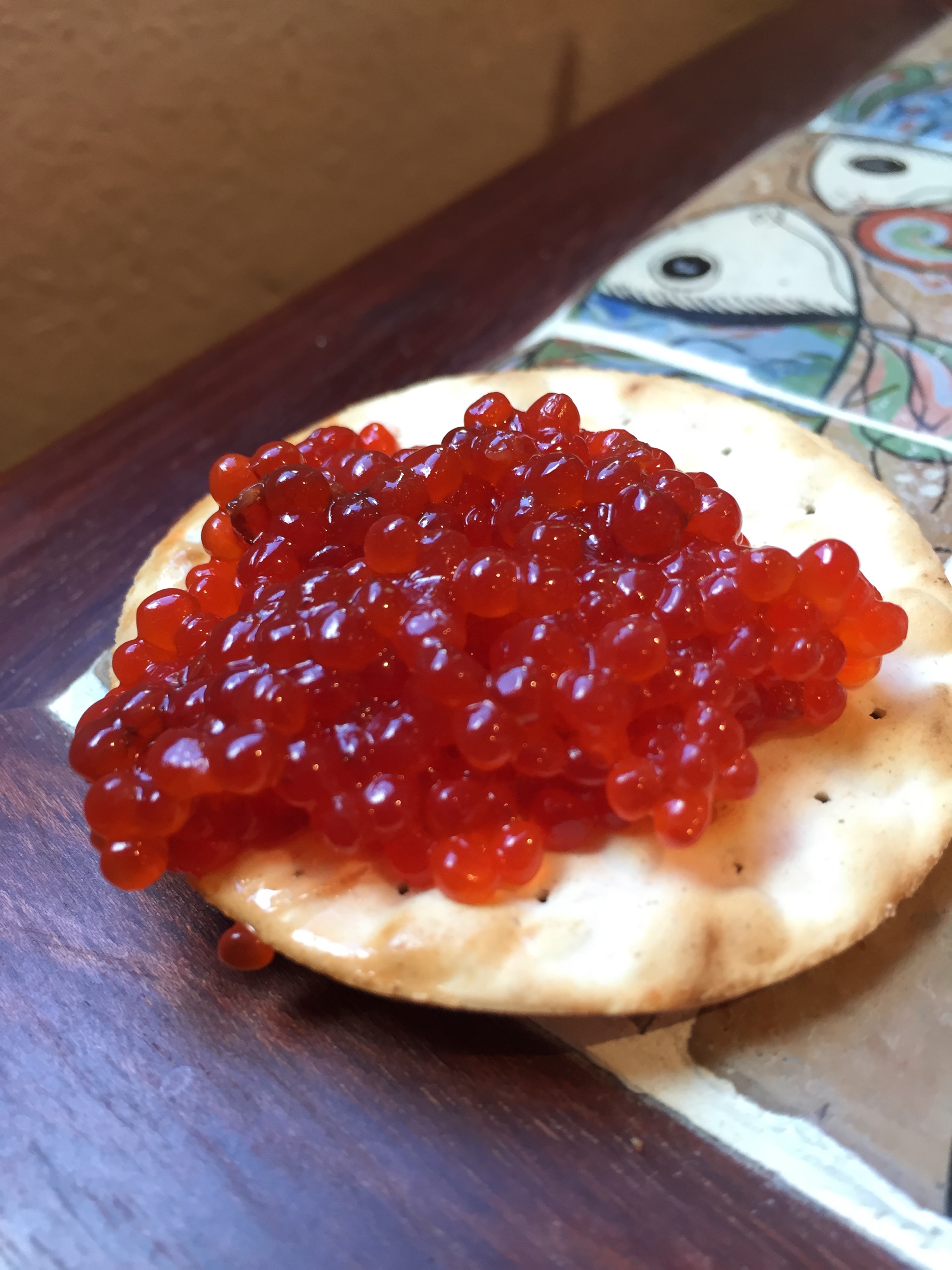
Today, though, a friend dutifully gave me his roe from the silver salmon he caught in Seward over the weekend. When I went to process them I realized they were too small and delicate. Pushing them through a metal grate was ruining them. I didn’t want to waste them so I thought outside the box. Or inside the box, rather, as my dad had just removed some red salmon lox from his smoker.
I found this incredibly simple recipe for smoked salmon roe and decided to give it a try. It turned out splendidly! A friend told me it tasted a bit like smoked oysters. I will definitely try it again, but I might rinse the eggs of their salt brine before smoking them as they are a bit on the salty side.
This recipe assumes that you know how to use a smoker. I only say this because my dad is the smoke master in my family and I haven’t learned to operate one. All I can say is we cold smoked the eggs since heat would ruin the texture altogether.
Make sure the roe is fresh, fresh, fresh. That means it’s either been in a freshly caught fish or if the fish was processed on the beach that the eggs were kept on ice the entire time for no more than two days.
Smoked Salmon Roe
Directions:
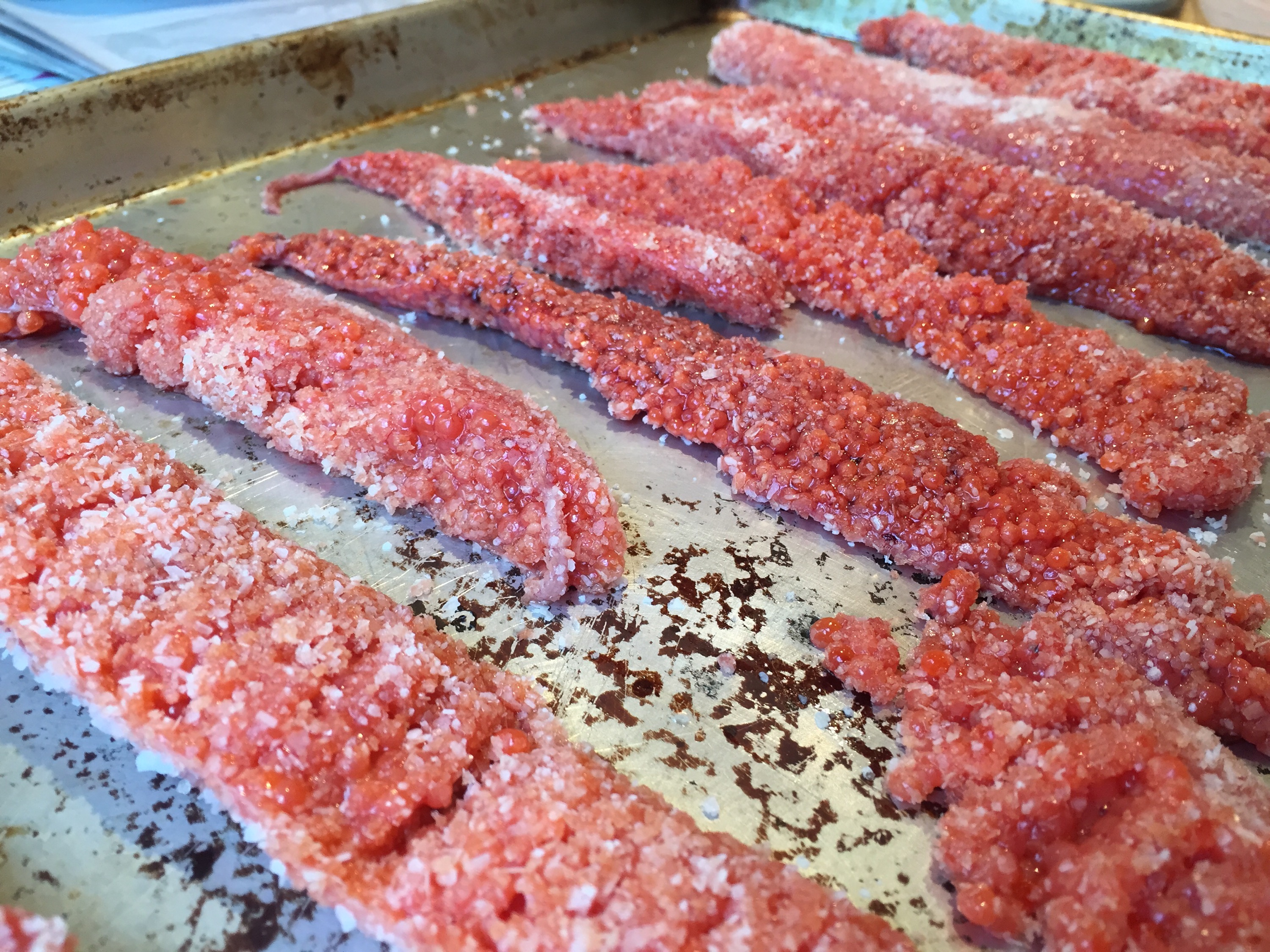
Rinse the salmon roe skeins in fresh cold water to remove any grit. Pat them dry with paper towels and dredge them in kosher salt.
Place them on a rimmed baking sheet in the fridge for 20 minutes. In the meantime, turn on your smoker.
Remove the skeins from the fridge and rinse them again under cold water. Pat dry. Rinse off the baking sheet and wipe dry. Place the skeins back on the tray.
Place your baking sheet on the top shelf and leave the smoker door slightly ajar. Smoke for 30-45 minutes.
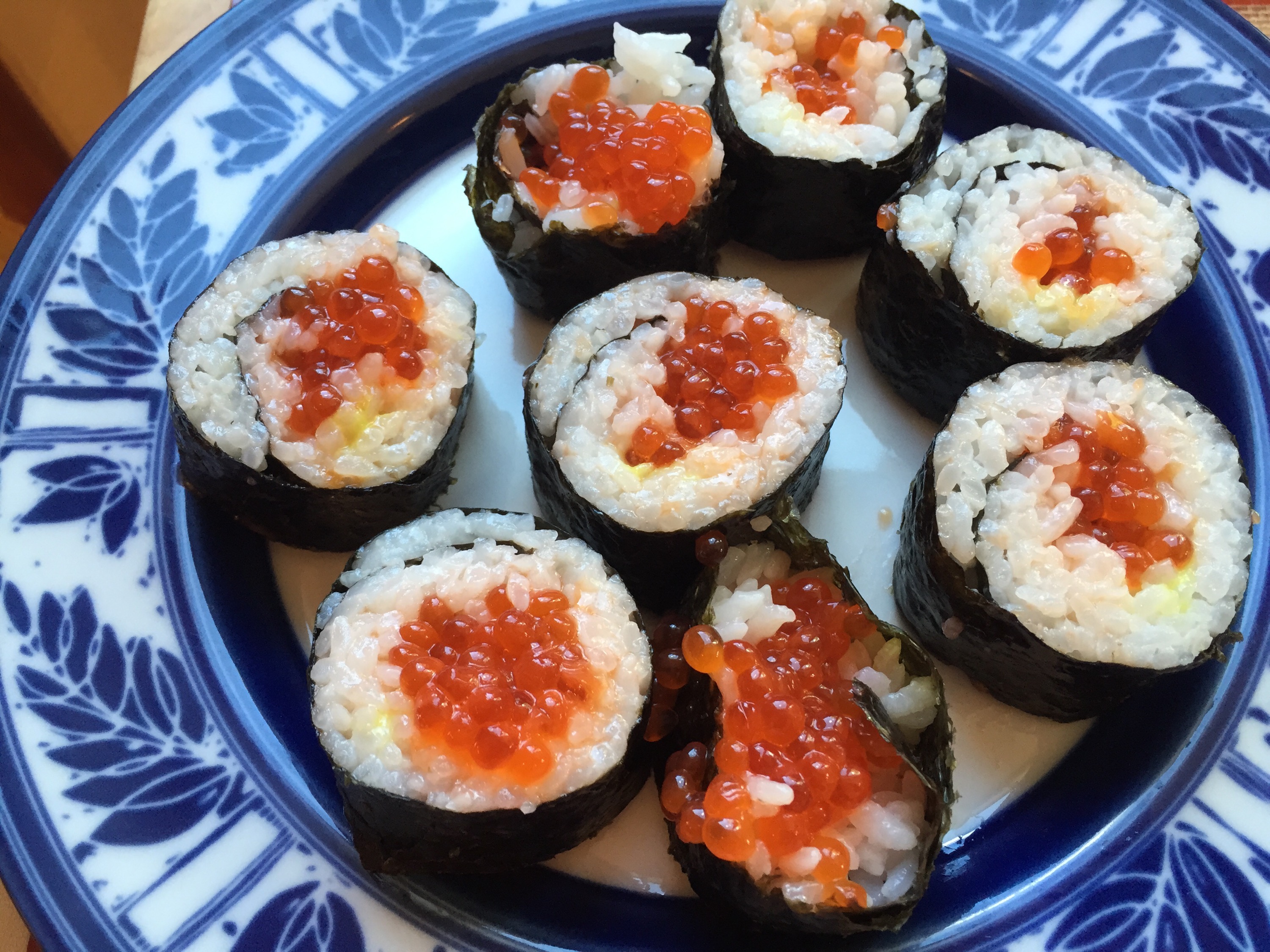
Place roe in fridge until cold. Use a butter knife to scrape the eggs away from the skein membrane. Store in a jar for up to 5 days (but they shouldn’t last that long, really). Enjoy on crackers or in any way you deem fit. Today I made sushi with the smoked roe. It was fabulous.
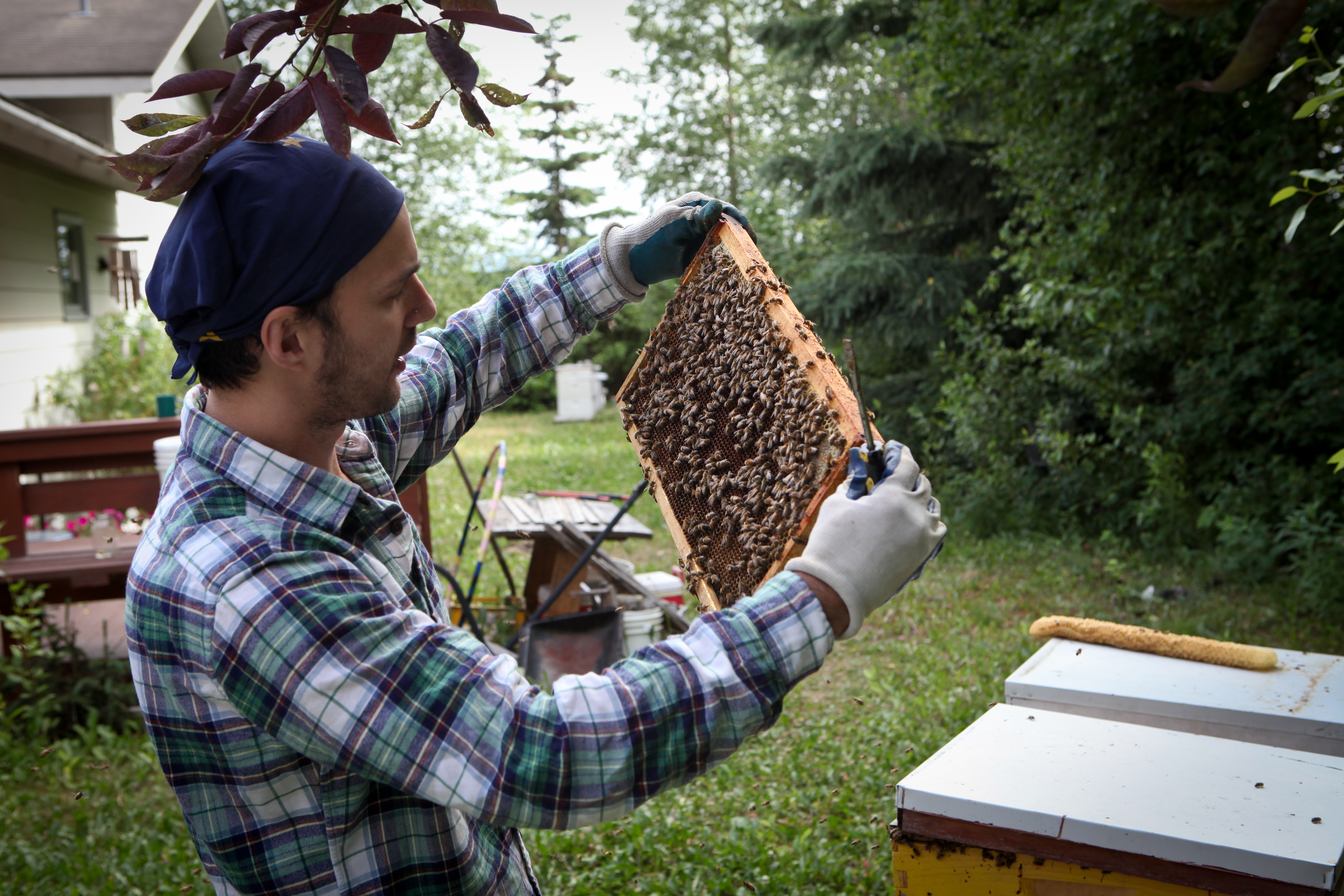
My old friend Ivan Night is a man of many talents; he’s a musician, an educator, a sound technician, a beer brewer, but for the sake of this blog post we’ll stick to just one of his titles: an apiarist.
Ivan has been keeping bees for about eight years. His family has owned and operated Alaska Wild Teas for more than three decades, so honey is a natural side project. Check the bottom of this post for a homemade tea recipe.
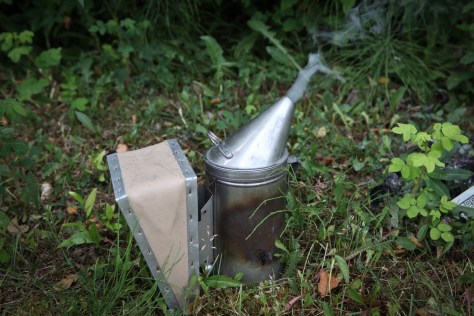
Recently I visited Ivan’s home to see how he harvests honey from his busy little bees.
Oh, how I love Alaska weddings! There’s something about an Alaska bride. She loves to incorporate her home state into her most special day. Philly was no exception. Her vision was simplicity for the bridal party and big and wild for the bridal bouquet.
The photos can’t do this bouquet justice. There are peonies from every angle. The wholesaler’s peonies were small, but thanks to an old friend with a big peony garden, I was able to compensate with two HUGE blooms, which are what take up most of the photos. While snipping these two gorgeous flowers I sneaked a couple of poppy pods, which add some vintage green to the arrangement. I foraged many wildflowers including clover blossoms, yarrow, cow parsnip and grass berries. Wrapped in lace and twine and you’ve got a soft beauty with a twinge of wild. Utterly romantic.
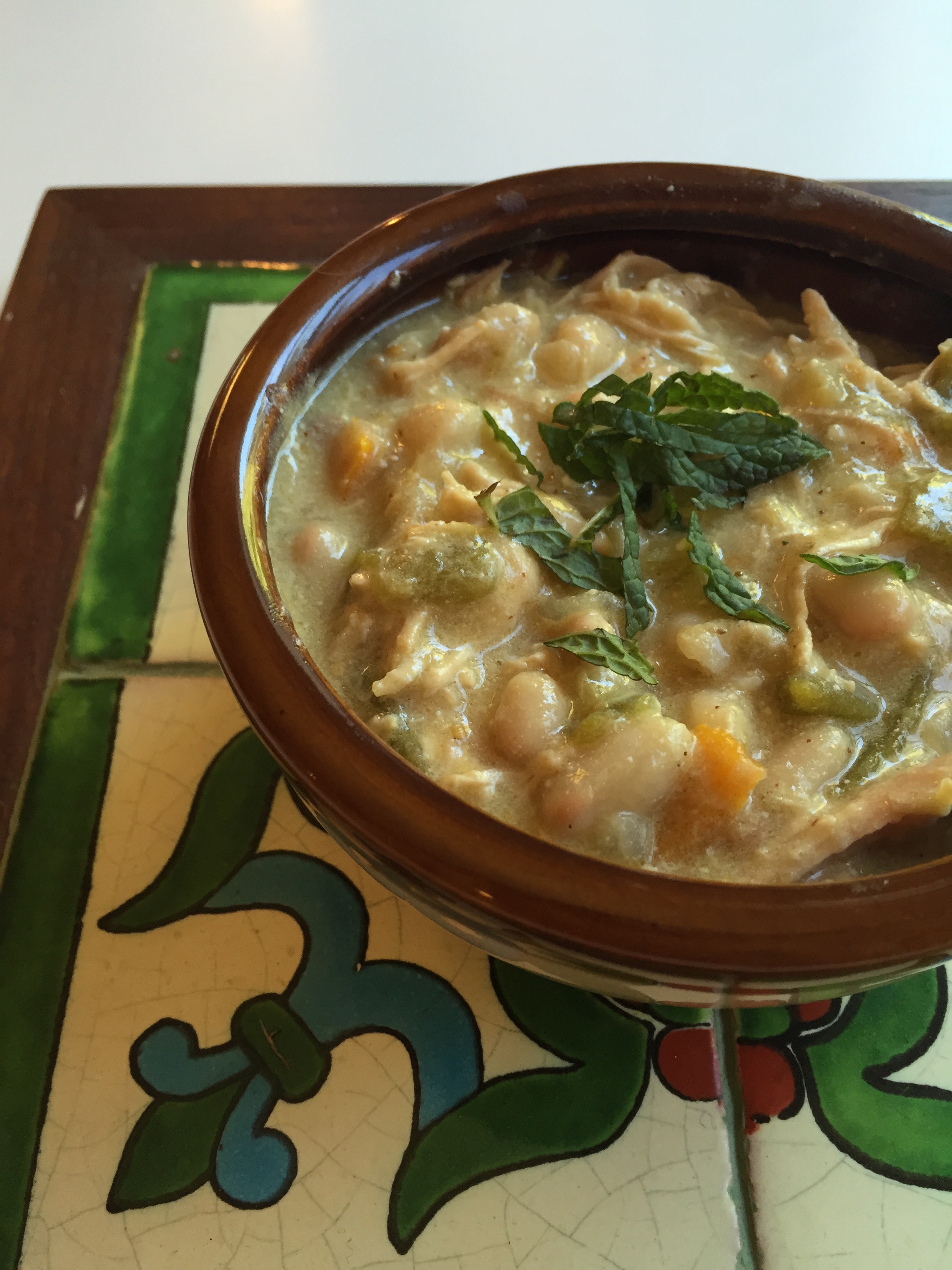
I’ll never stop promoting Costco rotisserie chicken. It’s only $5 and not only is it delicious hot off the shelf (I sometimes don’t even bother with a plate or silverware), but the leftovers can be used for myriad dishes such as pesto lasagna roll ups, quick matzo ball soup and homemade chicken stock.
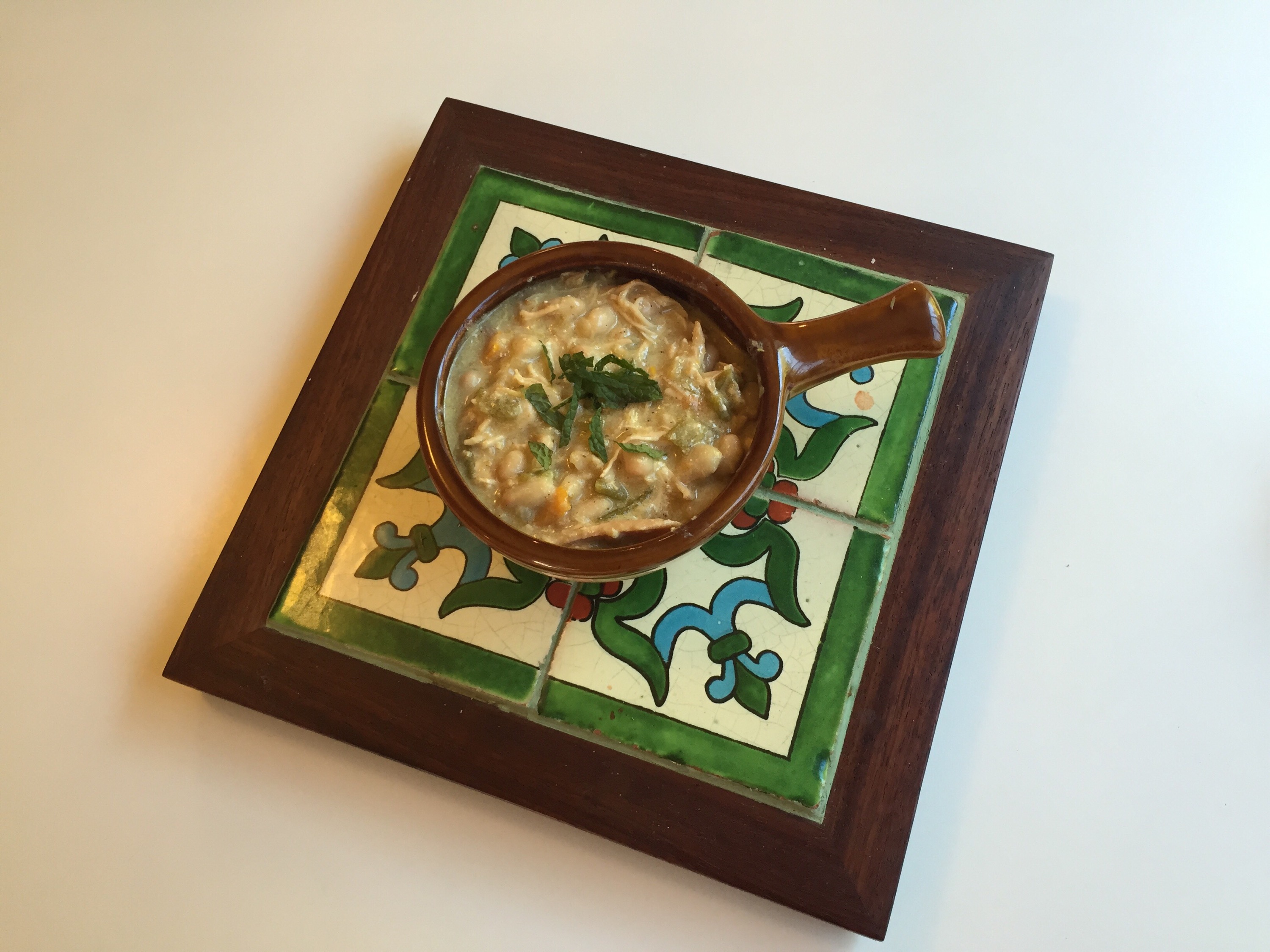
Tonight on the menu is white chili. My friend Danielle introduced me to the notion of non-tomato chili about eight years ago and when I thought of the dish for tonight I was surprised I hadn’t blogged about it yet.
This one-pot wonder has similar flavors to traditional chili. With the addition of salsa verde and sour cream you give chili night a new twist.
White chili with chicken
Serves 6
Ingredients:
1 Tbs. olive oil
1 cup chopped onion
1/2 cup chopped yellow bell pepper
1 can diced green chiles
leftover rotisserie chicken meat, shredded
1, 16-oz. jar salsa verde
1.5 cups chicken stock
2 tsp. ground cumin
1/4 tsp. chili powder
1/4 tsp. garlic powder
1/2 tsp. dried oregano
1 bay leaf
2 cans great white northern beans, drained
1 cup sour cream
Directions:
Heat oil in a dutch oven. Sauté the onions and peppers till onions are soft, about 7 minutes. Add the chiles, chicken, salsa, stock and spices. Bring to a simmer, turn to low and simmer one hour.
Add the beans and cook another 10 minutes. Add the sour cream just before serving. Top with cilantro sprigs and shredded cheddar cheese.
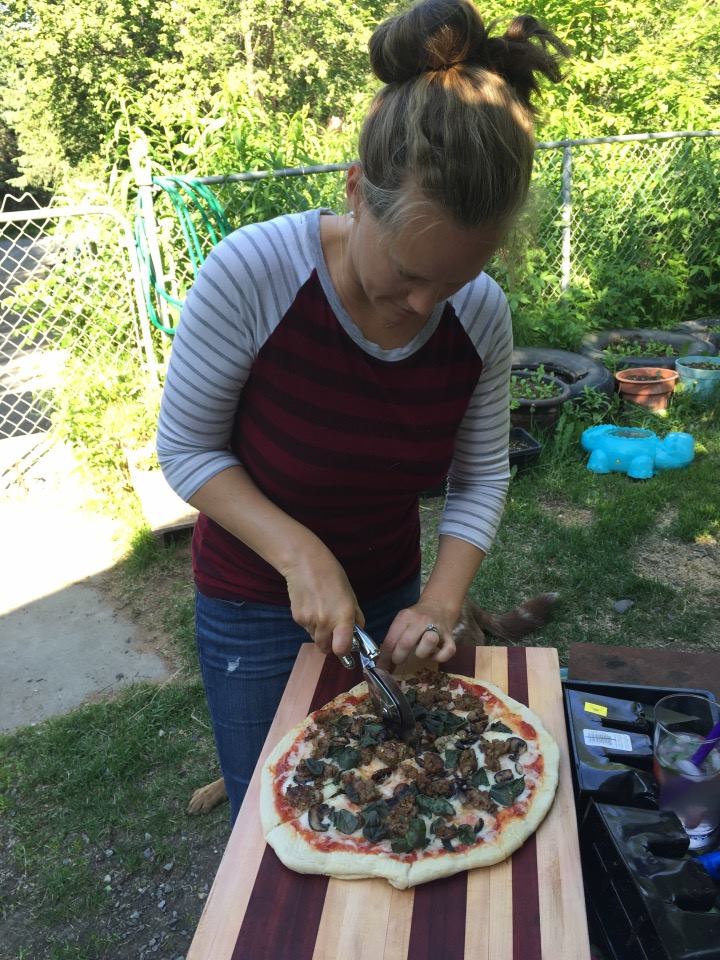
My old college friends are here for a visit this week and of course they arrive on the first cloudy day in two weeks. This morning we had planned on making my creamy tomato tortellini soup, but by mid-afternoon the sun finally came out and it was evident that soup was inappropriate. We decided on pizza on the grill.
This is a dish my mom is an expert at preparing. She makes the dough from scratch, but we didn’t have the time. I discovered that my grocery store sells balls of pizza dough in the bakery section for just $3. This makes pizza a quick, easy dish.
Good pizza tends to be cooked in a really hot oven and my oven just doesn’t get hot enough. My gas grill, though, can heat up pretty well. Pizza on the grill is easy and the crust comes out wonderfully crispy. The secret is to use a pizza grate, which looks a bit like a fan filter and only costs a few bucks at a restaurant supply store. The other secret is to grill the rolled out dough on one side before adding the toppings.
Pizza on the grill
Ingredients:
2 balls of pre-made pizza dough
shredded mozzarella cheese
simple tomato sauce
toppings of choice such as Italian sausage, mushrooms and Kalamata olives.
Pizza grate (can be purchased at restaurant kitchen supply stores)
Directions:
Let the dough sit at room temperature for 30 minutes. Heat gas grill to hot for 15 minutes. Turn down burners to medium-hot.
Flour and roll out the dough till it’s pizza size and place on pizza grate. Place on the grill and close the grill for about 3-5 minutes, until the side down is browned. Flip and remove from grill. Add tomato sauce, cheese and toppings and place back on the grill until cheese is melted and bubbly, about 5 minutes and bottom of the pizza is browned.
When I was asked to pick up a last minute wedding gig this week, I was more than thrilled to accept. A chance to work with white peonies and garden roses? Yes, please!
Bride Emily wanted a forest look to her arrangements, so I did the sensible thing and I foraged from the forest. I gathered dwarf hemlock from Glenn Alps, which I incorporated into the woodland fairy-like crowns, the delicate boutonnières and corsages and the perfectly-sized bridal bouquet.
Wild geranium, wood ferns and forget-me-nots mixed perfectly with the centerpieces of queen Anne’s lace, veronica and lisianthus.
Emily’s biggest desire was to have a big bridal flower crown of peonies and garden roses. When a fully bloomed peony is the size of a large grapefruit, a large crown is LARGE. My first draft was a little too big, I could barely hold my head up. After I downsized, I made Emily a smaller crown in case the original was too gigantic.
Every time I travel to Mexico I can’t resist buying a meter or two of brightly colored oilcloth. You see it everywhere down there, mostly as cheerful tablecloths. I use it for just about everything. I cover cans with it, I reupholstered my dining chairs and I love to use it for coin purses.
I have a simple pattern for my coin purses. You could use any fabric you like, but since the oilcloth is so thick I don’t have to use any stabilizer. That cuts down on project time, which is good because I have a really short attention span for sewing.
Oilcloth coin purse: a free tutorial from Alaska Knit Nat
Materials:
2, 6×8-inch pieces of oilcloth
one long, nylon zipper (9 inches or longer makes it easier)
As part of my personal challenge to forage at least one edible plant a month this summer in Anchorage, I decided to revisit wild rose petals. Several years back I collected these perfectly pink petals and made a just-OK jelly out of them. Thing is, I don’t eat jelly. I’m not a toast and jam kind of gal, I guess.
This time I opted to make rose petal syrup. It was easy to prepare and resulted in a gorgeous pink concoction that tasted as good as roses smell.
You can find wild roses just about everywhere in Anchorage in June. This bush is on the on-ramp to the Seward Highway.
The wild roses are in full bloom here in Anchorage and it’s hard not to find them. I picked petals on the side of the highway, on my street and in my back yard. They have been in bloom since the first week of June and will probably be around for another week before they fade, fall and begin to turn into rose hips (and that’s another foraging adventure!)
Rose Petal Syrup
To make one bottle of syrup I collected about 2 gently packed cups of petals. Be ready to encounter some caterpillars, bugs and spiders (I lost about a cup of petals when I spotted an arachnid creeping around my collecting jar).
*2023 update* – I realized I didn’t have a written recipe for the syrup. Here it is!
Ingredients:
6 cups fresh wild rose petals
5 cups sugar
1 quart plus 1 cup of water
2 teaspoons salt
2 tablespoons lemon juice
Fill the sink with cold water and pour in the petals. Stir them around and let the bugs and debris settle. Spin the petals dry in a salad spinner and place in a medium mixing bowl. Add 3/4 cup of sugar and muddle the petals with a potato masher.
Place the pulpy petals in a sealable container in the fridge overnight. Before cleaning the mixing bowl, scoop out remaining sugar gloop and exfoliate your hands. It’s lovely.
The next day, bring the water to a boil. Add the remaining sugar till dissolved. Toss in the petals and any pulp, lemon juice and salt and simmer on low until the color has been extracted from the petals. There’s no science to this. I think I simmered mine for 30 minutes. The liquid should be bright pink.
Turn off the heat and let the syrup cool. Using a mesh strainer lined with a clean linen dishcloth, ladle the syrup into a pitcher, pressing on the petals and tossing them as you go.
Pour into sanitized jars or bottles. Keep refrigerated. Keeps for several months.