
Category Archives: Cooking

Pozole Verde

The other day my husband bought a huge jar of hatch green chiles from Costco. He thought it was salsa. I guess since it contains garlic and salt, one could consider it a salsa, but I had a feeling it would not get finished before it started getting moldy in the fridge, so I decided to make a green pozole.

I am only familiar with making red posole, a New Mexican style hominy stew that’s thicker than Mexican-style pozole. Both contain hominy and pork. I’m assuming a Mexican-style pozole verde uses tomatillos and green chiles (I’ve never made it) so I decided to improvise and not look up any recipes for pozole verde. I knew I could make a flavorful hominy stew with chicken thighs, jarred hatch chiles and store bought salsa verde.

The salsa verde contains tomatillos, jalapeños, coriander, and arbol peppers, which gave the soup some kick and brightness. I added one packet of Bare Bones instant bone broth to add some dimension to the soup. Cooking the thighs with the bone in creates a more robust broth as well.

This turned out to be so flavorful with a deep, but not overwhelming, spice to it. The chicken thighs are fall-apart tender and because I used dried hominy, the kernels have the perfect chew to them. The hominy thickens the soup as it simmers so now I have a recipe for another kind of pozole that I enjoy almost as much as the rojo variety.

Note: you can use canned hominy for this recipe and it will significantly reduce the cook time. I’ve included a note at the end about how to use canned instead of dried.

Pozole Verde

Pozole Verde

Serves 6-8
Total prep & cook time (not including soaking the hominy): 4 1/2-5 hours or 1 1/2 hours if using canned hominy.

Ingredients:

  • 5 ounces dried hominy, soaked in water overnight (or one 28-ounce can of cooked hominy)
  • 3 green onions
  • 7 garlic gloves, divided
  • 1 tablespoon salt, plus more for seasoning
  • 5 bone-in, skin on chicken thighs
  • 1 medium onion, chopped
  • 3 cups chicken stock
  • 1 packet of Bare Bones instant bone broth (optional)
  • ¾ cups jarred hatch green chiles
  • 1 1/4 cup salsa verde
  • 2 bay leaves
  • Freshly ground pepper, to taste
  • Sour cream, for serving
  • Fresh cilantro, for serving
  • Flour tortillas, for serving

Directions:

After you’ve soaked your hominy overnight, drain it and place it in a slow cooker. Add enough water to cover the hominy by three inches. Toss in the green onions, 3 smashed garlic cloves and 1 tablespoon salt. Slow cook for 3 hours (I have an Instant Pot and I set it to high). Drain, discarding the green onions and garlic, and set aside until ready to use.*

Pat dry the chicken with paper towels and sprinkle both sides with salt. Heat a large dutch oven over medium high and add the thighs skin-down. You may have to do this in two batches. Cook until the skin is golden brown, about 5 minutes. Flip and cook the other side for a few more minutes. Remove thighs from the pot and set aside. This renders a lot of fat and we only need a little bit of it to cook the onions. Drain all but 2 teaspoons fat and reserve it for another time you want fat with flavor (I store it in my freezer after it’s solidified). Remove the skin from the chicken and if you want a little snack, place it back in the pot and fry until completely brown and crispy. Or just discard it. I wanted the skin on to render the fat because chicken fat has more flavor than olive oil.

While you munch on chicken chicharrones, toss the onions into the pot with the remaining chicken fat. Saute until soft, about 5 minutes. Roughly chop the remaining garlic and add that to the pot. Stir and cook another two minutes until the garlic is fragrant.

Add the chicken thighs back to the pot along with the hominy, stock, Bare Bones packet, hatch green chiles, salsa verde and bay leaves. Add some freshly ground pepper to your liking. Cover the pot. Bring to a simmer, turn down heat, and cook for an hour. 

Carefully remove the chicken thighs from the pot and transfer them to a cutting board. With a fork and knife, remove and discard the bones and gristle. Shred or roughly chop the chicken thigh meat and return to the pot. Simmer for another half hour. Add salt to taste.

Serve with a dollop of sour cream, a sprinkle of fresh cilantro and flour tortillas.

*If using canned hominy, skip this step and just drain the canned hominy and start at step 2.
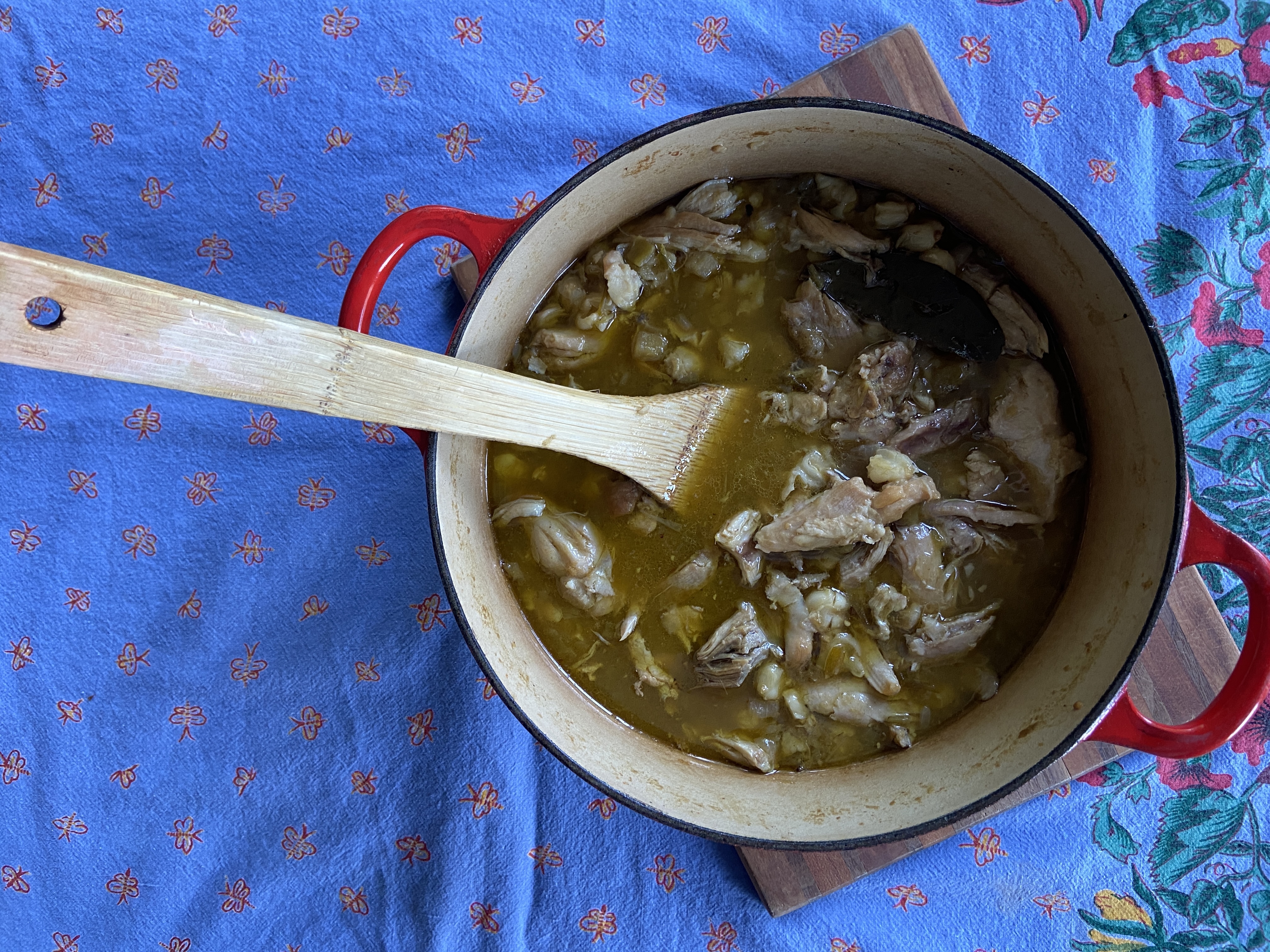
Pozole verde

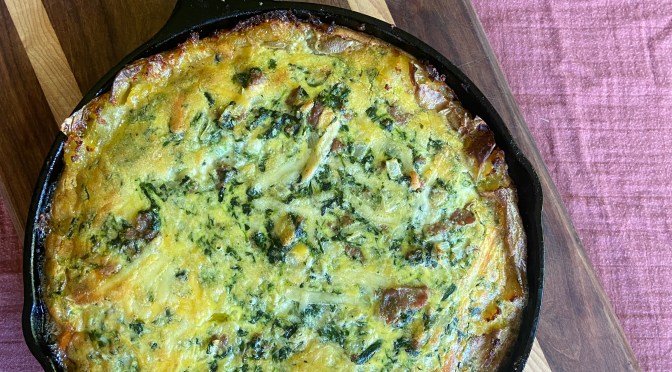
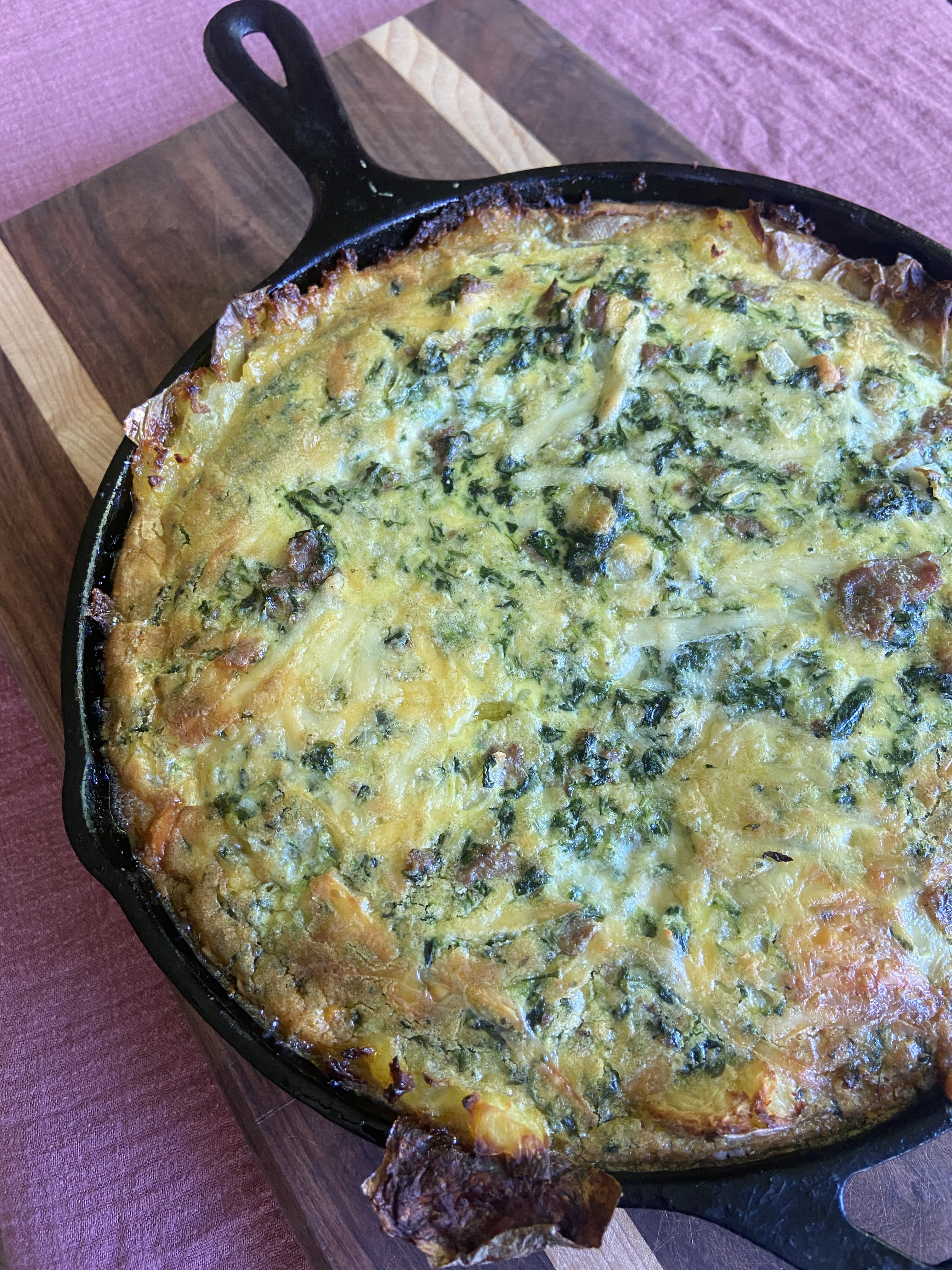
Skillet Quiche with Potato Crust

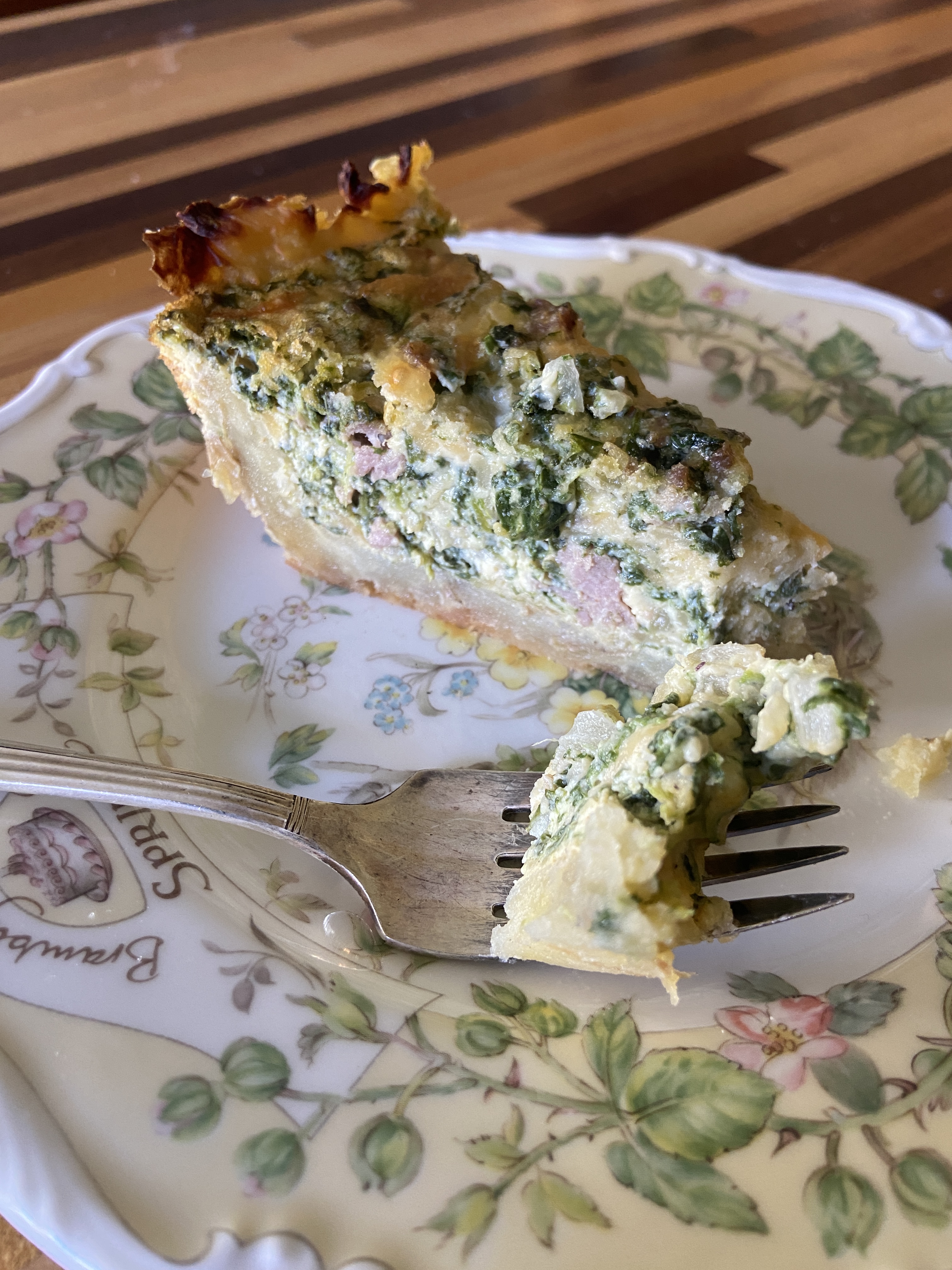
I’ve never been very good at quiches. Sure, mix some eggs and milk and some meat and veggies and bake it in some kind of crust, but it usually comes out too eggy. I don’t want an omelette, I want something my fork can slice through like a custard.

There’s a cafe in Anchorage that used to serve the richest, most creamy quiche and I want quiche like that. I also can’t be bothered with a pastry crust, which is why I have come up with a potato crust based on that trendy dish where you smash potatoes with the bottom of a glass and bake them at high heat. Also, forget the quiche pan! Just bake it in a cast iron skillet. It’s non-stick and straight sided enough to support the potato crust after you cool it and serve up a slice.

Warm quiche out of the oven is good, but next day quiche after it’s solidified in the fridge is even better. And if you happen to have duck eggs, sub in a couple instead of chicken eggs and use one fewer chicken egg. It makes for a luxurious custardy quiche.

This recipe is flexible. Use whatever veggies suit you. Just chop them up small and parcook them first. Don’t have bacon? Use diced up ham or breakfast sausage. Don’t have cheddar? Use parmesan or gruyere.

The world is your quiche!

Quiche

Skillet Quiche with Potato Crust

Serves 6-8
Total prep & cook time: 1 hour, 20 minutes

Ingredients

  • 2 pounds baby Yukon gold potatoes, scrubbed
  • 1 ½ tablespoons salt for boiling potatoes, plus more for seasoning
  • 4 ounces bacon or breakfast sausage
  • ½ yellow onion or 6 green onions, diced
  • 4 ounces veggies such as broccoli, asparagus, spinach (precooked and drained) and peas
  • 1 tablespoon butter, plus extra
  • 5 large eggs
  • 1 egg yolk
  • 3/4 cup whole milk
  • 3/4 cup heavy cream
  • 1 tablespoon 00 flour (AP flour would work too)
  • ¼ teaspoon black pepper, freshly ground
  • ¼ teaspoon smoked paprika
  • ⅛ teaspoon ground nutmeg
  • 1 cup (4 ounces) shredded cheese , (sharp cheddar and/or parmigiano reggiano)
  • Dots of butter

Instructions

Preheat the oven to 450F. Place the whole, unpeeled potatoes to a large pot and add enough water to cover them by 1 inch. Bring to a boil, then add 1 ½ tablespoons salt. Reduce heat to medium and boil until the potatoes are fork-tender, about 20-30 minutes, depending on the size of the potatoes. Drain well and set aside.

While the potatoes boil, chop the bacon into small pieces. Chop your veggies into small pieces as well. If using precooked spinach, squish out as much liquid as possible and finely chop.

Set a 10-inch cast iron pan (or a heavy-bottomed, oven-safe pan) over medium heat and add the bacon. Cook until the fat is rendered and the bacon is crisp. Remove the bacon with a slotted spoon and set in a small mixing bowl. Add the onions and veggies to the bacon fat and sauté, stirring often, until softened, about 5 minutes. (If using precooked spinach, just add the onions in this step and add spinach to the bacon and onions after the onions are soft.) Transfer veggies to the bowl with the bacon, mix and set aside. 

Wipe out the skillet and place it in the oven until the potatoes are done. This will help make the crust crispier.

When the potatoes have cooled enough to handle, remove the skillet from the oven and coat it all over with the butter. Sprinkle the pan lightly with salt. Add the potatoes to the cast iron skillet in a single layer. 

Use the bottom of a glass or measuring cup to press the potatoes firmly into the bottom and about 1 inch up the sides of the pan, closing any gaps with a rubber spatula to form a crust. Place in the oven for 15 minutes then turn down the heat to 350F.

While the crust bakes, whisk the eggs, milk, cream, flour, ½ tsp salt, pepper, paprika, and nutmeg in a mixing bowl. Whisk vigorously for a minute to incorporate some air into the mixture. Stir in the bacon, onion and cheese. 

Remove the skillet from the oven. Pour the filling into the potato crust. Top with dots of butter. Bake for 45 minutes, or until the filling is set (it shouldn’t jiggle when you jolt the pan) and is an internal temperature of 160F. Let cool for 15 minutes.

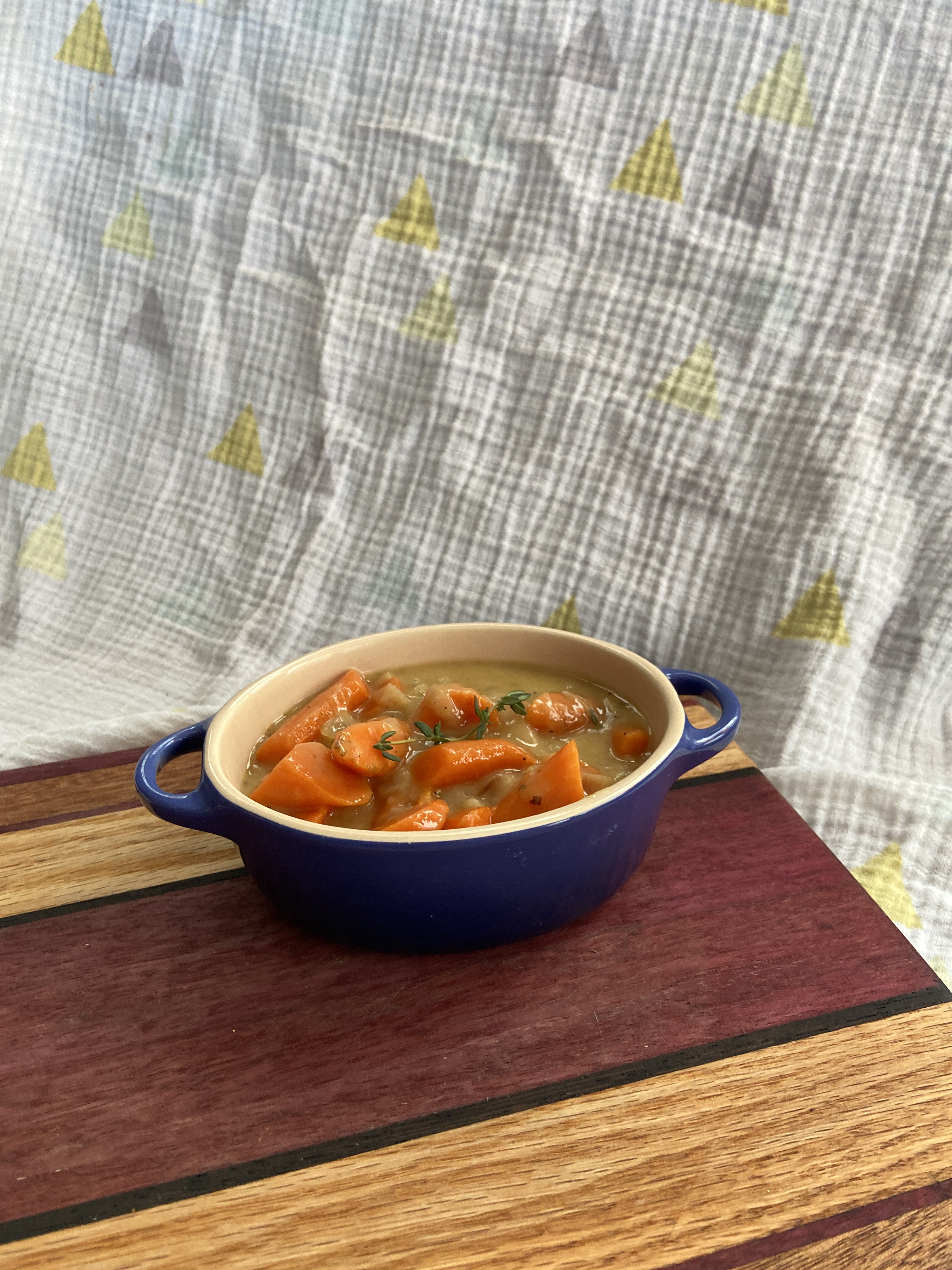
Creamed Carrots

I recently came across an Instagram reel from Corre Larkin for Julia Child-inspired creamed carrots. I’m always at a loss for how to serve cooked carrots and this recipe is a game changer. It is so flavorful and satisfying. The carrots are coated in silky, tangy gravy. Gravy is liquid of the gods!

Since her video doesn’t list the exact measurements, I tried finding the original recipe in my copy of “Mastering the Art of French Cooking,” and it’s quite different from how Corre Larkin made them. Julia Child’s Carrotes à la Crème recipe has fewer ingredients and a lot more cream.

So I came up with my own version of these recipes. This side dish is perfect for a Costco rotisserie chicken night. Whatever jus has gathered in the bag I add with the chicken stock. I put the chicken in a 200F oven while I make the carrots so the bird stays warm.

Creamed Carrots à la Corre Larkin à la Julia Child

Serves 4
Total Prep and Cook Time: 40 minutes

Ingredients:

  • 3 tablespoons butter
  • 1 onion, halved and sliced into half-moons
  • salt and pepper
  • 2 bay leaves
  • 2 pounds carrots, peeled
  • 2 tablespoons flour
  • 2 tablespoons sake or white wine
  • 2 sprigs fresh thyme
  • 1-inch sprig of fresh rosemary (optional)
  • 2-3 cups chicken stock
  • 2 teaspoons apple cider vinegar
  • 2 tablespoons cream
  • pinch of nutmeg

Directions:

In a large sauté pan, melt the butter over medium high heat. Add the onion slices, salt and pepper to taste and the bay leaves. Stir till everything is coated in the butter. Turn heat to medium low, cover and cook for 7 minutes, stirring occasionally, until the onions are soft.

In the meantime, trim the ends off the carrots and cut them oblique style.

When the onions are soft, add the carrots and stir till they are coated. Cover and cook another 10 minutes.

Add the flour and stir so it’s coating the ingredients. Cook for 1-2 minutes. Add the sake or white wine to deglaze the pan, scraping any bits from the bottom of the pan.

Add the thyme, rosemary and enough stock to just cover the carrots. You don’t want them swimming in stock. Stir until the flour has been incorporated into the stock. Turn up the heat to bring to a simmer, then turn back down, cover and cook for another 10 minutes or until the carrots are tender.

Remove the cover, add the vinegar, cream, and nutmeg, and let simmer for 5 minutes to thicken slightly.

Remove the bay leaves, thyme and rosemary and serve immediately.

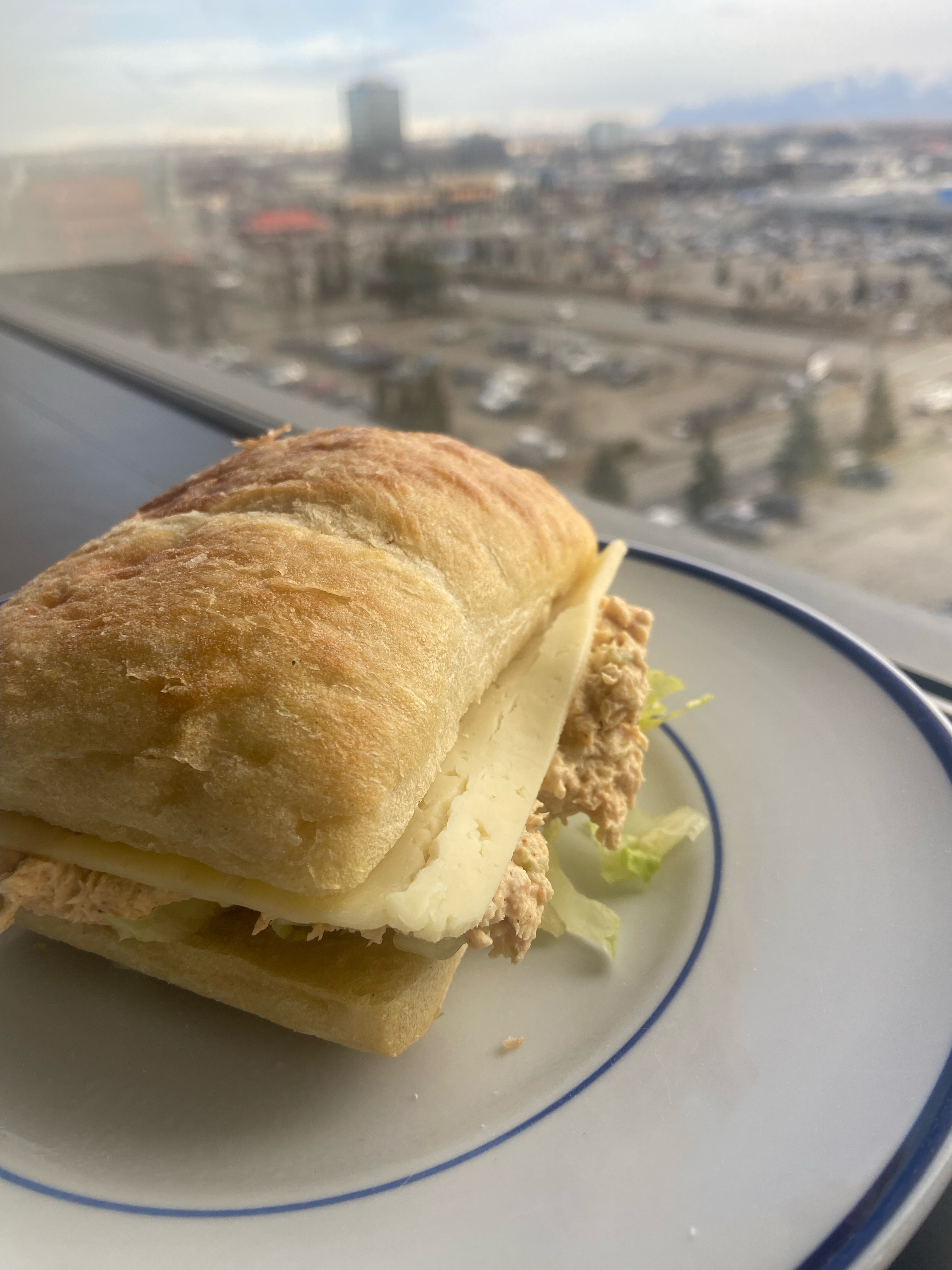
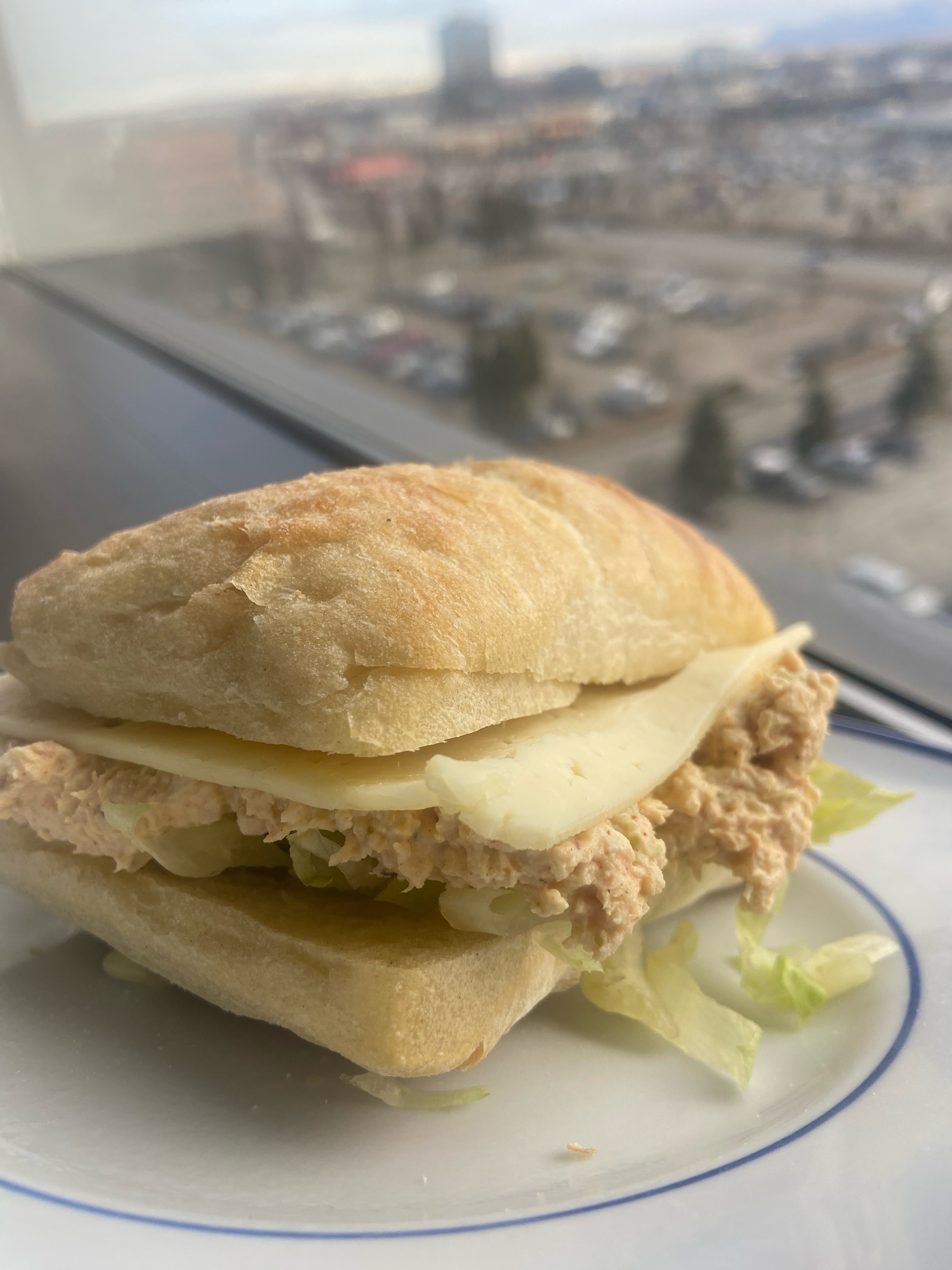
The Best Chicken Salad

Chicken salad has always been “meh” to me. I don’t mind the flavors, but I’m not a fan of big chunks of cold chicken. It turns out it is mostly a texture thing for me. The other day, the Instagram algorithm suggested a reel from Rachel Halldorson that I had to try. She uses a leftover rotisserie chicken in a creative way and puts the chicken in a food processor. Having a consistent texture in my chicken salad is what does it for me apparently!

I highly recommend her method of making crispy chicken skin to top off a chicken salad sandwich, but I wanted to jot down my version of her chicken salad recipe here so I don’t forget it.

The Best Chicken Salad

Serves 4-5

Ingredients:

  • 2 celery stalks, roughly chopped
  • 1/4 of a medium onion, roughly chopped
  • 1 pound leftover rotisserie chicken meat, chopped into chunks
  • 2 tablespoons Dijon mustard
  • 1/2 cup Duke’s mayonnaise
  • 1 teaspoon white wine vinegar
  • 1/2 teaspoon smoked paprika
  • 1 teaspoon salt, or to taste
  • Freshly ground pepper, to taste

Directions:

Toss the celery and onion into a food processor and pulse till it’s coarsely chopped. Add the chicken and pulse until chicken is finely chopped, but not too fine as to create a paste. Place mixture in a mixing bowl and stir in the mustard, mayonnaise, vinegar, smoked paprika, salt and pepper. It should have the consistency of tuna salad.

Serve on toasted, buttered bread, havarti cheese, and finely chopped romaine lettuce.

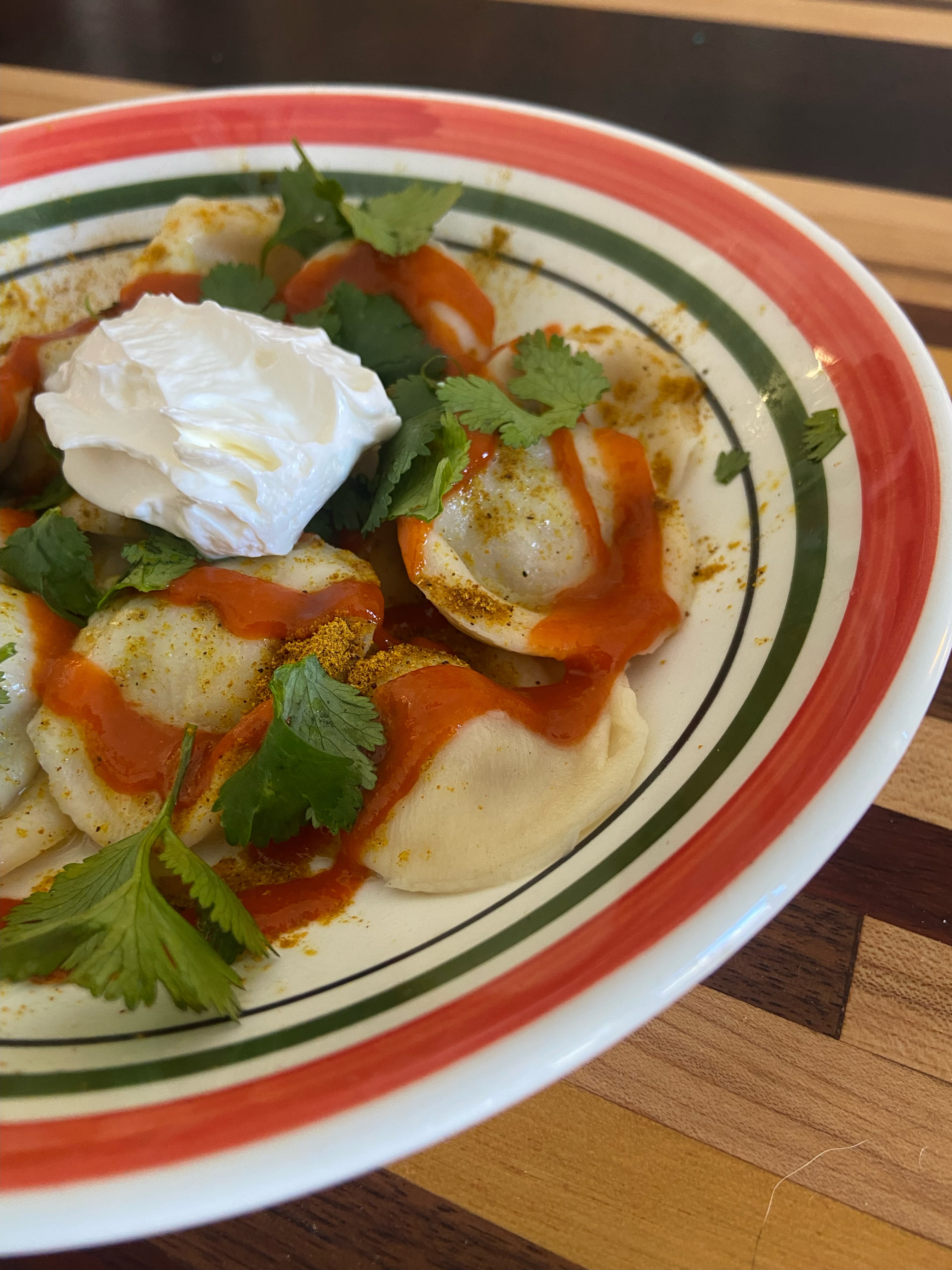
Homemade Russian Pelmeni – Updated

Back in 2011 I posted a recipe for one of my favorite dumpling recipes – pelmeni. This was back before I had all the recipe-writing knowledge I have today, so I wanted to update this recipe for anyone wanting to make these delicious dumplings at home.

It’s super helpful to have a pelmeni mold, but you can always make them using a small glass as a dough cutter and folding them into half moon shapes.

Russian Pelmeni

Makes about 60 dumplings

Ingredients for the dough:
1/2 cup warm water
2 eggs
About 260-270 grams AP or 00 flour, plus more for dusting

Ingredients for the meat filling:
1/2 medium onion, chopped very finely (I recommend using a small food processor)
1 tablespoon olive oil
2 garlic cloves, minced
1 teaspoon curry powder
1/2 pound ground beef
1/2 pound ground pork
1/2 teaspoon salt
Pepper, to taste

For the topping:
Butter
Rice vinegar
Curry powder
Sriracha
Fresh cilantro
Sour cream

Directions:
In a medium bowl, whisk together the egg and water. Incorporate flour till you have a soft, stretchy dough that isn’t sticky to the touch. Knead on a floured surface for five minutes, incorporating flour if it’s still too sticky. Wrap the dough in plastic wrap and let sit for 30 minutes.

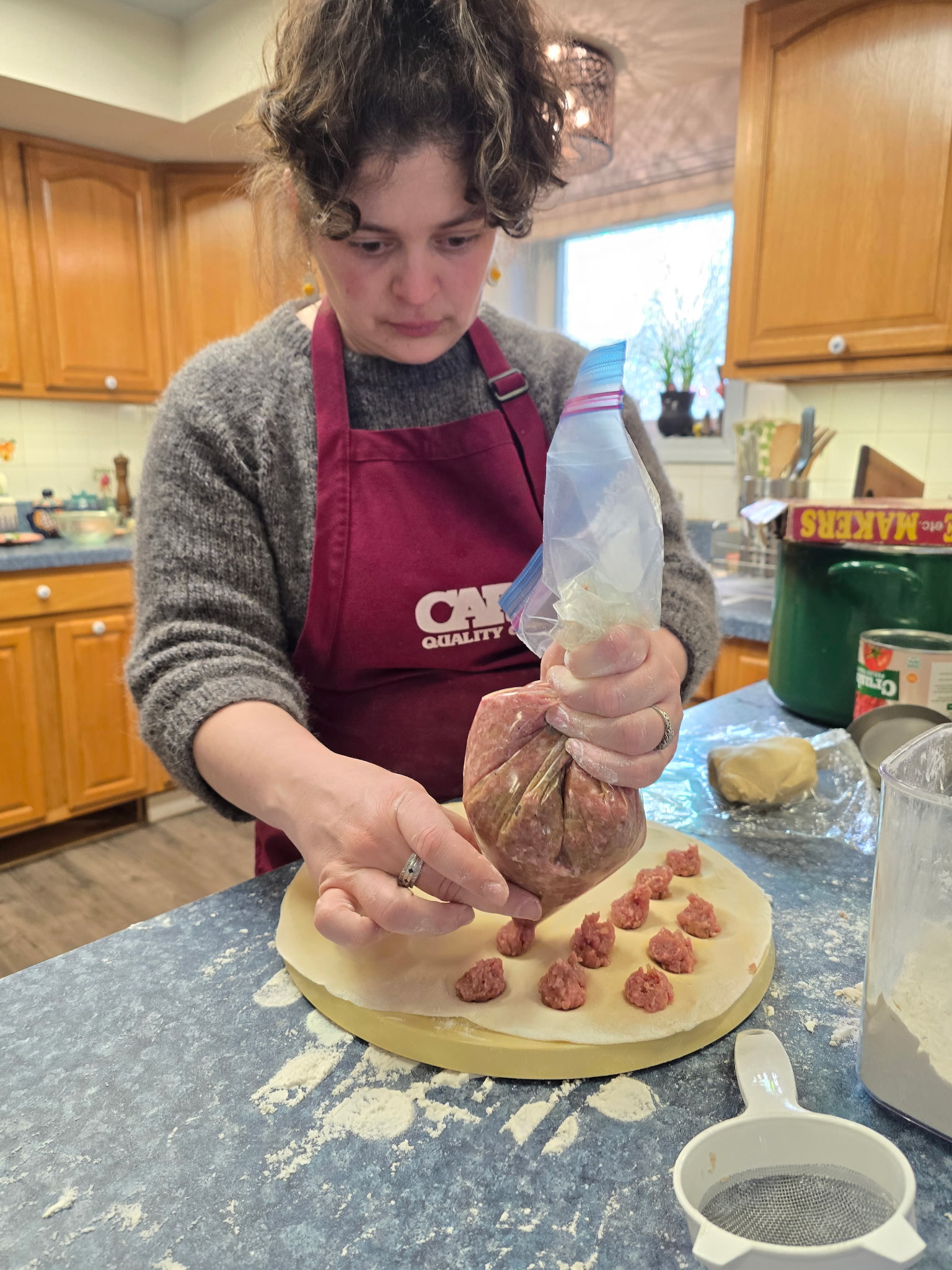
Meanwhile, heat a pan with the oil over medium-high. Add the onions and sauté until onions are soft, about 5 minutes. Turn the heat to medium, add the curry powder and garlic, and cook for 1 more minute. Let this cool off the stove while you combine the beef, pork, salt and pepper in a mixing bowl. Once onions are mostly cooled, add to the meat and combine well. Cook a small sample in your frying pan to sample, if you like, then adjust for salt. Once the meat mixture is seasoned to your liking, place it in a gallon sized zip top bag and cut a small hole in one of the bottom corners.

If you have a pelmeni mold, use 1/4 of the dough and roll out a large, thin, round sheet of dough, incorporating flour if needed so it doesn’t stick. Sprinkle flour over the mold and drape the dough on top. If you don’t have a mold, use a biscuit cutter or the edge of a glass and cut circles out of the dough.

Using your makeshift piping bag, add about a teaspoon of filling to each divot in the pelmeni mold. If the dough seems too dry, you may want to lightly spritz the whole sheet with a water sprayer because you want the other sheet of dough to stick. Roll out another 1/4 of the dough into a large, round sheet and place it on top of the filled mold. Using your rolling pin, gently roll back and forth along the dough side of the mold until the mold starts to pierce through the edges of each pelmeni. Lightly dust a counter with flour and turn the mold upside down to shake/poke the pelmeni out of the mold.

Repeat with the remaining dough to make one more set of pelmeni with the mold.

If not using a mold, add about 1 teaspoon of filling to each cut circle. Crimp closed with your fingers. The dough should be sticky enough to stay closed on its own without additional moisture.

Set each finished pelmeni on a flour-lined baking sheet.

From here you could either boil the dumplings right away or place them in the freezer for later. If you freeze them, make sure to freeze them on the baking sheet before putting them in a zip top bag or container, otherwise they will stick together.

To prepare, bring a big pot of salted water to a boil. Add the dumplings and return to a boil. Cook until dumplings float — about 5 minutes (7 minutes if frozen).

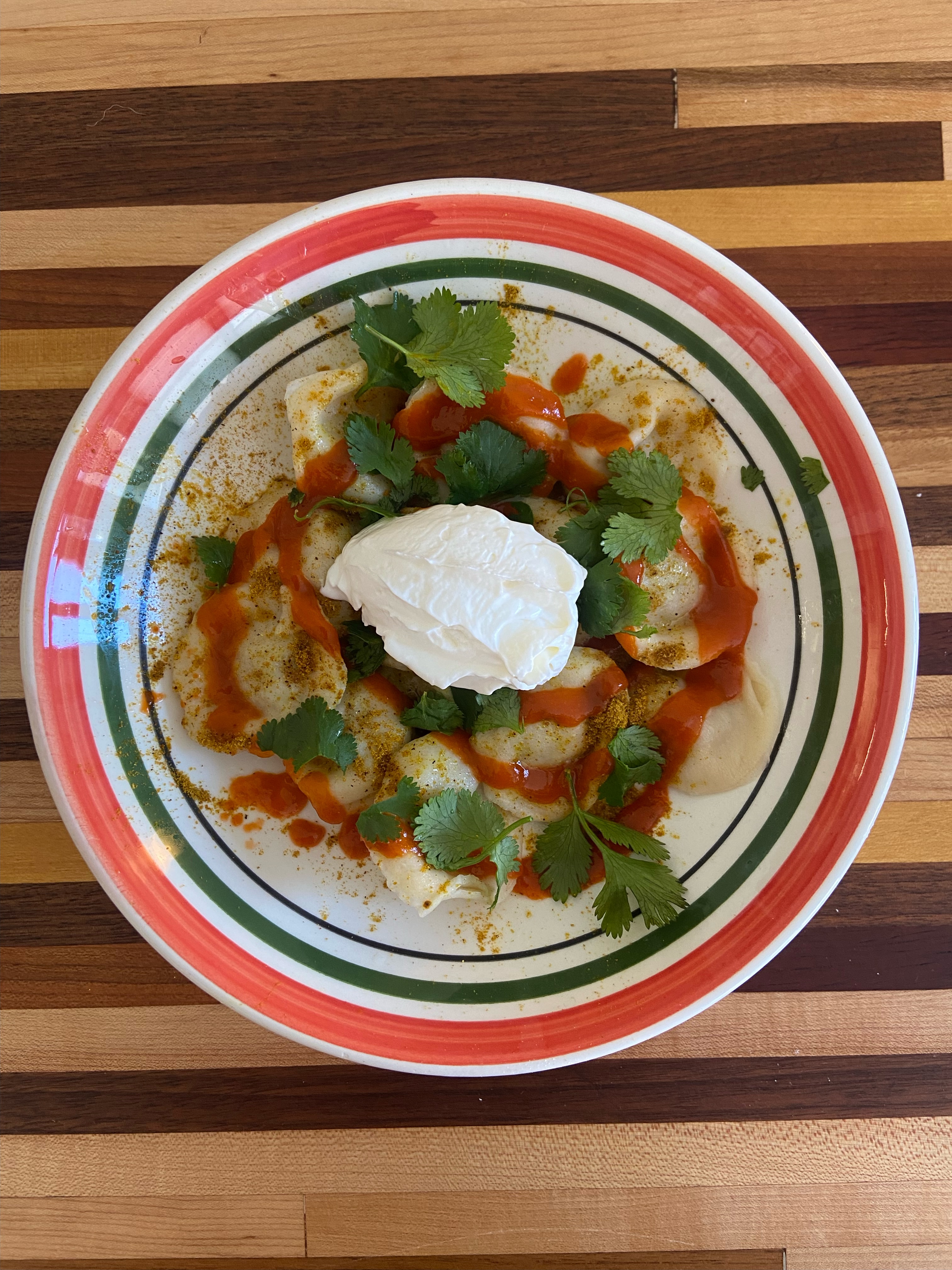
Use a slotted spoon to remove dumplings and place them in bowls. Top with butter, vinegar, curry powder, Sriracha, cilantro and sour cream.

Legit Falafel Mix

I’m usually not one to write more than a few sentences before a recipe, but this one warrants a little explanation.

I am not too familiar with making my own falafel patties. I’ve used a box mix before but that wasn’t worth writing about. The other day my sister told me she had the most delicious falafel at work and asked her coworker for the recipe. My sis came over last week with the recipe and ingredients, but we realized parts of the recipe were unclear so we had to make some guesses.

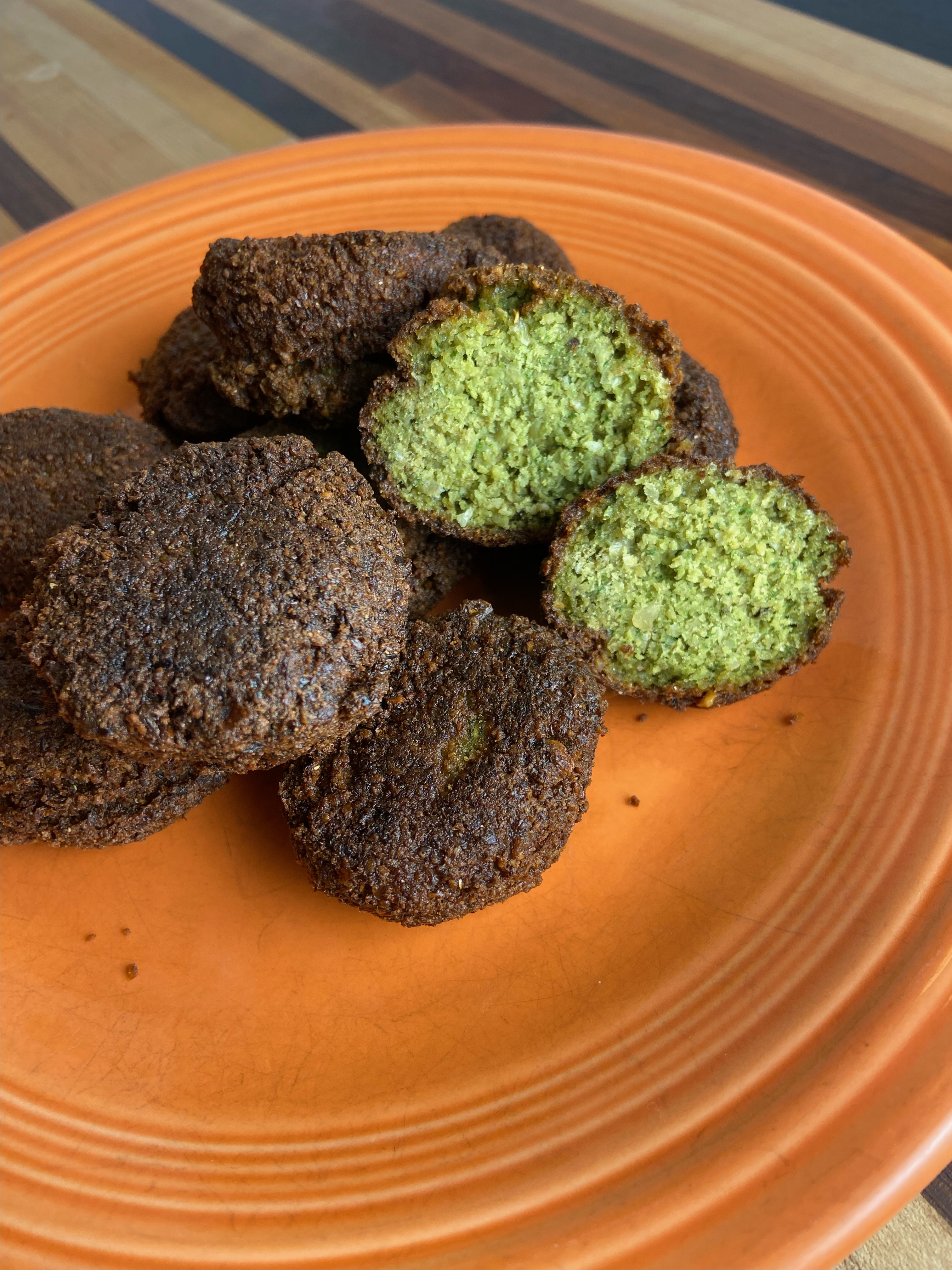
One thing was clear: you have to make falafel from dried chickpeas and not canned chickpeas. I didn’t know this having not grown up eating falafel. But soaking the chickpeas for 12-18 hours is the base ingredient for crispy, flavorful falafel that hold together perfectly. You don’t cook the chickpeas first. Frying the falafel cooks the chickpeas. If you use canned they will not hold together well and will be mushy.

Note: we soaked enough chickpeas for two batches of falafel. You can freeze the remaining soaked chickpeas for another time – it still comes out great!

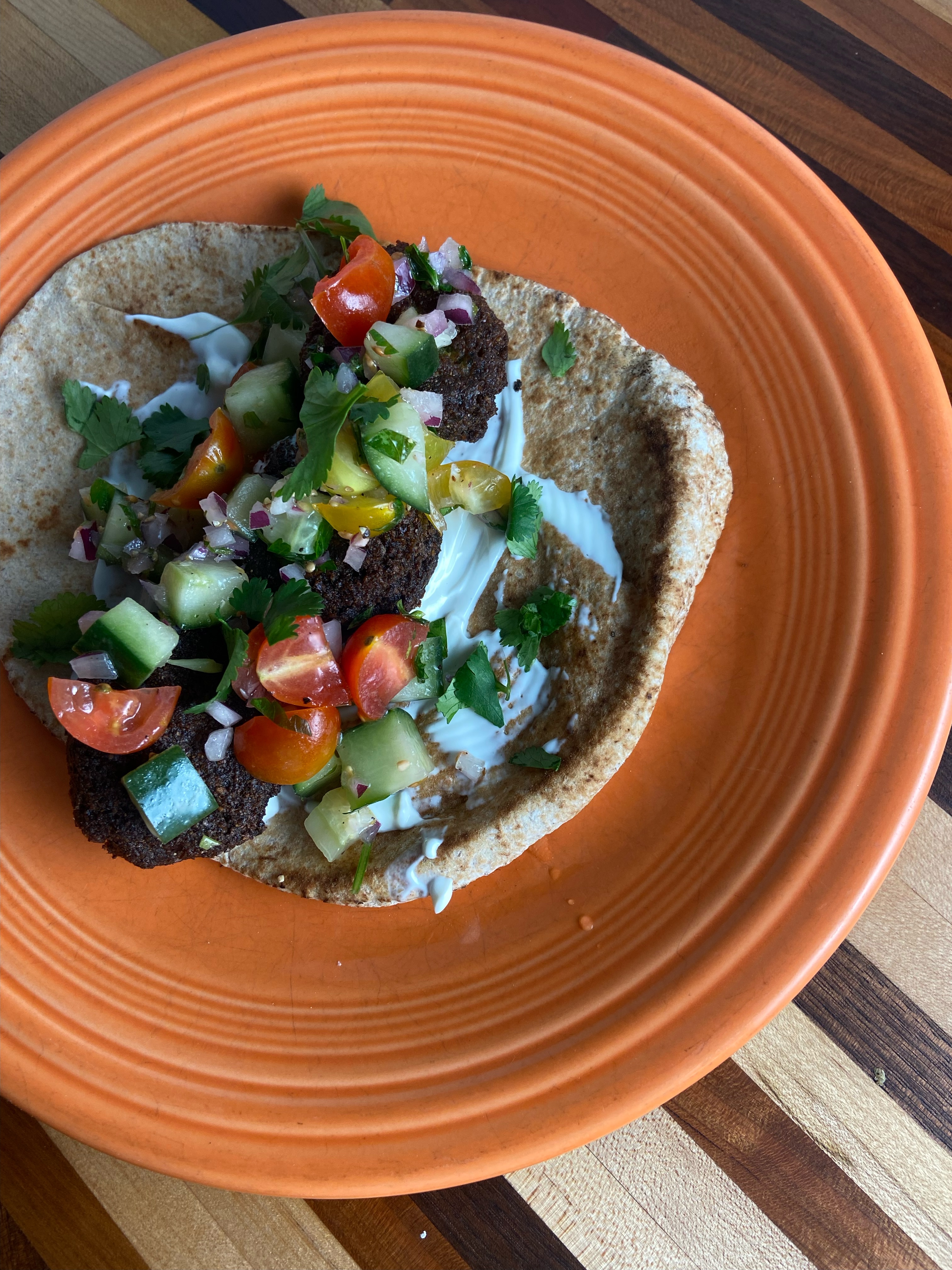
Ok, four paragraphs wasn’t so bad! Here’s how we made the falafel. I included a recipe for a tomato cucumber salad as well.

Delicious Falafel Mix

1 batch makes about 25 falafel patties

Ingredients for the chickpeas (enough for 2 batches of falafel):

  • 2 quarts water
  • ½ teaspoon baking soda
  • 1 pound dry chickpeas

Ingredients for the falafel:

  • ¼ of a leek, roughly chopped
  • 1 pound of soaked chickpeas (NOT CANNED OR COOKED), fully drained
  • ¼ cup fresh cilantro, roughly chopped
  • ¼ cup fresh parsley, roughly chopped
  • 1 celery stalk, roughly chopped
  • ¼ cup chopped onion
  • 2 cloves garlic, roughly chopped
  • Squeeze of fresh lemon
  • 1.5-2 teaspoons salt (or to taste)
  • ½ teaspoon ground pepper
  • 2 tablespoons ground coriander
  • 1 tablespoon cumin
  • A pinch of ground allspice
  • 2-3 tablespoons chickpea flour
  • ⅛ teaspoon baking powder
  • ⅛ teaspoon baking soda
  • Cooking oil, for frying

Directions:

The day before you want to make falafel, you’ll need to start soaking the chickpeas. Fill a pot with the water and add the baking soda. Add the chickpeas, cover, and soak them 12-18 hours. Drain and store in the fridge or freezer until ready to make your falafel.

On falafel day:

Soak the leek pieces in water to remove any grit. Put the leeks and chickpeas in a salad spinner and spin to remove as much water as possible.

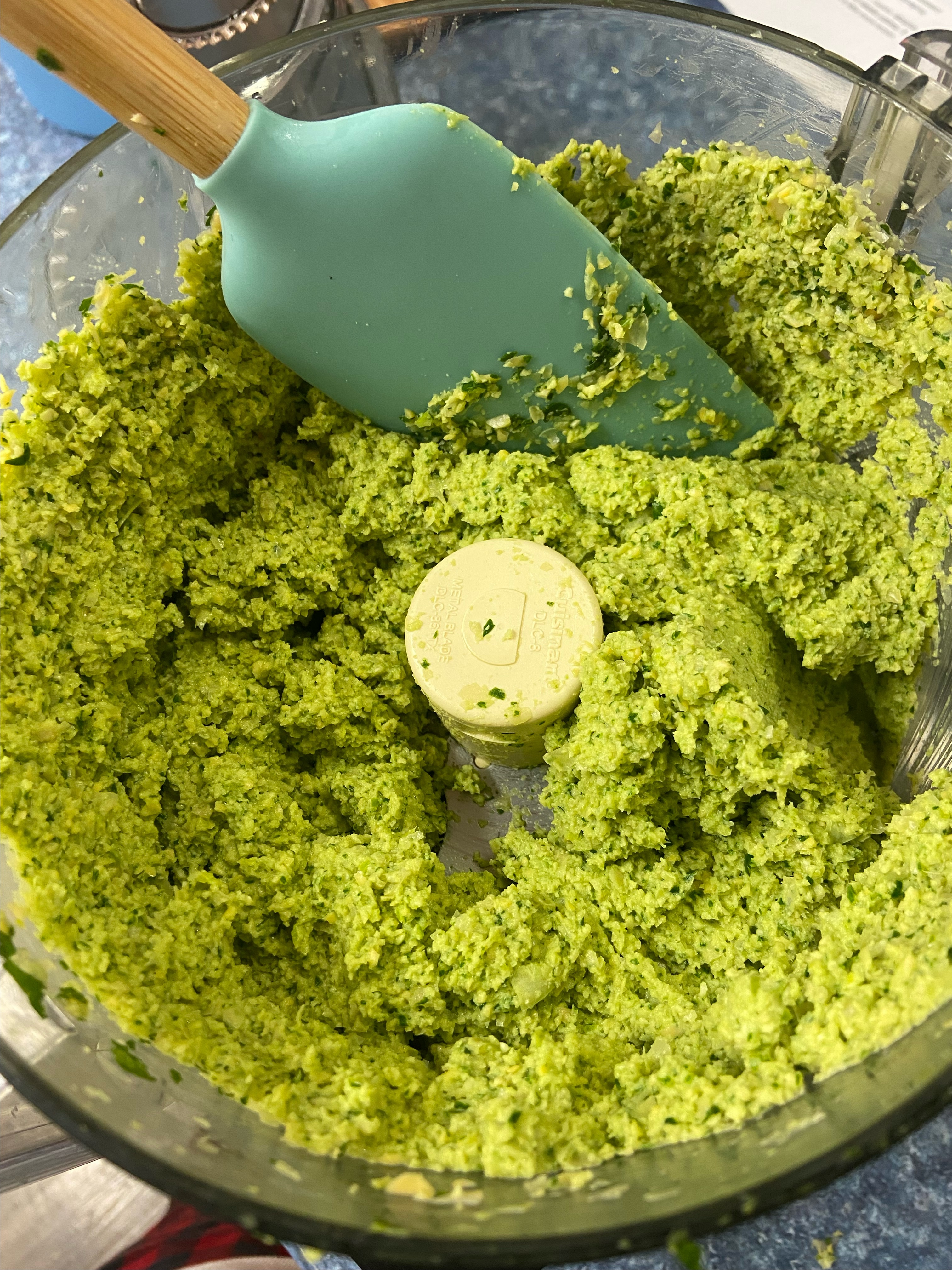
Place the leeks, chickpeas, cilantro, parsley, celery, onion and garlic in a food processor and pulse it until it is paste-like, scraping down the sides with a rubber spatula often.

Place mixture in a bowl and add the lemon juice, salt, pepper, coriander, cumin, allspice, chickpea flour, baking powder and baking soda. Mix well and form into falafel patties. If mixture is too moist, add a little more chickpea flour. If too dry, add a little more lemon juice. The falafel should be sort of wet but should hold together without bits falling off. 

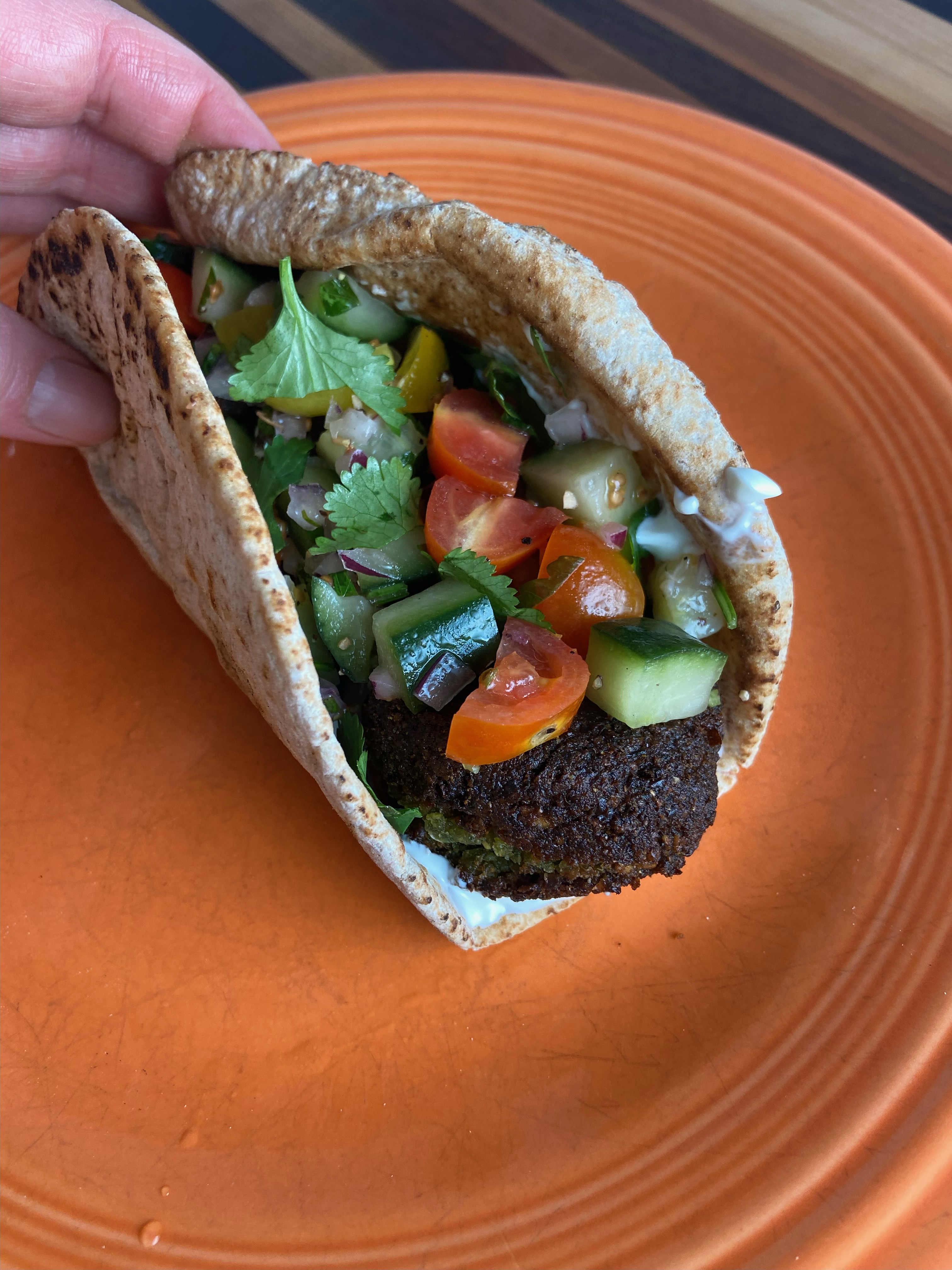
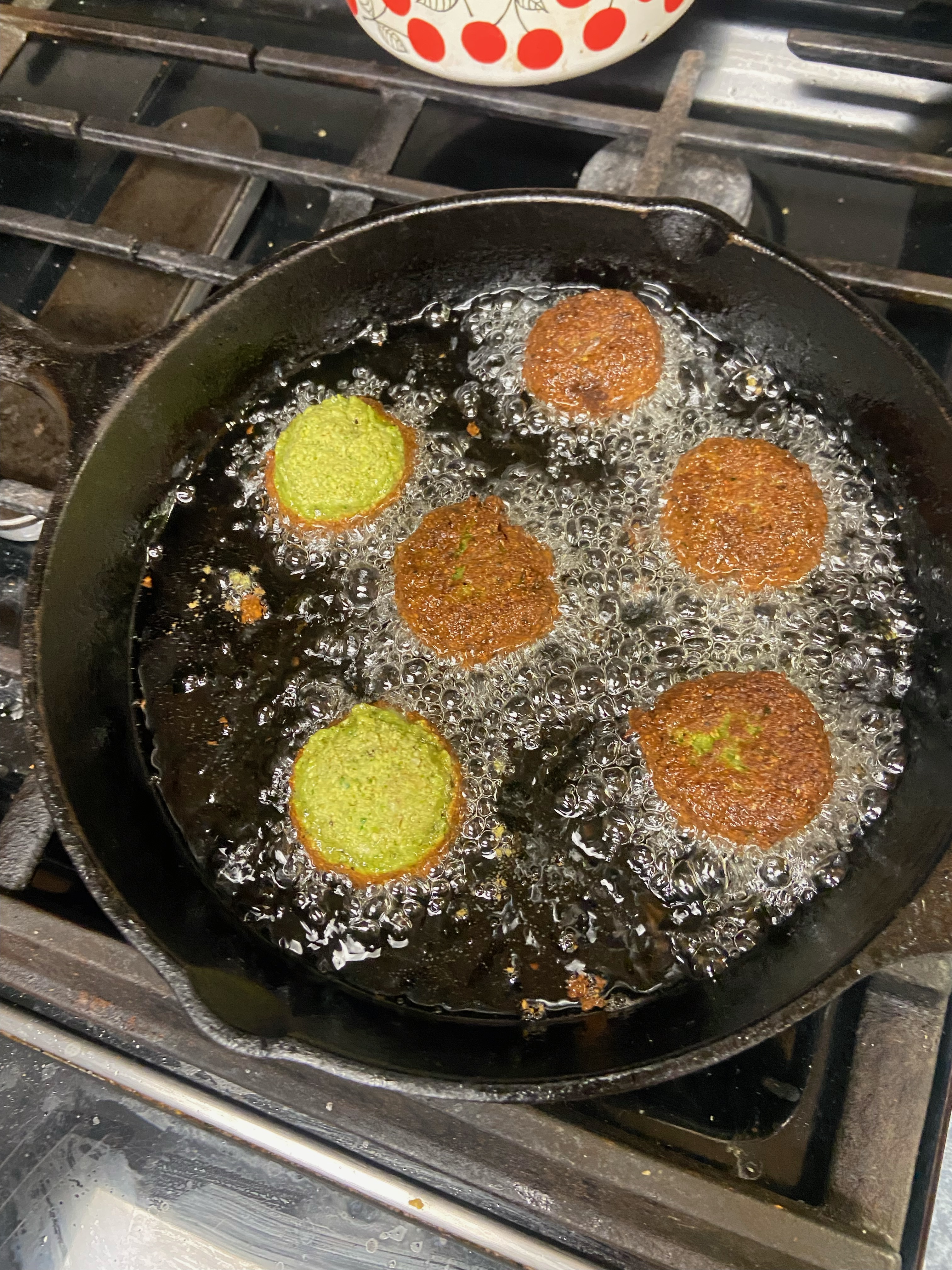
Heat a half inch of oil in a cast iron skillet till about 350F. Fry 6-8 falafel at a time so as not to bring down the heat of the oil. Fry till crispy and dark brown, about 2-3 minutes on each side. Place on a paper towel-lined sheet pan. Serve with all the falafel fixins.

Tomato and cucumber salad

Ingredients:

  • 2 roma tomatoes or 15 cherry tomatoes, diced
  • Half an English cucumber, diced
  • ¼ cups minced red onion
  • 2 tablespoons chopped parsley
  • 1 tablespoon garlic infused olive oil (or plain olive oil)
  • Juice of half a lemon
  • Salt and pepper to taste

Directions:

Combine all the ingredients and place in fridge until ready to serve.

Guest Post: Jack’s Lemon Cherry Bread

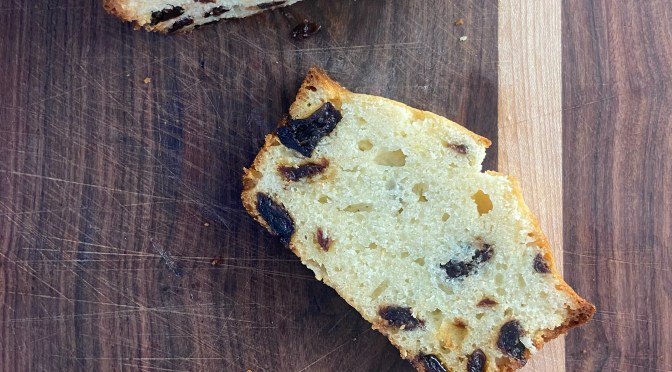
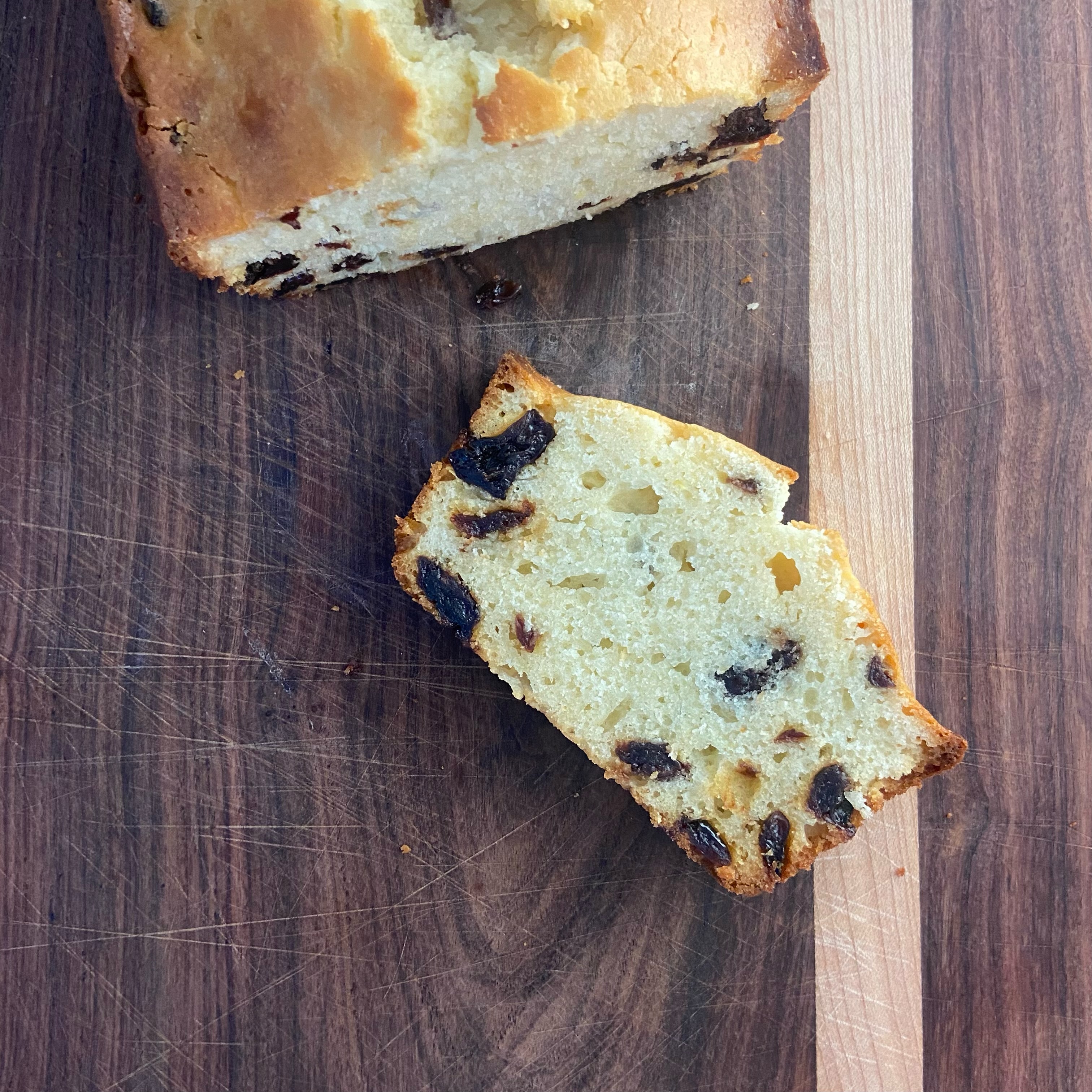
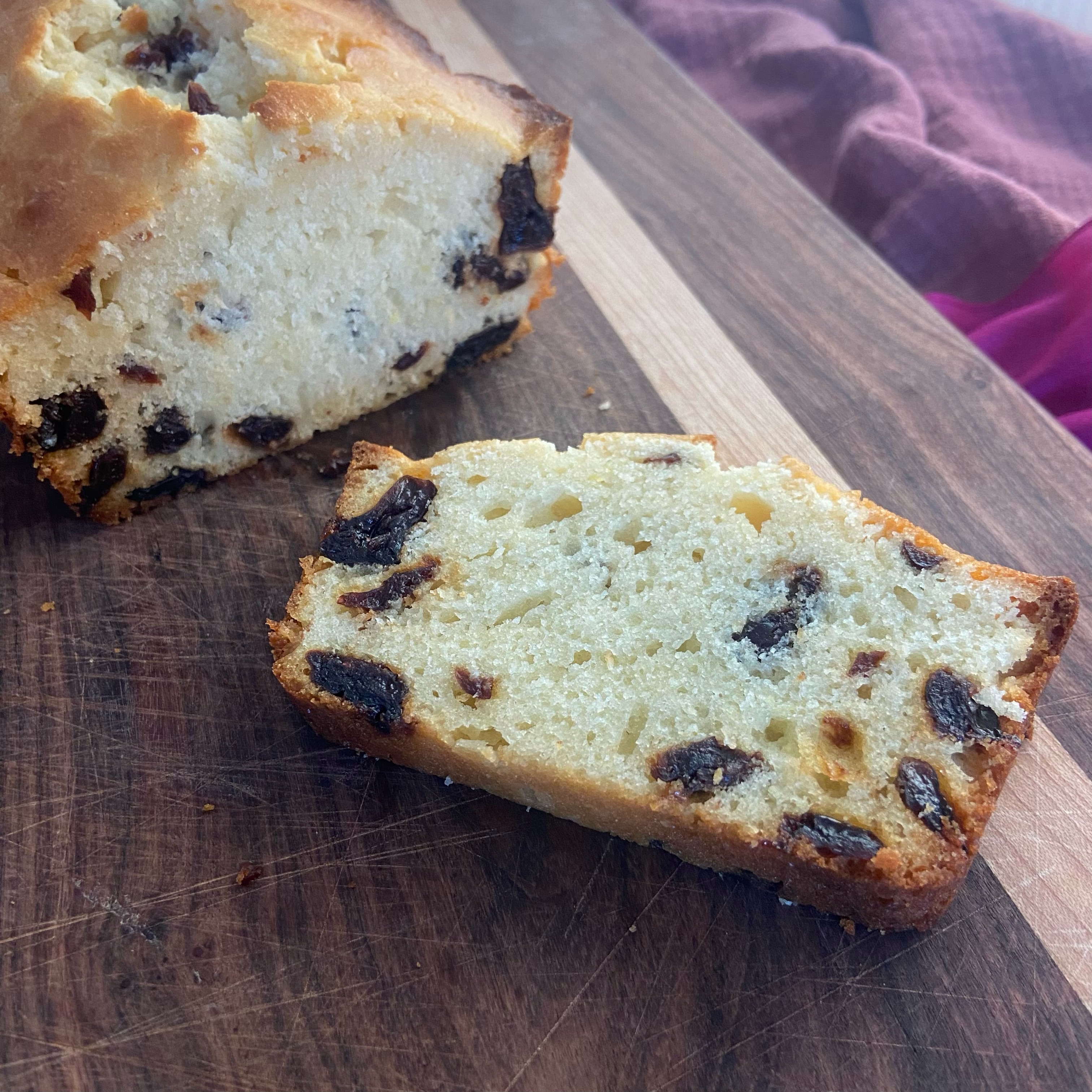
My son is becoming quite the cook. Over the winter break he did some baking, so I asked him to write down the recipe for his most recent quick bread, inspired by a different Natasha cook of Natasha’s Kitchen.

This simple bread has a lovely hint of lemon flavor that pairs perfectly with the dried tart Montmorency cherries we always buy from Costco.

Lemon Cherry Quick Bread

Makes 1 loaf

Ingredients:

  • ¾ cup + 1 teaspoon granulated sugar, divided
  • 1 teaspoon honey
  • 1/4 cup milk
  • Zest of 1 large lemon
  • 1/4 cup lemon juice, freshly squeezed
  • 1 1/2 cups + 1/2 tablespoon all-purpose flour, divided
  • 1 teaspoons baking powder
  • 1/4 teaspoon salt
  • 6 tablespoons unsalted butter, softened
  • 2 large eggs
  • 1 cup dried cherries

Directions:

Preheat the oven to 350F. Butter a glass loaf pan then dust with flour, tapping out the excess flour.

In a measuring cup, combine 1 teaspoon sugar, honey, milk, lemon zest, and lemon juice. Set aside.

In a medium mixing bowl, whisk together the 1 1/2 cups flour, baking powder, and salt. Set aside.

In a large mixing bowl, cream the butter and granulated sugar on medium/high speed, about 3 minutes. Beat in the eggs, mixing until well incorporated.

Add flour mixture in 2 parts, alternating with the milk mixture and mixing on medium/low speed just until incorporated with each addition. Scrape the sides of the bowl with a spatula as needed.

    Coat the dried cherries in the 1/2 tablespoon of flour and add to the batter just until incorporated. Spread the batter into your prepared pan and bake for 50-60 minutes until golden on top and a toothpick inserted into the center comes out clean. Let cool in the pan for 10-15 minutes then transfer loaf to a cooling rack.

    Lasagna Beans!

    Once again it was 5 p.m. and I was faced with the dilemma of what to make for dinner in a hurry that isn’t pasta. Yesterday on Facebook I was recommended this New York Times recipe, but due to a paywall I wasn’t able to view it so I decided to see what I could come up with.

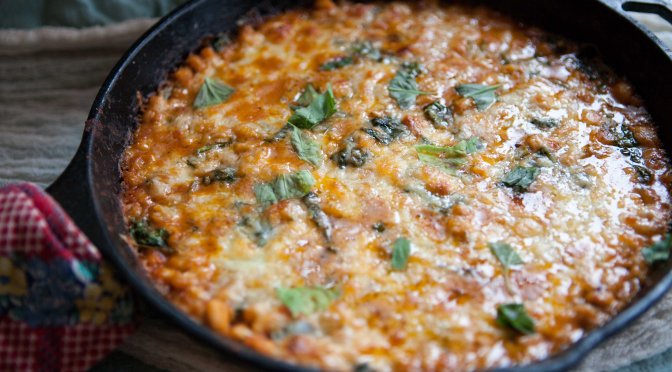
    Using items commonly found in my pantry, I whipped together a one-pan dish that has all the notes I crave from lasagna but without the labor and carbs. This is a flexible recipe. If you wanna add some crumbled Italian sausage, go for it. If you want some spice, add dried chili flakes. But no matter what, this dish is sure to be a family favorite.

    Lasagna Beans – a super quick recipe to satisfy that pasta craving

    Prep/cook time: 20 minutes
    Serves: 4

    Ingredients:

    • 1 tablespoon olive oil
    • 2 garlic cloves, minced
    • 3/4 cup marinara sauce
    • 2 packed cups of fresh baby spinach
    • 2 cans white beans, drained
    • 1/4 cup pre-made pesto sauce
    • Salt and pepper, to taste
    • 2/3 cup shredded mozzarella
    • 1/2 cup grated parmesan
    • Fresh basil, for serving
    • Crusty bread, for serving

    Directions:

    Preheat oven to 450F. While the oven is heating, place a medium cast iron pan over medium-high heat and add the olive oil. Toss in the garlic, turn heat to medium-low, and cook until garlic is golden brown, about 2 minutes. Add the marinara and baby spinach, turn to medium-high, cover, and cook until spinach is wilted, about 3 minutes. Stir in the beans, pesto, and salt and pepper. Cook until it starts to bubble. Evenly sprinkle on the cheeses.

    Place the pan into the preheated oven and bake for 8 minutes, or until bubbling. Turn on the broiler and let broil until the cheese starts to brown, just 1-2 minutes. Remove from oven and sprinkle with torn pieces of fresh basil. Serve with slices of toasted crusty bread.

    Marinated Ramen Eggs

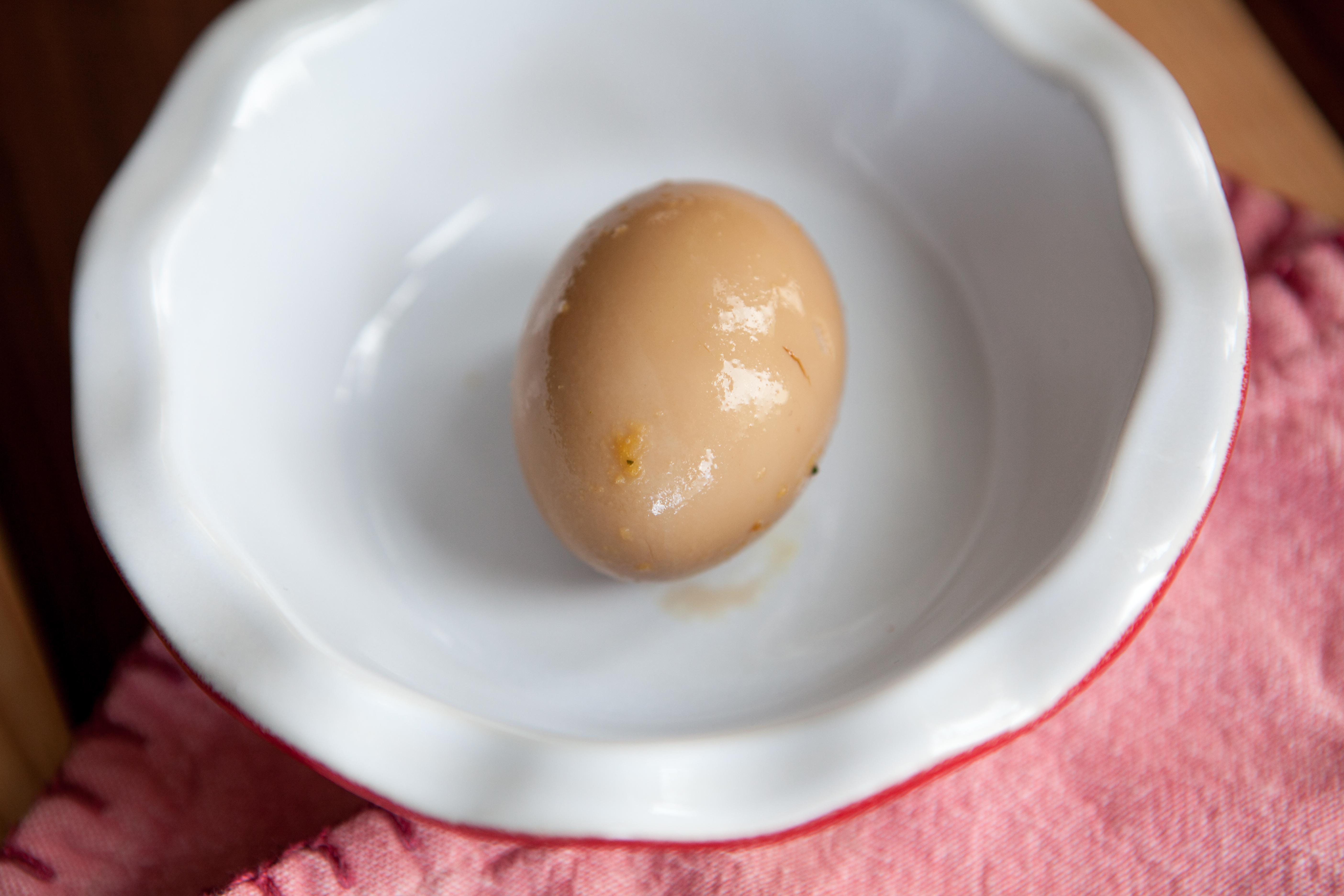
    I am high-key obsessed with the jammy eggs that come in ramen. So much so, that I started making them on the regular and not even putting them in ramen. I’m just snacking on them. The simple marinade penetrates the white of the egg and infuses the whole egg with umami flavor.

    Thanks to Uncle Roger for the tip on how to keep the floating egg parts submerged! You know when your eggs are properly marinated when they are brown all over and when you cut them open you can see the marinade has gotten inside the eggs.

    I’m a bit like a kitchen witch when it comes to marinated eggs. Below is an approximate recipe I use, but it’s really “a little bit of this and a little bit of that” kind of a process. If you don’t have all of the ingredients below, that’s ok! Some soy sauce, water, vinegar and sugar would probably also do the trick.

    Marinated Jammy Eggs for ramen or for snacking

    Makes 4-6 eggs

    Ingredients:

    • 4-6 eggs
    • 1/4 cup soy sauce
    • 1/4 cup chicken stock
    • 1 tablespoon dark soy sauce
    • 1 tablespoon oyster sauce
    • 1 tablespoon rice vinegar
    • 1 tablespoon sambal oelek (optional)
    • 1 tablespoon sake
    • 1 tablespoon mirin
    • 1/2 teaspoon MSG
    • 1 teaspoon sugar
    • 1 teaspoon toasted sesame oil
    • 1 green onion, chopped
    • 1-inch piece of fresh ginger, minced
    • 2 teaspoons miso paste

    Directions:

    Bring a medium pot of water to a boil. Gently lower in the eggs so they don’t crack and turn down the heat slightly so it’s not an aggressive boil. Boil for 6 minutes 30 seconds. This is my magic number to achieve not too runny and not too cooked eggs. If you like yours cooked more, boil them longer.

    Drain and place eggs in an ice bath till cool. In the meantime, combine all the marinade ingredients in a mason jar and whisk well so the miso paste breaks up.

    Peel the eggs and gently place them in the jar. Take a paper towel and place it on top of the eggs so it becomes saturated with the marinade. This will ensure that any parts of the egg that are floating will get marinated.

    Place in the fridge overnight. Enjoy your eggs the next day or the day after. The longer they marinate, the more flavorful they get. I don’t usually let them sit longer than three or four days (but they also don’t last that long).

    Colcannon Ravioli

    It’s St. Patrick’s Day and although I don’t really have much of a connection to this day, I thought it would be fun to serve something festive for dinner.

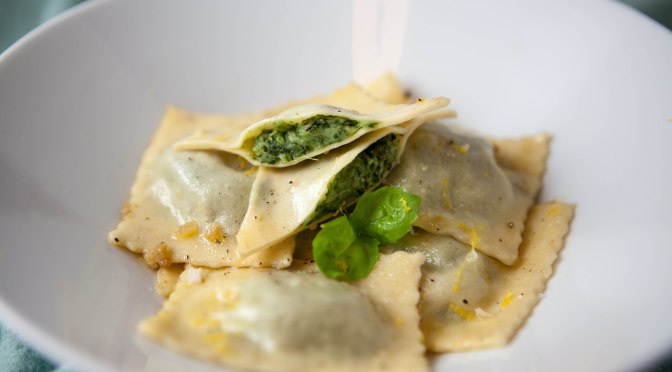
    I’ve made colcannon in the past, which is a traditional Irish potato dish with cabbage, and as I was leafing through an Alice Waters cookbook I saw a recipe for potato and spinach ravioli and I thought it would be the perfect dish for St. Patrick’s Day. I didn’t follow her recipe, but made up my own and after boiling the ravioli I sautéd them like pierogis.

    Spinach and Potato ravioli in a garlicky cream sauce

    Serves 4

    Ingredients

    For the pasta dough:

    • 225 grams 00 flour
    • 75 grams fine semolina flour
    • 3 eggs
    • 1 teaspoon olive oil

    For the filling:

    • 1 pound potatoes, any variety (I used a combination of russet, new potatoes and fingerling)
    • 8 ounces frozen spinach, thawed and squeezed dry
    • 1/3 cup grated Parmesan cheese
    • 1 tablespoon butter
    • 1/4 cup cream, divided
    • salt and pepper, to taste

    For the sauce:

    • 1 tablespoon olive oil
    • 1 tablespoon butter
    • 2 cloves garlic, minced
    • 1/4 cup cream
    • salt and pepper, to taste
    • zest of 1 lemon

    Special supplies:

    • Small food processor or immersion blender
    • Potato ricer (you could use a potato masher but it won’t be as smooth)
    • KitchenAid pasta roller adapter (or a hand cranked version would work too)
    • Ravioli cutter (or a pizza cutter would work)
    • Shot glass
    • Large spider strainer (a slotted spoon would work)

    Directions:

    1. In a large bowl or on a clean, dry countertop, combine the flours. Make a well in the center and add the eggs and olive oil. Whisk the eggs and oil till scrambled, slowly incorporating the flour. Mix into a rough ball and knead for 10 minutes. Wrap in plastic wrap and set aside for at least 30 minutes.

    2. Meanwhile, peel the potatoes and cut them into roughly the same sized pieces. Boil in salted water until tender, about 10-15 minutes. Place the squeezed spinach and 2 tablespoons of cream in a food processor and run it till the spinach is puréed. You may need to add a little more cream to get it going. When the potatoes are done, drain them and press through a potato ricer into a medium mixing bowl. Add the spinach, Parmesan, butter, remaining cream and salt and pepper. This should be a relatively homogenous consistency. Add more cream if necessary to make it smooth. Place mixture in a gallon zip top bag and refrigerate until cool.

    3. Time to assemble the ravioli. Tear a small handful of dough away from your pasta ball and flatten it with your hand. Set the pasta roller on the largest setting and run the dough through. It’s ok if it tears apart a little. Roughly fold the dough into thirds and run it through again on the same setting. Repeat this three or four times until your dough is smooth.

    4. Adjust the roller to the next thinnest setting and run the dough through once. Repeat this step making the roller thinner each time until you’ve run it through the thinnest setting.

    5. Place the sheet of dough on a clean counter top. With a ravioli or pizza cutter, cut the sheet in half, across the width, not the length.

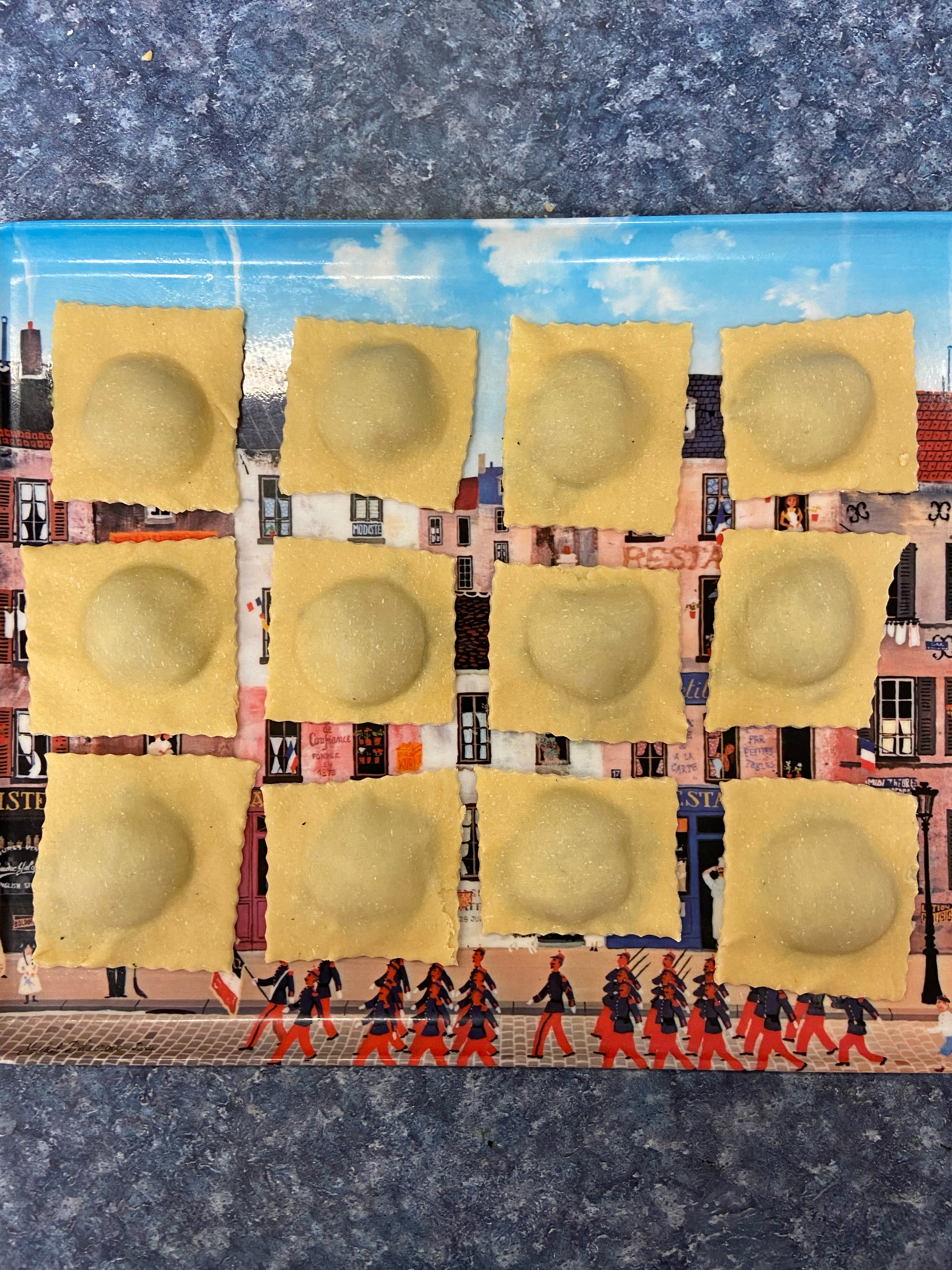
    6. Cut a hole in the corner of the bag containing the filling and place about 1 teaspoon of filling on one half of the pasta sheet. Repeat so you have them evenly spaced on the dough, about 6-8 on the sheet. Place the other half of the dough on top and gently press the air out between the sheets without smashing down the filling. Use a shot glass to center the filling and lightly press down (don’t cut through the dough with the shot glass). This makes the ravioli look more uniform.

    7. Use your ravioli cutter to cut out 6-8 ravioli. Pick up each ravioli and make sure the edges are sealed. Pinch any areas that look separated. Place on a semolina lined tray. Cover with foil.

    8. Repeat steps 3-7 with the remaining dough and filling.

    9. Bring a large pot of well-salted water to a boil. Just before the water is boiling, place a large sauté pan over medium-high heat and add the olive oil and butter. Add the garlic and cook till fragrant, turning down the heat to prevent the garlic from burning, about 1 minute. Add the cream, stir, and turn off the heat while you cook the ravioli.

    10. Add the ravioli to the boiling water, gently stirring with a spider strainer. Boil the ravioli for 3-5 minutes, until al dente. Remove one ravioli and cut off a corner to see if the dough is cooked to your liking.

    11. Heat the sauté pan again over medium-low heat. Remove the ravioli from the water using the spider strainer, give it a good shake to remove excess water, and place into the sauté pan. Gently toss the ravioli till they are all coated with the sauce. Add salt, pepper and lemon zest to taste. You could either serve right away or continue cooking the ravioli until they ever so lightly brown, like pierogis.

    12. Serve the ravioli with a drizzle of cream and a grind of pepper.