Category Archives: Tutorials

Thrift Store Skirt Refashion — Free Tutorial

Floral prints are all the rage these days and I’m always finding skirts at the thrift store that have pretty patterns, but they are just too long for my stumpy legs.

You’ve probably come across these types of skirts — they are from the ’90s, ankle-length and look as though a church lady might wear them.

If you have basic sewing skills it’s pretty simple to shorten a skirt to a more youthful length. It only took me 45 minutes and I went from bake sale mom to hipster mom for $2.50. You can too!

Thrift Store Skirt Refashion -- go from bake sale mom to hipster mom in less than an hour!

Materials:

One thrift store skirt in your size

Ruler

Straight pins

Chalk or pencil

Fabric scissors

Sewing machine

Iron

Thrift Store Skirt Refashion -- go from bake sale mom to hipster mom in less than an hour!

Step 1: Iron your skirt if it needs it.

Step 2: Determine how much length you’d like to cut off. I wanted the skirt to fall just above my knees, which was about 10.5 inches from the original hem. I subtracted 1.5 inches to account for the new hem. For me, 9 inches was how much I needed to remove.

Thrift Store Skirt Refashion -- go from bake sale mom to hipster mom in less than an hour!

Step 3: If your skirt has buttons down the front, unbutton it and lay it flat, wrong side up. With a ruler and chalk or pencil go along the bottom of the skirt and mark 9 inches all around. I didn’t do this accurately at all and it still worked out fine. My skirt had a slight arc to it so I eyeballed it here and there.

Step 4: Cut along the measurement lines you made.

Thrift Store Skirt Refashion -- go from bake sale mom to hipster mom in less than an hour!

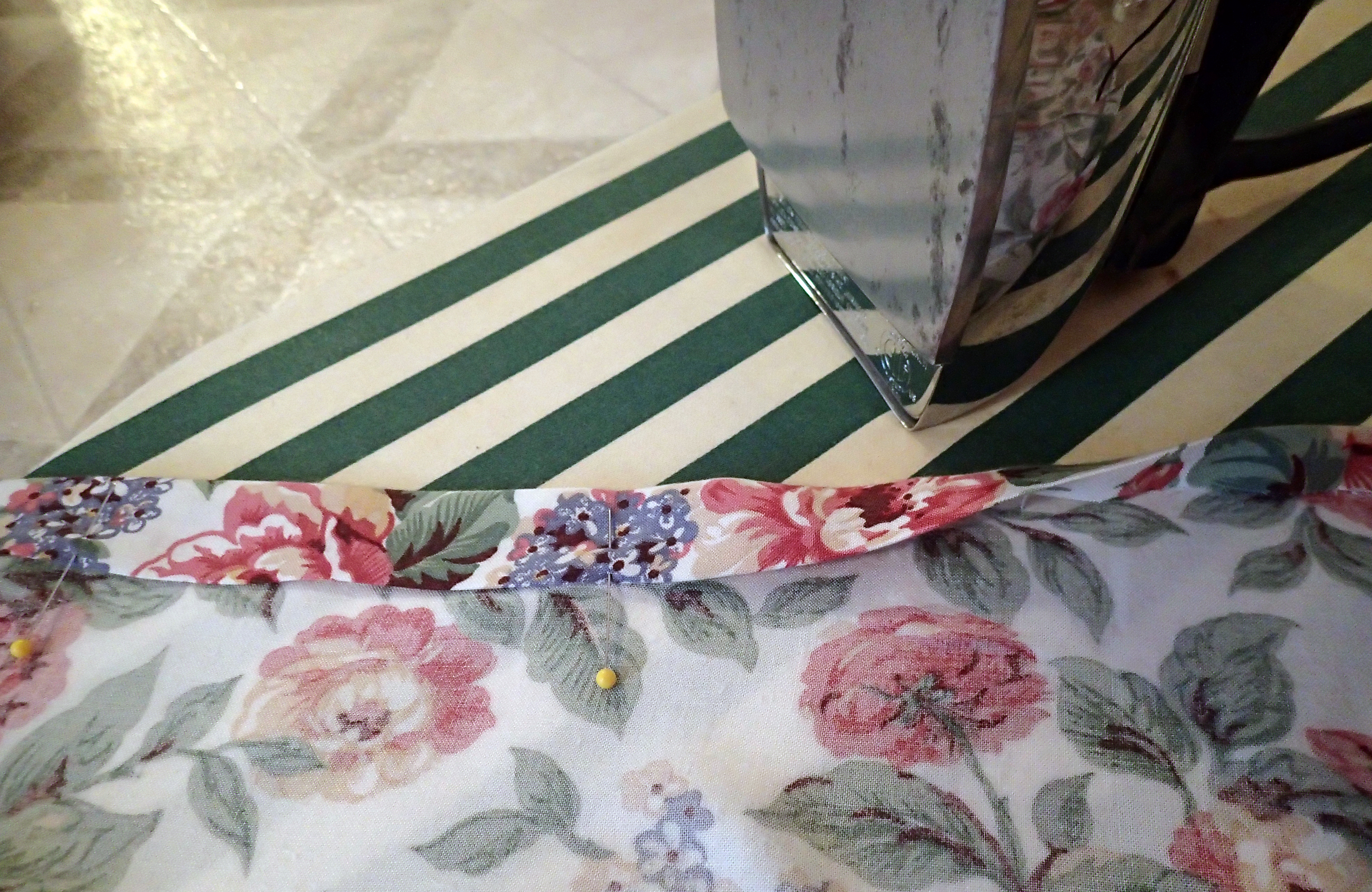
Step 5: With your iron, turn under 1/2 inch from the edge all across the skirt.
Thrift Store Skirt Refashion -- go from bake sale mom to hipster mom in less than an hour!

Step 6: Turn under 1 inch all around and iron down, pinning as you go. *NOTE* if your skirt buttons in the front, make sure your ends match in the front. Mine were really off so I had to re-iron and eyeball it till it worked. Doesn’t need to be perfect, especially if it’s a flowing skirt. No one will notice if the back is slightly shorter than the front.

Thrift Store Skirt Refashion -- go from bake sale mom to hipster mom in less than an hour!

Step 7: Sew a seam along the hem 3/4 inches from the folded edge, backstitching at the beginning and end.

Step 8: Trim all threads and run an iron along the hem one last time.

Step 9: Put on your skirt and admire your crafty awesomeness.

Thrift Store Skirt Refashion -- go from bake sale mom to hipster mom in less than an hour!

Quick craft: Soda Bottle Kitty Planters

This was a perfect crafting weekend. Between family dinners and birthday parties my friend Kelly and I had just enough time for small crafts.
I’ve been hauling around some two liter soda bottles in my car for several weeks with the intention of creating kitty planters I saw on Recycleart.org (original post from Brudiy.com).

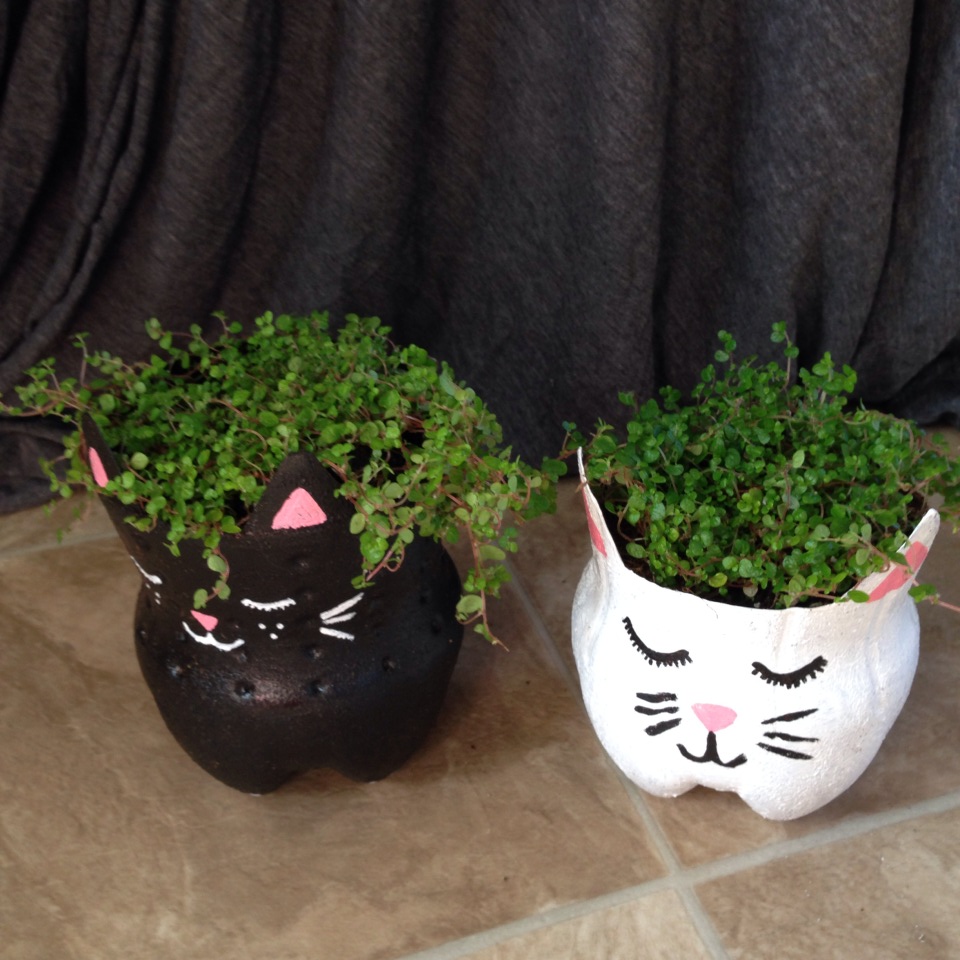
It took no time at all to cut the bottle to shape, paint it and plant some lovely soleirolia in it. Here’s our version.

Quick craft: Recycled soda bottle kitty planters. Irresistibly cute from Alaska Knit Nat

Materials:

one, two-liter soda bottle

scissors

permanent marker

acrylic paints in black, white and pink

paintbrushes

glossy finish spray (optional)

small plant

extra soil for planting

Quick craft: Recycled soda bottle kitty planters. Irresistibly cute from Alaska Knit Nat

Directions:

With sharp-tipped scissors, cut the top off of your bottle. Also poke some drainage holes in the bottom if you think of it. Clean and rinse the bottle. Note how deep your potted plant is to determine how tall your bottle planter should be. Also note where the “paws” are to determine where to place the ears. I didn’t think to do this so the black cat looks like his head is turned to the side, which is OK with me. With a Sharpie, draw the cat’s ears on the bottle. Cut around the ears and the back of the bottle. It should now look like a clear cat shape.

Paint two coats of desired base color on the outside of the bottle. Place your fist inside the bottle to make it easier to paint all around. Hold it up to the light to see if you missed any spots. I used a sponge brush and dabbed all over to give it more texture and eliminate any brush strokes. Let fully dry.

Paint on the ears and nose in pink. Paint the eyes and whiskers. Let fully dry.

Spray on an even coat of glossy finishing spray. I only did this because I was afraid watering the plant might cause the paint to chip over time. It’s probably not necessary. Let gloss dry.

Quick craft: Recycled soda bottle kitty planters. Irresistibly cute from Alaska Knit Nat

Place a plant of your choice in your kitty and enjoy how irresistibly cute it is.

Quick craft: Recycled soda bottle kitty planters. Irresistibly cute from Alaska Knit Nat

Homemade ABC Book — Free Tutorial

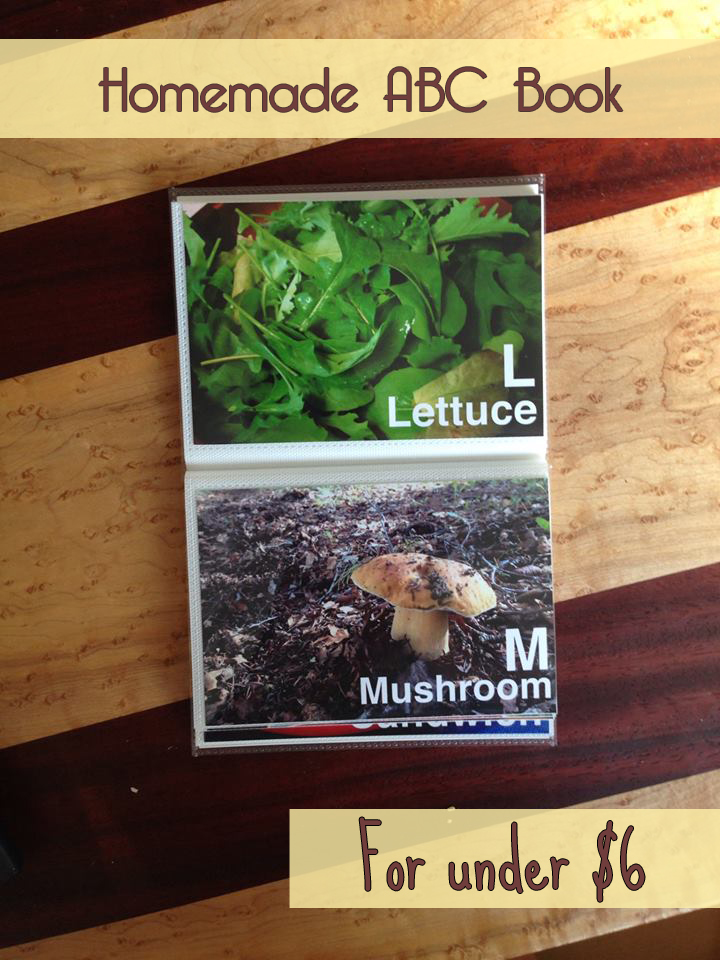
My son is starting to pick up on the alphabet and lately he’s been into ABC books. I was browsing Pinterest and came across a great idea. A homemade ABC book using personal photos.

With some basic Photoshop skills and a trip to Walgreens and Michael’s Crafts I was able to make a fantastic photo book for only $5.50.

Homemade ABC Book -- Free Tutorial

You can use phone, Instagram or digital camera photos as long as you size them well. I’m a self-taught Photoshop gal. Here’s a step-by-step guide to how I made my book, but I’m sure my techniques are not exactly textbook methods — but they work!

Homemade ABC Book -- Free Tutorial

Step 1: Open your image in Photoshop. I encourage you to make all your photos the same resolution — one of a printable quality — so that they all look more uniform. My personal photos come in several different sizes and resolutions depending on what camera I used. I made them all the same so the font size would be the same on each photo. A 140 pt. font on a 180 dpi resolution will look a different size from 140 pt. on 300 dpi.

Homemade ABC Book -- Free Tutorial

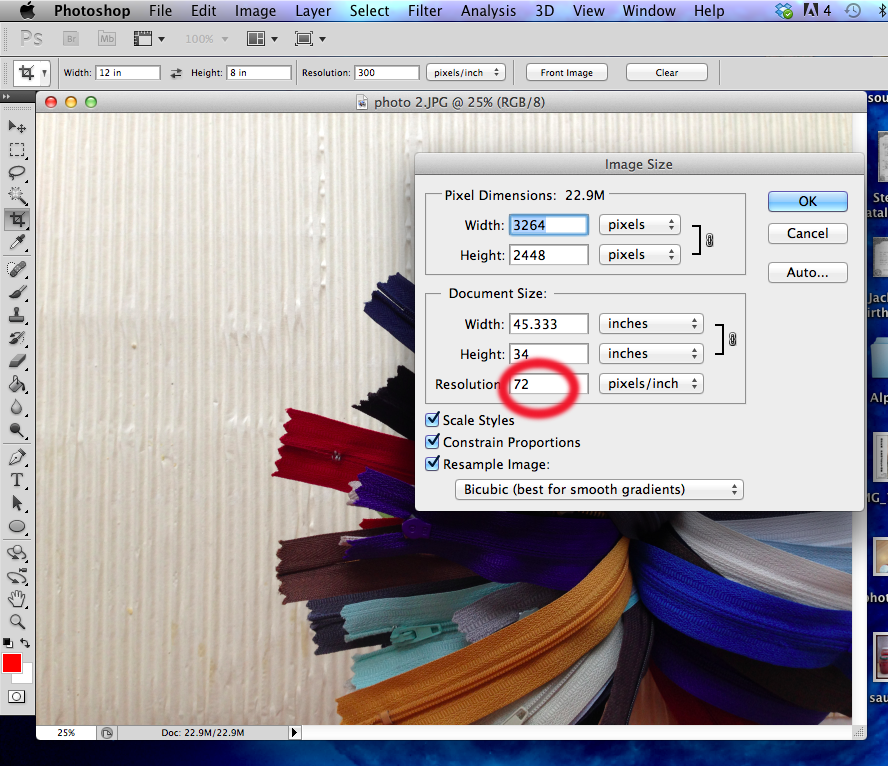
Step 2: Go to Image<Image size and take a look at the size of your photo. If the dpi is 180 or more, you’re good to go. Most of my Instagram and iPhone photos are really low resolution, such as 72 dpi, but really large in dimension, such as 45 inches wide. If you were to just resize the photo and leave a low resolution they wouldn’t print well.

Homemade ABC Book -- Free Tutorial

Step 3: Click the crop tool and enter the dimension and resolution you want for the photo. I selected 12×8 with 300 dpi to maintain as much data in the photo as possible (it will print better this way). Crop the photo the way you would like it.

Homemade ABC Book -- Free Tutorial

Step 4: Make sure your background layer is unlocked (double click the little lock next to the layer name). Create a new layer. Choose the font you’d like. I selected Helvetica bold. Type in your letter. I used 140 pt. font. Add a new layer. Type the word you want. I used 90 pt. font. With the selection tool, position the letter and word where you’d like them. If your photo is dark consider making the letters white. Leave enough space between the edge of the photo and the words in case the printers cut the photo funny.

Homemade ABC Book -- Free Tutorial

Step 5: Save your photo as a .jpg and make 25 more!

Step 6: Upload your photos to a photo printing site such as Walgreens and print 26, 4×6 prints. Search for online coupons. I saved $1.50!

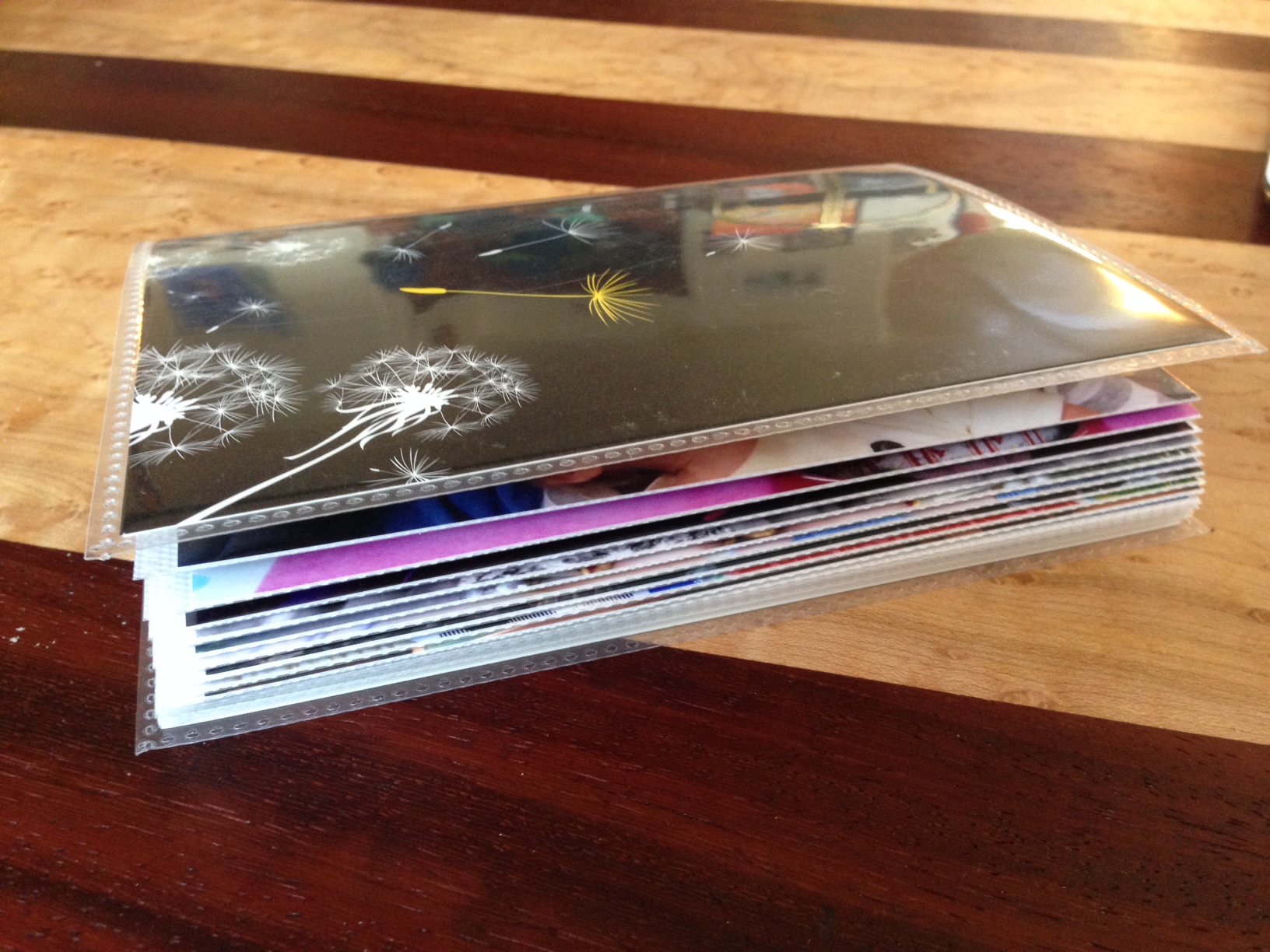
Step 7: Purchase a “brag book” at a craft store. It’s just a floppy plastic photo album that holds up to 36, 4×6 photos. I had a coupon for Michael’s so I saved $1!

I don’t think I need to explain the rest. But you’ll end up with a personal ABC book that hopefully your child will love. Our child already recognized several familiar people and objects in his book.

Homemade ABC Book -- Free Tutorial


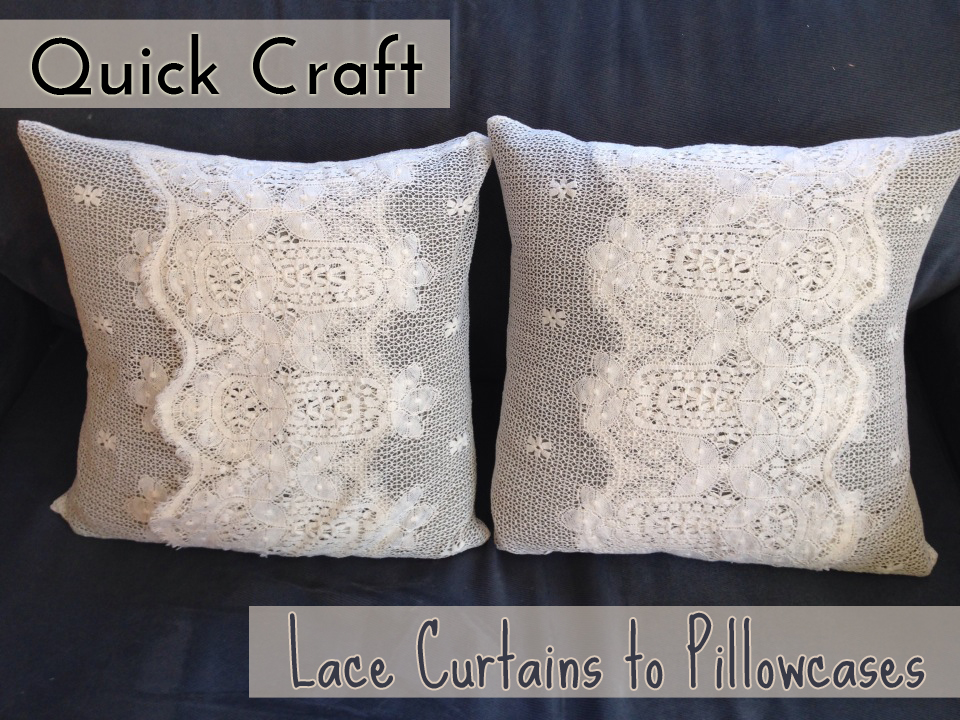
Quick Craft — Lace Curtains to Pillowcases

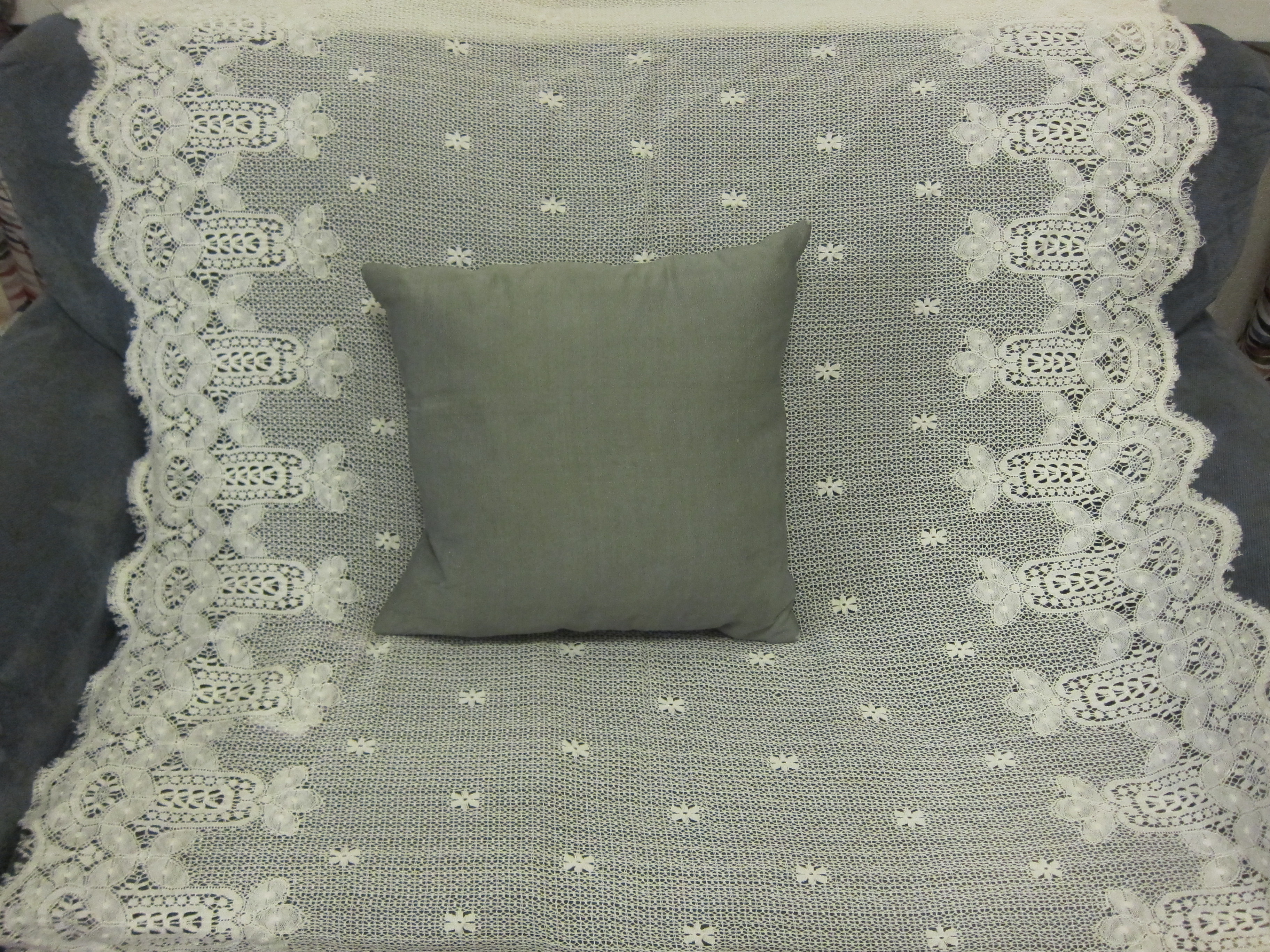
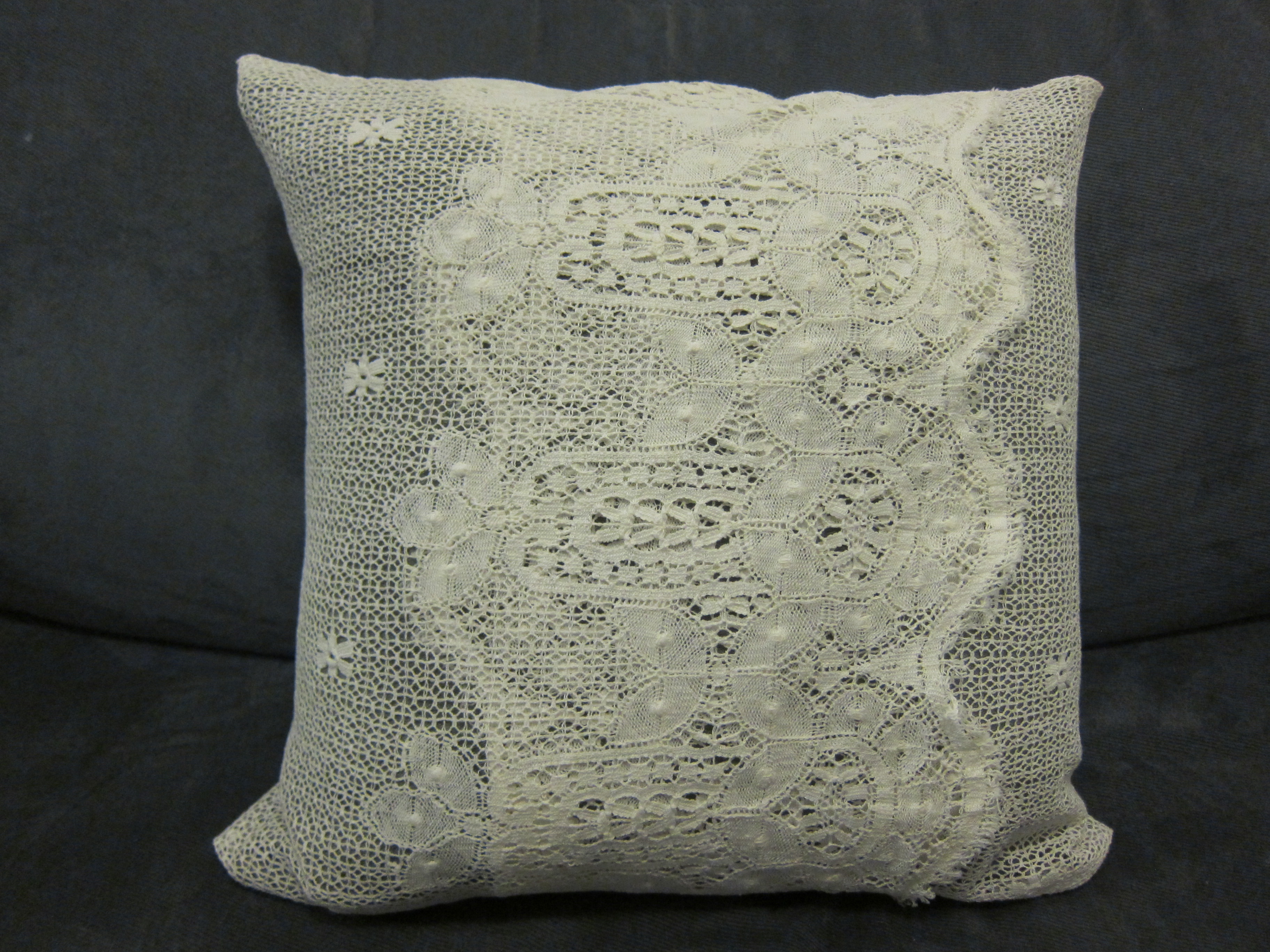
Our living room throw pillows needed an upgrade. At $20-30 a pop, I wasn’t about to buy two new ones, so I dug through my fabric stash and found an old lace curtain panel. Two cuts and four seams later I had a couple of gorgeous throw pillows. This was a great way to liven up my living room without breaking the bank. I just used the pillows we already had!

Quick Craft -- Lace Curtains to Pillowcase

Here’s how.

Materials:

1 lace curtain panel

2 square pillow forms

straight pins

sewing machine

Quick Craft -- Lace Curtains to Pillowcase

Directions:

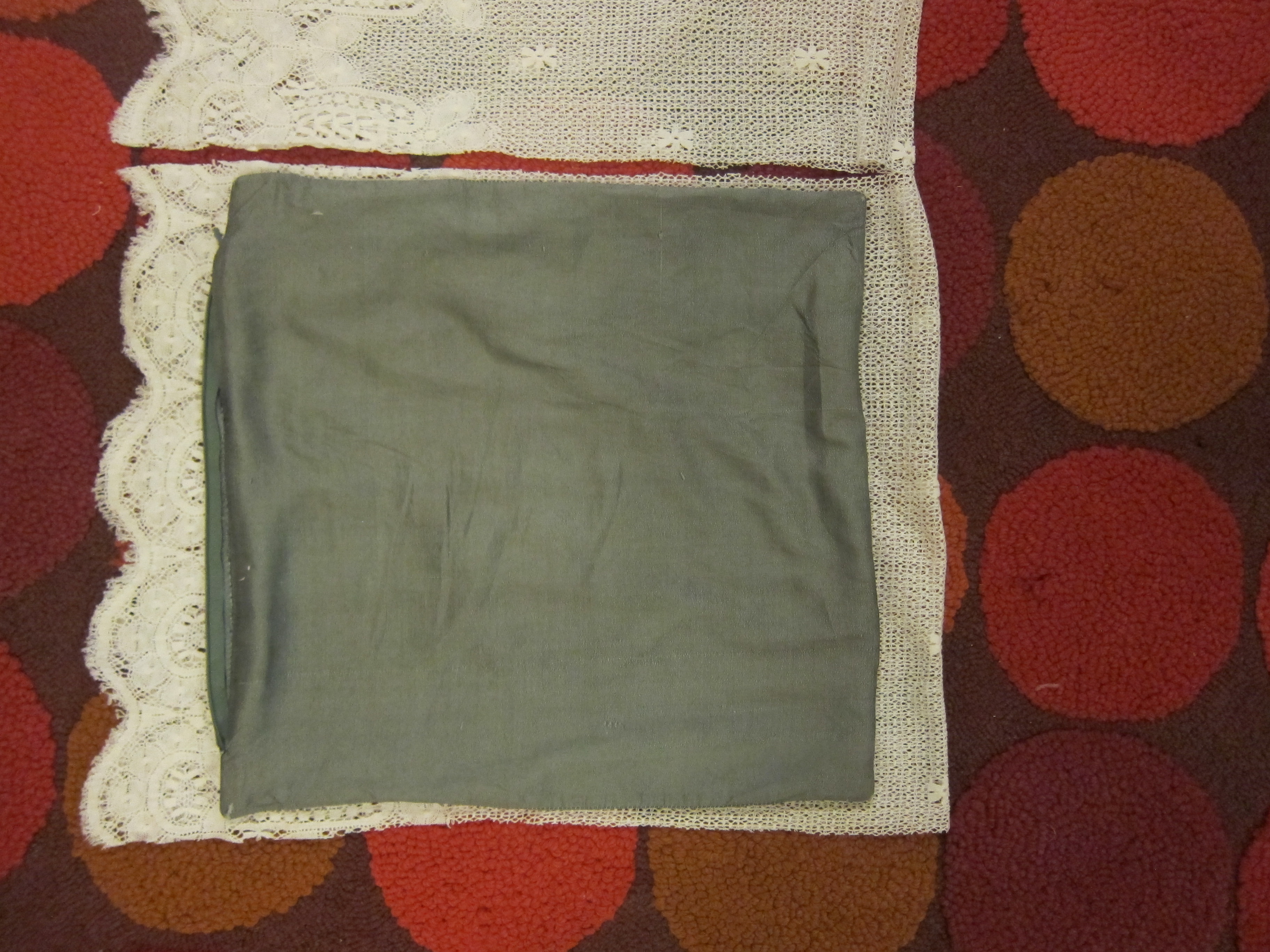
Lay out your curtain panel on the floor and place your pillow on top of it to measure how much fabric to cut. If you have a removable slip cover on the pillow already, then remove it and use the cover as a guide. Cut the curtain widthwise, leaving a half an inch of seam allowance on the top and bottom edge.

Quick Craft -- Lace Curtains to Pillowcase

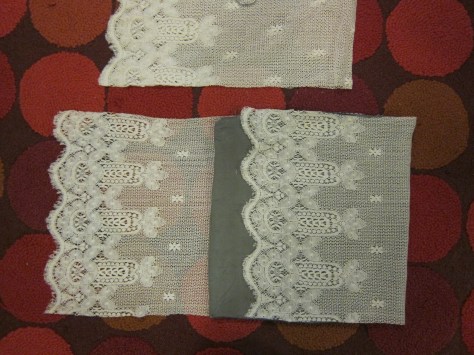
I made an envelope slip cover, but instead of the envelope being on the back side, like most throw pillows, it is on the front because the lace trim is already a finished edge and it looks so pretty overlapped.

Quick Craft -- Lace Curtains to Pillowcase

Lay your pillow on the long width of fabric and figure out how you want it to overlap. Fold one edge over the pillow and the other edge over. Mark where you folded and remove the pillow. Refold the lace and pin the raw edges in place.

Sew across both edges. Turn right side out and stuff your pillow inside. That’s it! Repeat with second pillow.

Quick Craft -- Lace Curtains to Pillowcase Quick Craft -- Lace Curtains to Pillowcase Quick Craft -- Lace Curtains to Pillowcase

Questions? Leave me a comment!

Quick Craft — Felt Christmas Tree

We recently put up our Christmas tree and I’ve discovered that my year-and-a-half-old son enjoys dismantling the lower part of the tree as often as possible.

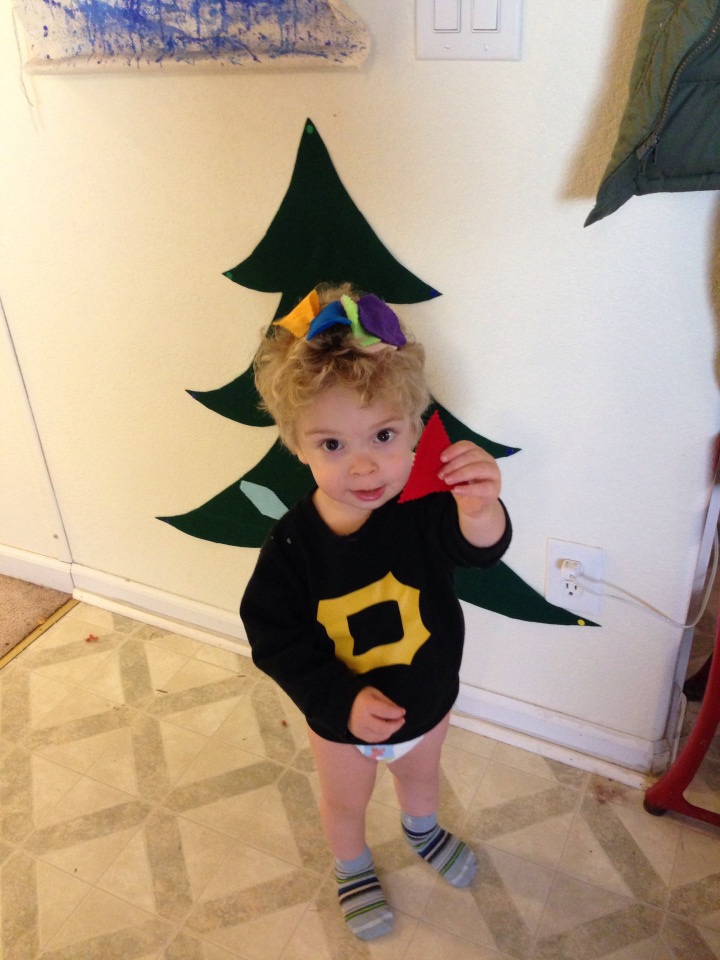
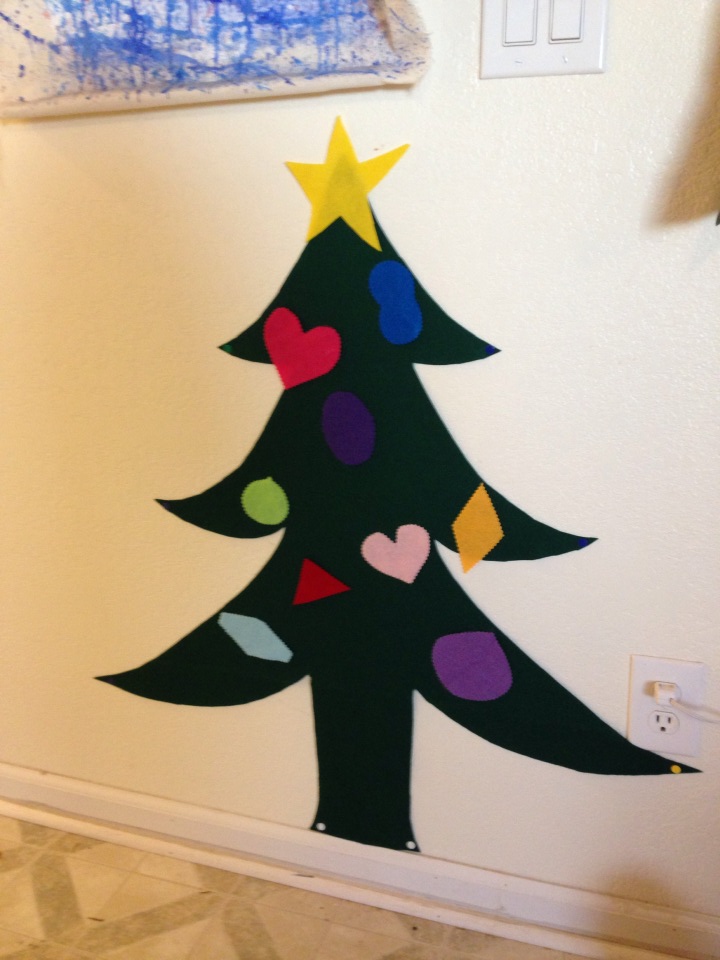
So I made him his own tree for about $5. His tree is 2-D, felt and has occupied about 30 minutes of his attention — which is a lot!

Quick Craft -- Felt Christmas Tree | Alaska Knit Nat

Here’s what you need:

1 yard green felt

chalk

scraps of felt in many colors

fabric scissors

masking tape

pinking shears (optional)


Directions:

Fold your green felt hotdog style and make half a tree shape along the fold. Cut out your tree shape and tape to a wall at toddler height.

Quick Craft -- Felt Christmas Tree | Alaska Knit Nat

Cut out various shapes from the other felt — hearts, diamonds, circles, ovals, stars, etc. Use pinking shears for decorative value.

Quick Craft -- Felt Christmas Tree | Alaska Knit Nat

Hand the shapes to your toddler and watch him go to town. The felt sticks to the felt.

Obviously not decorate by a toddler.
Obviously not decorated by a toddler.

The Easy Way to Line a Hat

I could knit hats all day, but ask me to line a hat and chances are I’ll never do it. Something about measuring a head, cutting out fabric and sewing it into a hat seems like way too much work.

I was recently deconstructing a cashmere turtleneck for another project and was trying to figure out how to use the turtleneck tube. Headband? Too ugly. Hat lining? Perfect.

The Easy Way to Line a Hat | Alaska Knit Nat

Here’s how to line a hat with minimal effort. Just some scissors, pinning and whip stitches.

What you’ll need:

An old turtleneck

Fabric scissors

A person’s head (not yours)

Straight or safety pins

Needle and thread

Directions:

Cut the tube of the neck away from the body of the sweater. I cut below the seam so it wouldn’t unravel over time.

Turn the tube inside out and put it on a head with the seam in the back.

Put the hat over the tube and line it up the way you’d like it (if there’s a seam to the hat, it should also be in back). Let the hat overhang the tube by 1/4 inch.

Pin the tube to the hat all the way around. This way it will remain stretched out as you sew it and won’t cause the hat to pucker.

Remove the tube and hat from the head and thank your head for its assistance.

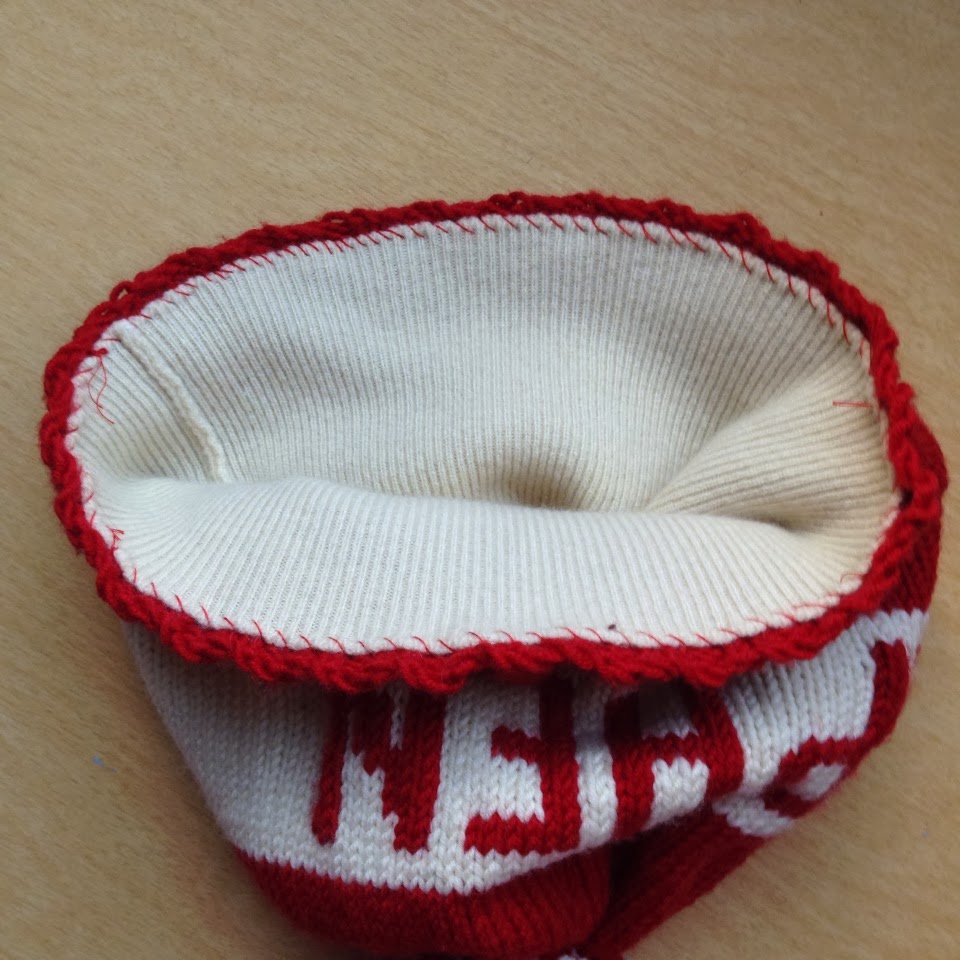
With thread matching the color of the hat, whip stitch the lining to the inside of the hat, trying to sew into the inside knitted stitches so as not to reveal the thread on the outside of the hat. The following photos are from a different hat and turtleneck.


lining1


That’s it! Now your hat is warmer and cozier.

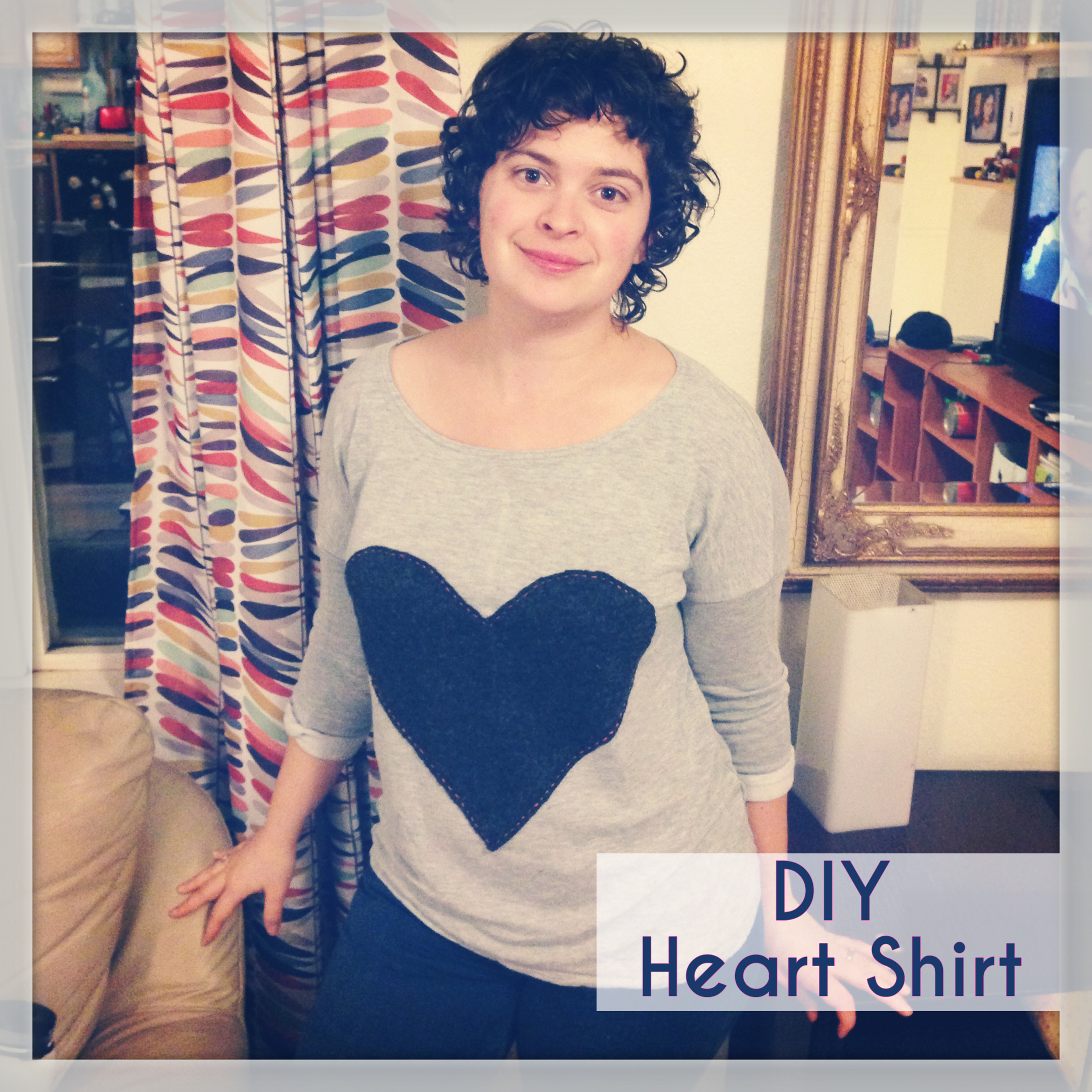
Quick Craft: DIY Heart Shirt

Shirts with big hearts are big right now, but despite the fad I actually think they are pretty cool.

I’ve had a few old cashmere sweaters awaiting crafting and this was the perfect short-attention-span craft: cut out a heart, sew it on a shirt.

Quick Craft: DIY Heart Shirt | Alaska Knit Nat

My husband had the idea of sewing on the heart with contrasting embroidery thread. It not only gives it some “pop,” but it also adds more of a homemade touch.

 Here’s what you’ll need:

 An old sweater

A plain shirt

A large piece of paper or newspaper

chalk

Thin, double-sided fusible interfacing or Stitch Witchery

Embroidery thread

iron

large needle

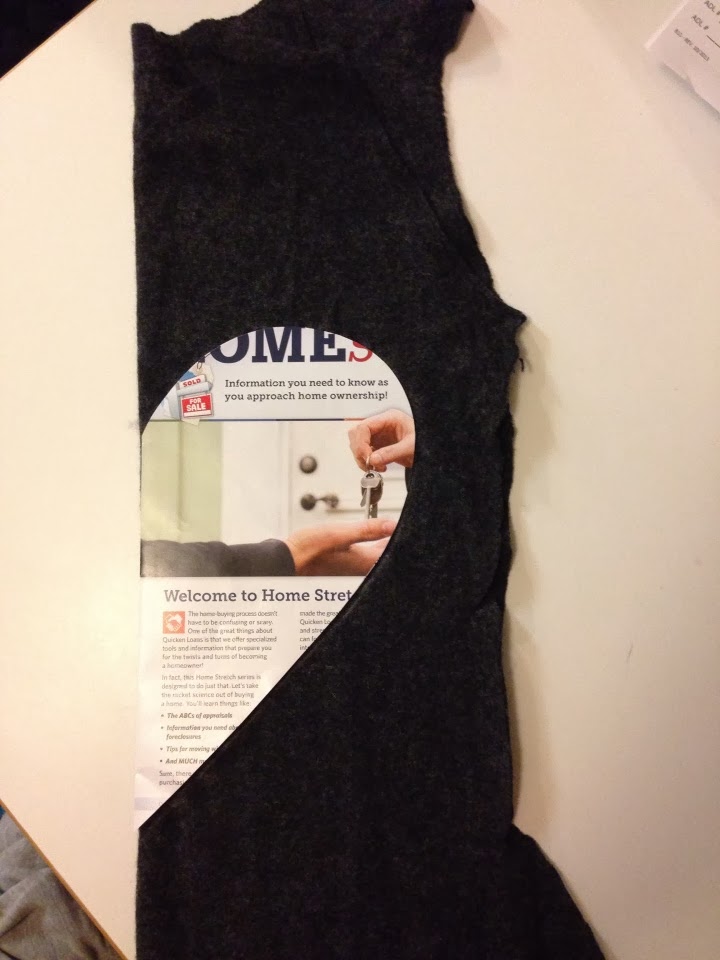
1. Make a heart template to your liking. I just folded an 11 x 17 piece of paper in half and cut out a heart shape.

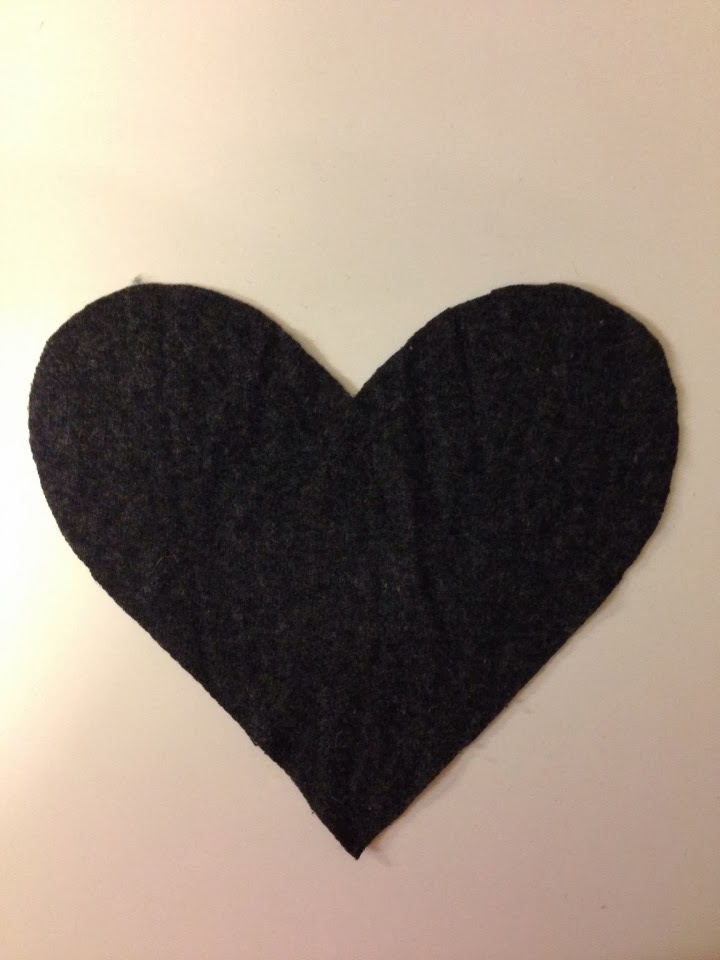
 2. Place your heart template on the sweater and use chalk to trace the shape. Cut your shape out of the sweater.

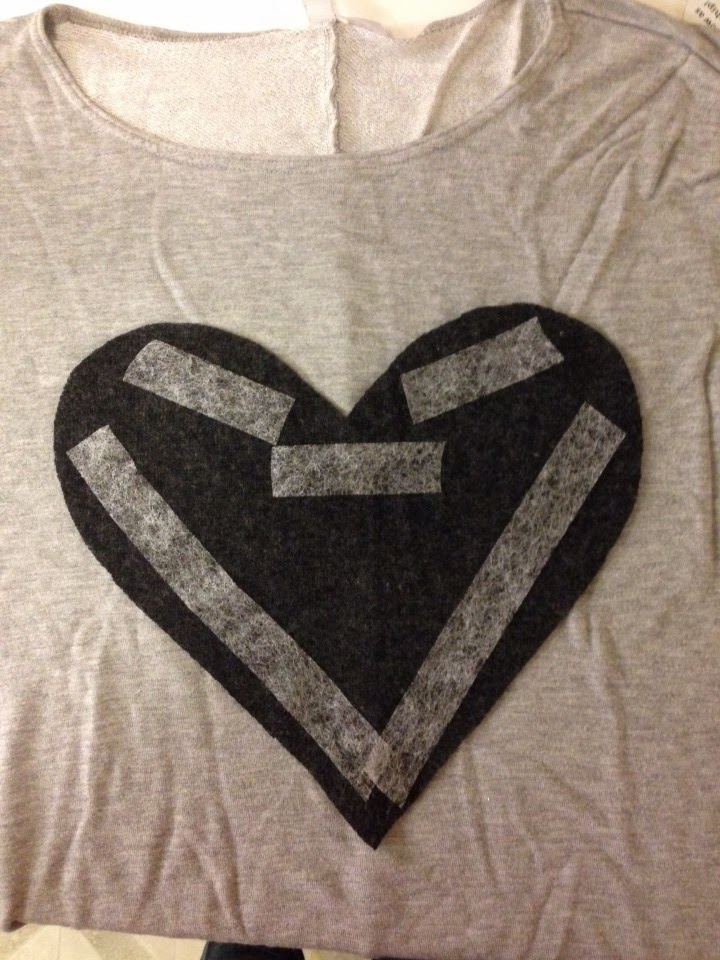
 3. Figure out where you’d like the heart to be placed on your shirt. Cut strips of interfacing or Stitch Witchery and place them on the shirt. Lay your heart, right side up, on top of the strips and fiddle around to get everything centered and flat. The photo below just shows where I placed the Stitch Witchery. In reality, the strips should not be facing up.

 4. Iron the heart according to interfacing instructions, so it fuses to the shirt. This way it won’t slip around when you’re sewing and you won’t have to worry about pins sticking you as you sew.

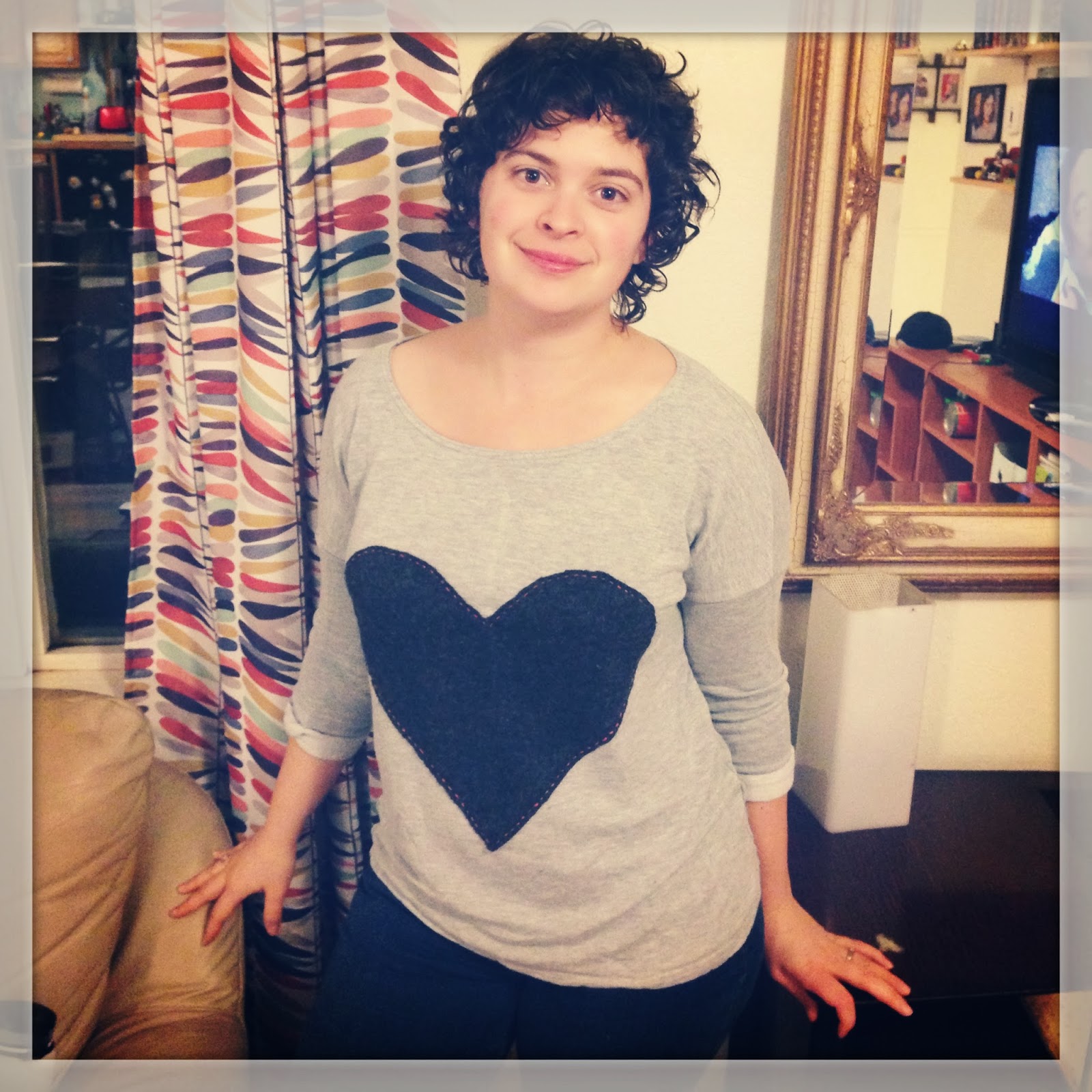
 5. Cut a long piece of embroidery thread and straight stitch around the edge of the heart. Secure thread with a couple of knots on the inside when finished.


 Ta-da!


The Best Way to Hem Jeans

The Best Way to Hem Jeans

Have you ever gotten your jeans professionally hemmed? It looks all neat and tidy and they even manage to keep the original hem. If you have basic sewing skills and a sewing machine, then hemming your jeans is easy. Save yourself the alteration charge. Learn to shorten your jeans and keep the original hem. This is the best kind of project because it takes about 15 minutes. Here’s what you’ll need:

  • Jeans that are too long
  • Straight pins
  • Sewing machine
  • Ruler or tape measure
  • Stitch Witchery double fusible tape (optional)
First, try on your jeans and figure out how much length you’d like to take off by folding up the cuff and measuring from the edge to the fold. With today’s pair I wanted them to be two inches shorter.
Take your measurement and divide it in half. This is how much you’re going to sew away. Remove your jeans (and continue crafting without pants if you’d like) and now fold up the edge of your jeans till the fabric below the hemline measures half of what you’d like to remove. In my case, I want to remove two inches, so I make sure there is one inch of fabric folded below the hem. Pin in place.
the best way to hem jeans

Start your seam in the inner leg and sew right below the edge of the original hem. Repeat with other leg.

the best way to hem jeans
You are now basically done and if you are truly lazy you could walk away from this project now. But why not make them look perfect? It will only take a few more minutes.
Turn your jeans inside out and iron the fold you just made. Iron the whole “flap” you just created upward. Take your Stitch Witchery and cut a couple of strips that are long enough to be tucked under the flaps. You may need to trim the tape if the flap is narrower than the tape’s width. Sorry, no photo, but it’s really not that hard. You’re just fusing the flap to the leg so it doesn’t flop around when you wear the jeans. Press your hot iron on the flap, using steam, for about 20 seconds and *PRESTO* your flap has been fused to the leg.* I love Stitch Witchery. It’s one of my favorite sewing notions.
the best way to hem jeans
Now, admire your professionally hemmed jeans and how you saved, like, $15.
The best way to hem jeans
*If you are shortening your jeans by a lot, such as more than four inches, I would consider cutting the flap till it’s about an inch wide and running a zig zag stitch around the raw edge (which used to be a fold). Then fuse this flap to the leg.

Recycled Cashmere Baby Booties — Free Pattern

It’s getting cold up here in Alaska and my son is still too small for winter boots, but he’s outgrown his cute little warm booties. I’ve been collecting thrift store cashmere sweaters for a while now with no real plan for them. I washed and dried them several times to felt them up a bit and strengthen the fabric and I decided a pair of sock-like booties would be just right for winter.

I did a little Google searching but couldn’t find a pattern I was satisfied with, so I made one. You can access it here.

These booties were pretty simple to make and only took me about 45 minutes. When printing off the pattern be sure your printer doesn’t scale it down. I had to go to my settings and change the scale to 100% and it printed off just fine. If you have troubles, please let me know.

What you’ll need:

Free Alaska Knit Nat Bootie Pattern

One cashmere sweater you’re willing to cut up (or any old sweater for that matter)

Two 2-inch pieces of narrow elastic

Sewing machine

Pins

Fabric scissors

Stretchy sewing machine needle (not required, but really helpful)

1. Using the pattern, cut the body of the bootie along the bottom of the sweater so the ribbing will become the cuff of the bootie. You’ll be cutting four pieces out, but you can cut through the front and back of the sweater at one time. Cut two soles from the sweater being sure to lay the pattern on a fold.

2. Lay the body of the booties right sides together. Pin and sew up the back of the bootie using 1/4-inch seam allowances.

3. Trim the seam toward the top so no raw edges stick up. Lay the bootie out flat, wrong side up and place the 2-inch piece of elastic a few inches from the top (I just used the end of the ribbing as a guide). Stretch the elastic across the back to see where you should start sewing. Sew along the length of elastic, stretching it as you go. This will ripple the bootie in the back so hopefully they will stay on better. You could skip the elastic altogether and sew laces to the back when you are finished.

4. With right sides together, pin and sew along the front of the bootie. The only raw edge remaining should be the bottom of the bootie.

5. Pin the sole wrong-side out around the edges of the bootie. Make sure the wider part of the sole is at the front and the narrower part is in the back. It seems like a no-brainer, but why do you think the booties in the photo look so pointy? Sew around. I didn’t trim because I figured the extra bulk inside would add some more warmth.

6. Turn right-side out. Pop onto cute baby feet. This is where you could add a long lace to the back and wrap it around the bootie and tie if you don’t want to use elastic. I might even crochet a long chain and put pom-poms on the ends.

Please let me know if you have any questions about this pattern, as I’m not used to writing my own patterns.

Baby Elf Hat — Free Pattern

This is Jack’s first Halloween. I’m not much of a Halloween person. I’m over it. I don’t need to dress like a sexy fill-in-the-blank. I’m not out to impress anyone. I was going to put forth some sort of effort with Jack since I have to address every single milestone in his tiny little life.

I dressed him up as a garden gnome, with a bib fashioned out of white felt to look like a beard and a pointy red hat. Here’s a poor-quality iPhone photo:

The hat is just too cute. I discovered after dressing him in green footie pyjamas that he also looks like an elf (no photo, unfortunately). This means the hat can double up for the holidays while I parade Jack around like the little elf child that he is.

The hat is pretty simple if you know how to knit hats. Here’s how I made it.

If you’re wanting to knit this pattern with a different needle size and different weight yarn, I am unable to adjust the pattern for you. This pattern is written for a specific needle size and yarn weight.

Materials:

1 skein worsted weight yarn

size 9 circular and double pointed needles

darning needle

Abbreviations:

CO = cast on

k1,p1 = knit 1, purl 1 ribbing

k2tog = knit two stitches together

Directions:

With your ciruclar needle, CO 64 stitches. Knit the last stitch to the first stitch making sure the stitches aren’t twisted on the needles. K1,P1 in the round for 6 rounds.

Knit regularly for 27 more rounds. Place marker at beginning of round. Decrease as follows:

k2tog, K6, repeat till end of round

k 1 round regularly

K2tog, K5, repeat till end of round

k 2 rounds regularly

K2tog, k4, repeat till end of round. Transfer stitches to double points

K 3 rounds regularly

K2tog, k3, repeat till end of round

K 3 rounds regularly

K2tog, k2, repeat till end of round

K 3 rounds regularly

K2tog, k1, repeat till end of round

K2tog, repeat till end of round

Cut yarn leaving an 8-inch tail. With a darning needle, weave in all ends. You can alter the pointyness of the hat by knitting more or fewer rounds between the decrease rounds. I like the cupie-doll look.