Oh, how I love Alaska weddings! There’s something about an Alaska bride. She loves to incorporate her home state into her most special day. Philly was no exception. Her vision was simplicity for the bridal party and big and wild for the bridal bouquet.
The photos can’t do this bouquet justice. There are peonies from every angle. The wholesaler’s peonies were small, but thanks to an old friend with a big peony garden, I was able to compensate with two HUGE blooms, which are what take up most of the photos. While snipping these two gorgeous flowers I sneaked a couple of poppy pods, which add some vintage green to the arrangement. I foraged many wildflowers including clover blossoms, yarrow, cow parsnip and grass berries. Wrapped in lace and twine and you’ve got a soft beauty with a twinge of wild. Utterly romantic.
When I was asked to pick up a last minute wedding gig this week, I was more than thrilled to accept. A chance to work with white peonies and garden roses? Yes, please!
Bride Emily wanted a forest look to her arrangements, so I did the sensible thing and I foraged from the forest. I gathered dwarf hemlock from Glenn Alps, which I incorporated into the woodland fairy-like crowns, the delicate boutonnières and corsages and the perfectly-sized bridal bouquet.
Wild geranium, wood ferns and forget-me-nots mixed perfectly with the centerpieces of queen Anne’s lace, veronica and lisianthus.
Emily’s biggest desire was to have a big bridal flower crown of peonies and garden roses. When a fully bloomed peony is the size of a large grapefruit, a large crown is LARGE. My first draft was a little too big, I could barely hold my head up. After I downsized, I made Emily a smaller crown in case the original was too gigantic.
As part of my personal challenge to forage at least one edible plant a month this summer in Anchorage, I decided to revisit wild rose petals. Several years back I collected these perfectly pink petals and made a just-OK jelly out of them. Thing is, I don’t eat jelly. I’m not a toast and jam kind of gal, I guess.
This time I opted to make rose petal syrup. It was easy to prepare and resulted in a gorgeous pink concoction that tasted as good as roses smell.
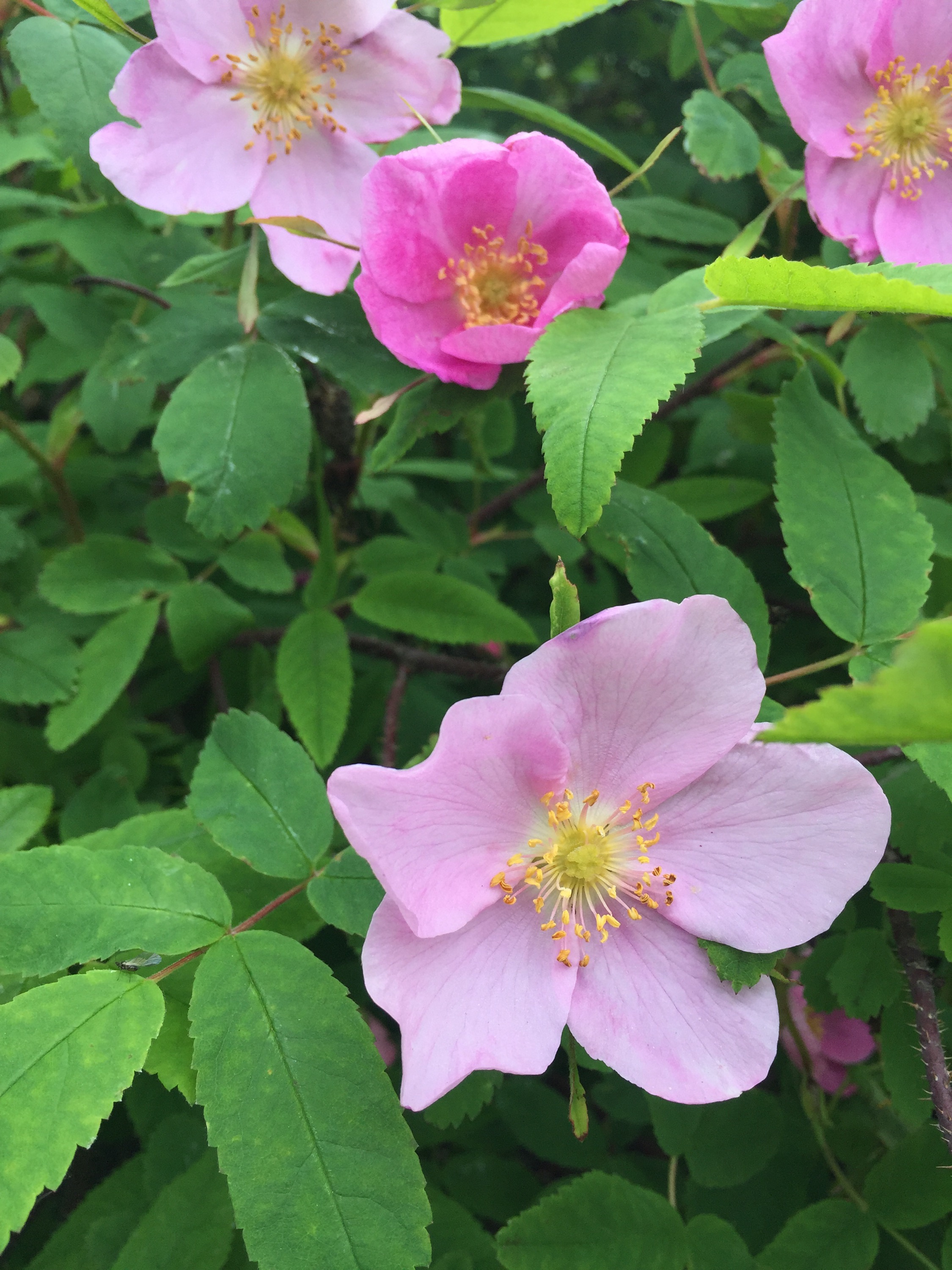
You can find wild roses just about everywhere in Anchorage in June. This bush is on the on-ramp to the Seward Highway.
The wild roses are in full bloom here in Anchorage and it’s hard not to find them. I picked petals on the side of the highway, on my street and in my back yard. They have been in bloom since the first week of June and will probably be around for another week before they fade, fall and begin to turn into rose hips (and that’s another foraging adventure!)
Rose Petal Syrup
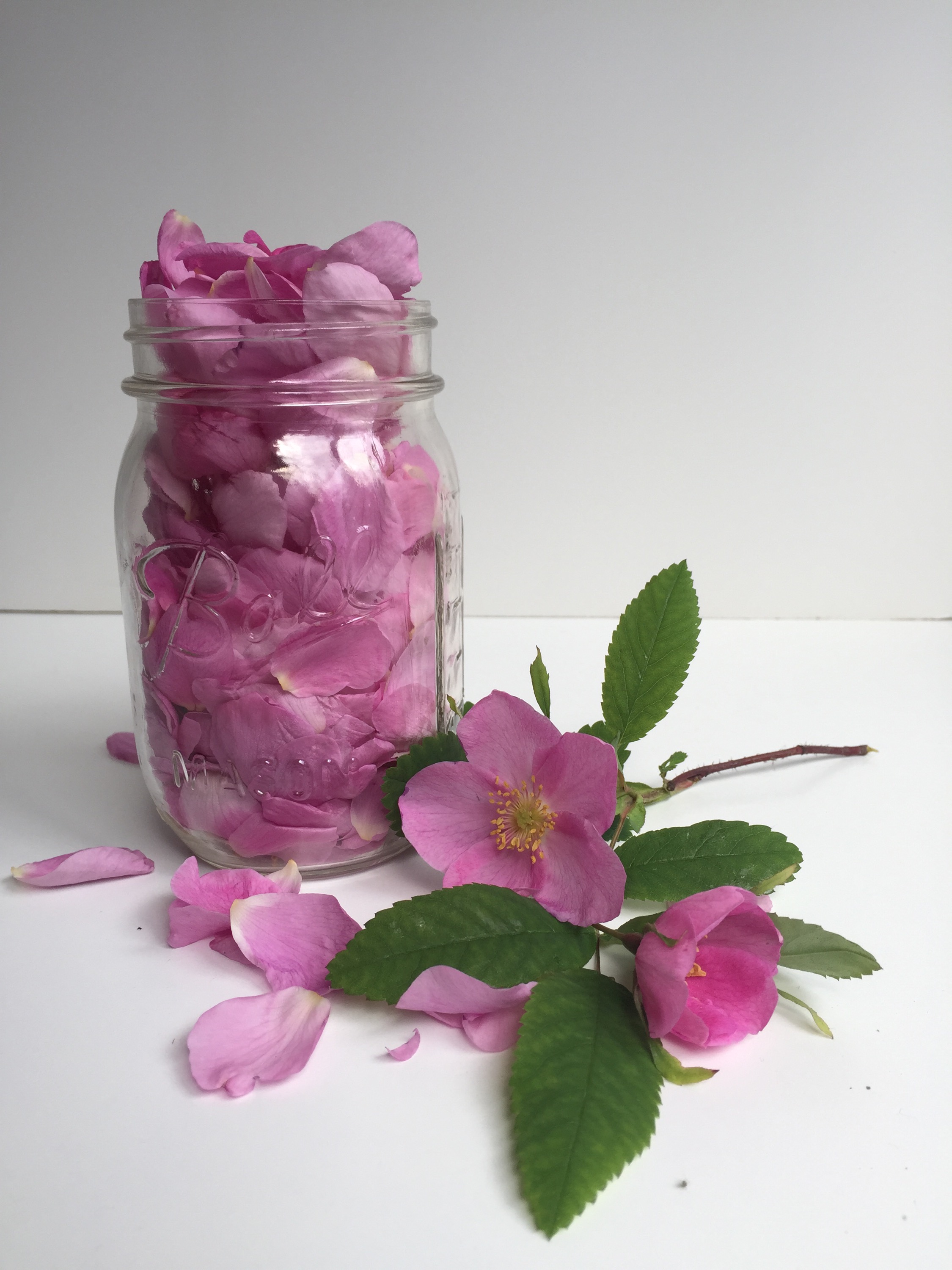
To make one bottle of syrup I collected about 2 gently packed cups of petals. Be ready to encounter some caterpillars, bugs and spiders (I lost about a cup of petals when I spotted an arachnid creeping around my collecting jar).
*2023 update* – I realized I didn’t have a written recipe for the syrup. Here it is!
Ingredients:
6 cups fresh wild rose petals
5 cups sugar
1 quart plus 1 cup of water
2 teaspoons salt
2 tablespoons lemon juice
Fill the sink with cold water and pour in the petals. Stir them around and let the bugs and debris settle. Spin the petals dry in a salad spinner and place in a medium mixing bowl. Add 3/4 cup of sugar and muddle the petals with a potato masher.
Place the pulpy petals in a sealable container in the fridge overnight. Before cleaning the mixing bowl, scoop out remaining sugar gloop and exfoliate your hands. It’s lovely.
The next day, bring the water to a boil. Add the remaining sugar till dissolved. Toss in the petals and any pulp, lemon juice and salt and simmer on low until the color has been extracted from the petals. There’s no science to this. I think I simmered mine for 30 minutes. The liquid should be bright pink.
Turn off the heat and let the syrup cool. Using a mesh strainer lined with a clean linen dishcloth, ladle the syrup into a pitcher, pressing on the petals and tossing them as you go.
Pour into sanitized jars or bottles. Keep refrigerated. Keeps for several months.
Last fall I attended a networking getaway in Homer hosted by The Boardroom called End of Summer Camp. It was a weekend full of meeting and making new friends. During that time I met Crystal and Carrie, owners of Toast of the Town event planning. I told them I was a flower lady and they said they would keep me in mind for future events.
Six months later they set me up with Charlee, a whimsical bride who wanted her flowers colorful, unkempt and carefree — just my style!
I had so much fun putting together the florals for Charlee and her fiancé Marc. I got to work with nearly a dozen different types of flowers from the most fragrant mauve garden roses to my favorite accent flower, craspedia.
I got to do something new, which I’m calling “hair flair.” Charlee had wanted hair combs with fresh flowers for the bridesmaids, but after a hair trial with another bride I discovered that the plastic combs I was using were not easy to work with. What I decided to do was make teeny flower bouquets with wire and floral tape to be pinned into the bridesmaids’ hair.
My niece and I made about 35 pieces of hair flair so the bridesmaids could pick and choose the flowers they liked best for their hairstyle. It was a lot of fun.
I delivered the flowers to Glory View Farm in Wasilla where Crystal and Carrie were setting up the most magical hootenanny.
Congratulations to Marc and Charlee and I wish them all the best!
After my less-than-stellar morel hunt last weekend I needed to forage something more gratifying. It’s the perfect time for spruce tips. Pretty much all the spruce trees in town are boasting bright green tips with brown papery casings. I ventured as far as my yard to collect a pound of them. They required very little processing; just remove the papery casings and you’re good to go.
I’ve never been quite sure what to make with these edibles. I’m not much for tea or jelly. I wanted something savory.
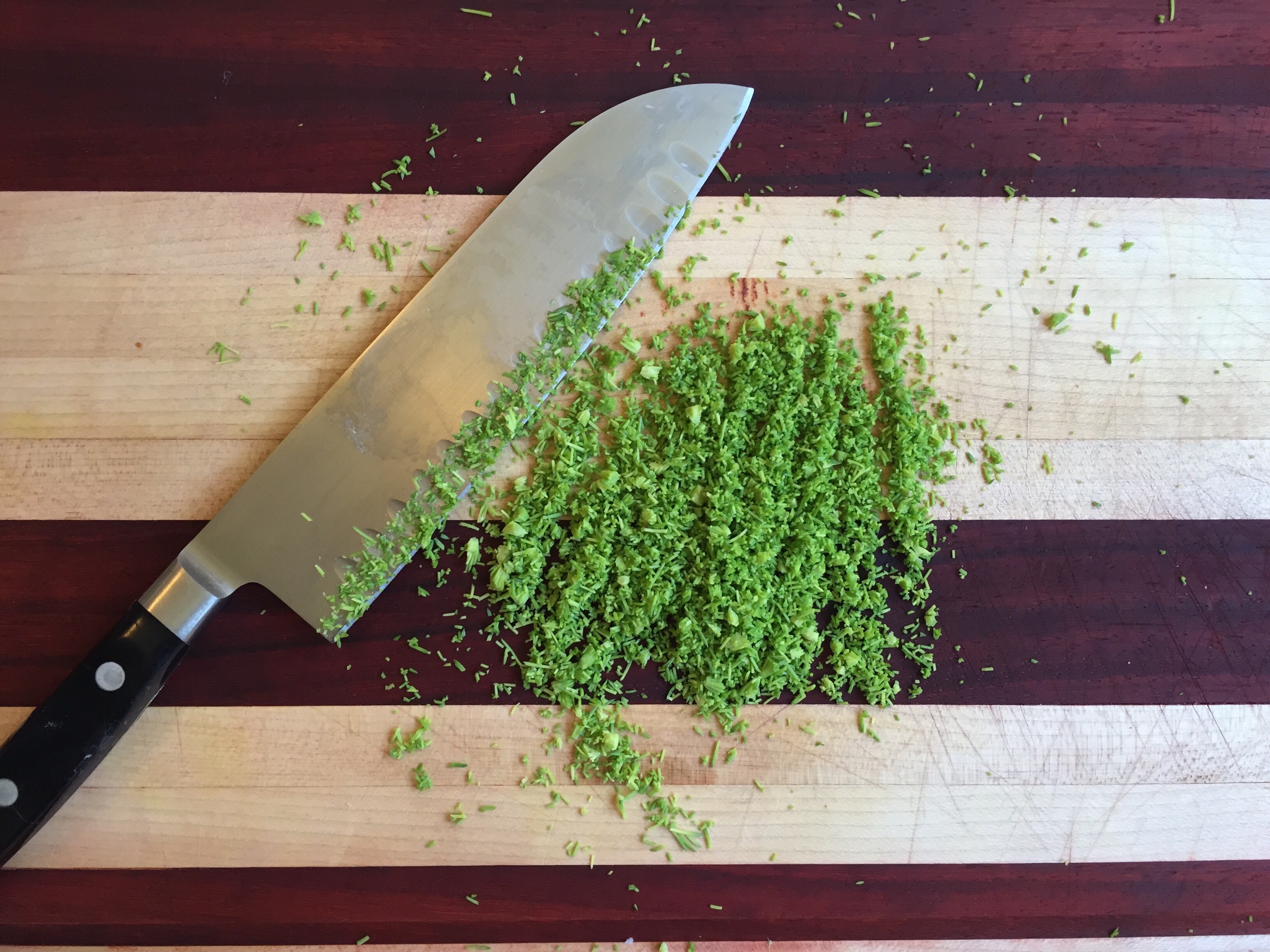
I first referenced the Goddess of Alaska Forests, Laurie Constantino, and made a delectable dip with mayo, Greek yogurt, lemon juice and minced spruce tips. It was perfect for the garlic bread crusts I had leftover on my dinner plate last night.
Recently a friend of mine told me about a Juneau-based blog that’s all about foraging Alaska edibles. There was an intriguing recipe for spruce tip gnocchi. I had to try it.
For my third segment of “Harvesting Anchorage,” I decided to go beyond city limits and venture out to the Kenai Peninsula in search of morel mushrooms.
My family and I have always been avid boletus mushroom hunters, but we’ve never looked for morels. I heard they tend to pop up in areas where there have been forest fires. After last year’s Funny River fire consumed more than 155,000 acres of land, I decided to keep an eye on this area through a secret informant. Ok, I have a friend who lives out there and is also a gatherer like myself. She gave me the news last week that the morels were up so my mom and I set out on a tiny road trip to Soldotna in search of these pristine, delicate, flavorful fungi.
Much like boletes, my friend told us morels tend to grow near birches. We pulled off to the side of Funny River Road and hiked about 1/4 mile into the burned spruce tree forest in search of patches of birch trees.
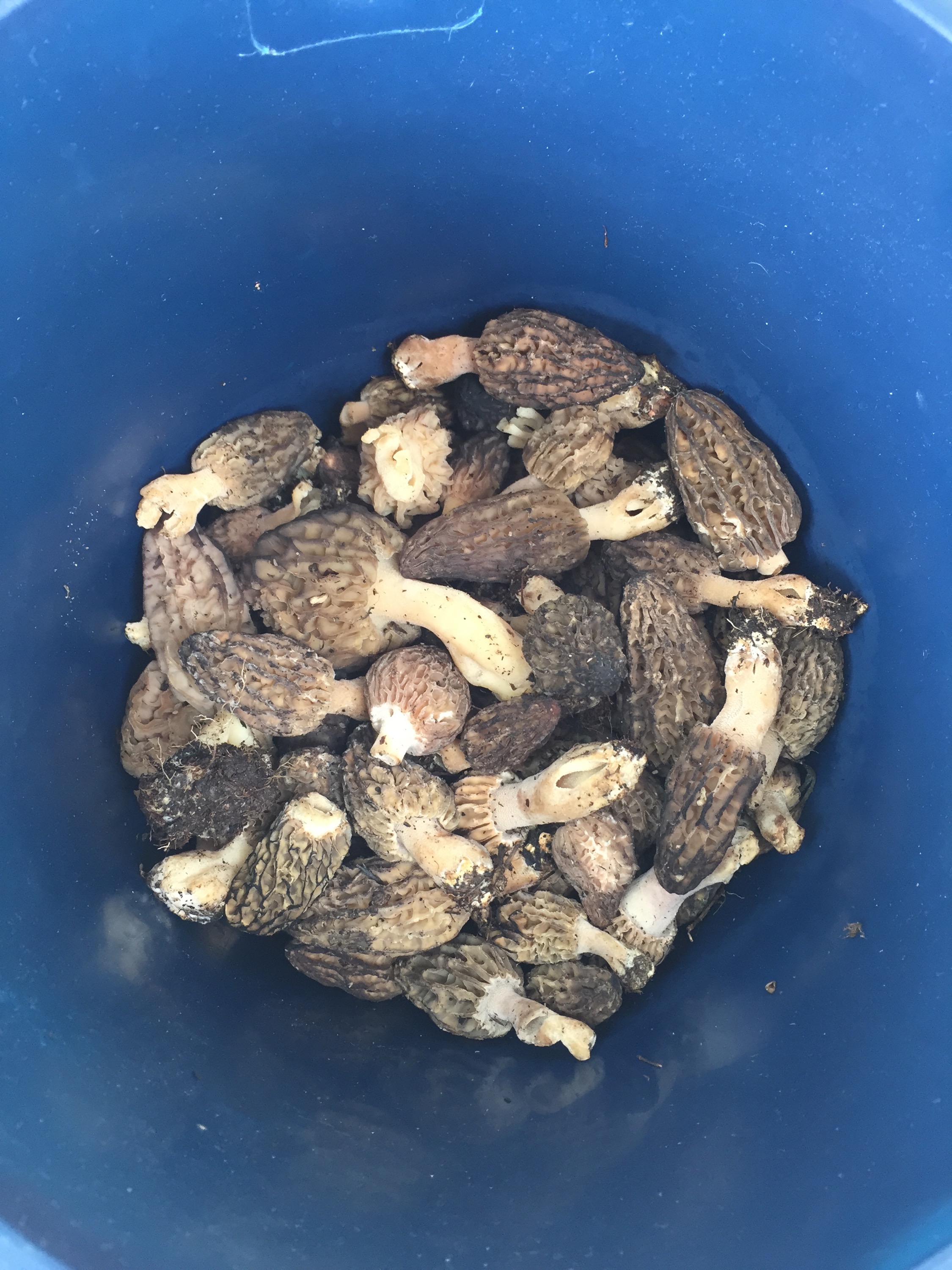
The hunt wasn’t wildly successful, but I was thrilled even to find a few because these little suckers are hidden! Unlike boletes, which stand prominently and proud, morels look like burnt spruce cones and are about the same color as the earth. I had to get low to the ground to see any at all, but on the plus side, when I found one morel I usually found at least two more in the same area. It truly felt like a treasure hunt.
False morels look really different from the real deal.
We immediately spotted some false morels, which looked completely different from the real things. Most of the real morels were pointy and brown. The false morels looked like misshapen blobs and were much lighter brown, like burnt sienna.
We spent a good three hours yesterday and today hunting. There was competition. Lots of cars were parked along the road and I saw one fellow with a tall laundry basket fashioned into a backpack that was half full. Another man had a full trash bag of morels, so it was obvious there were some experienced hunters among us.
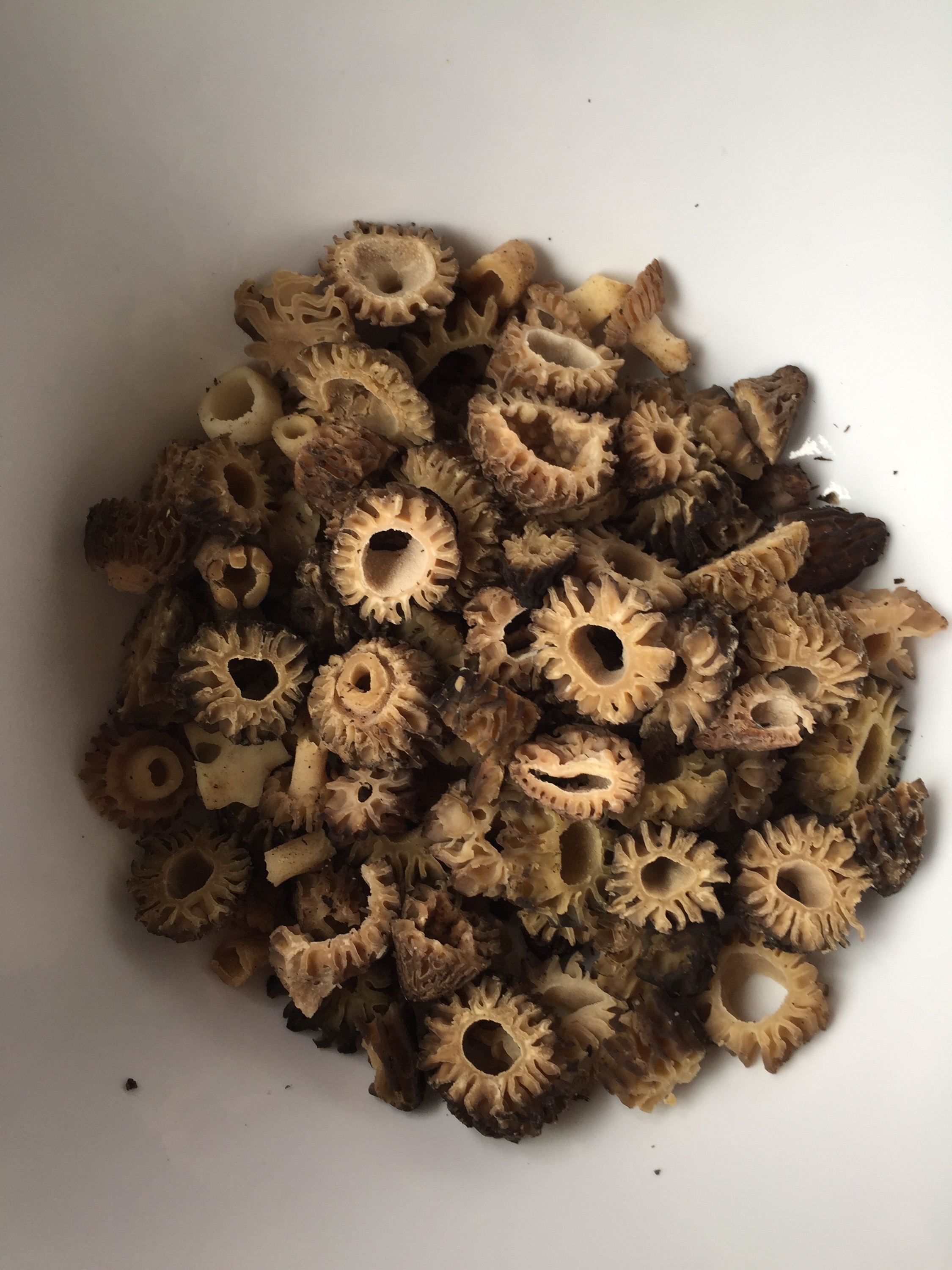
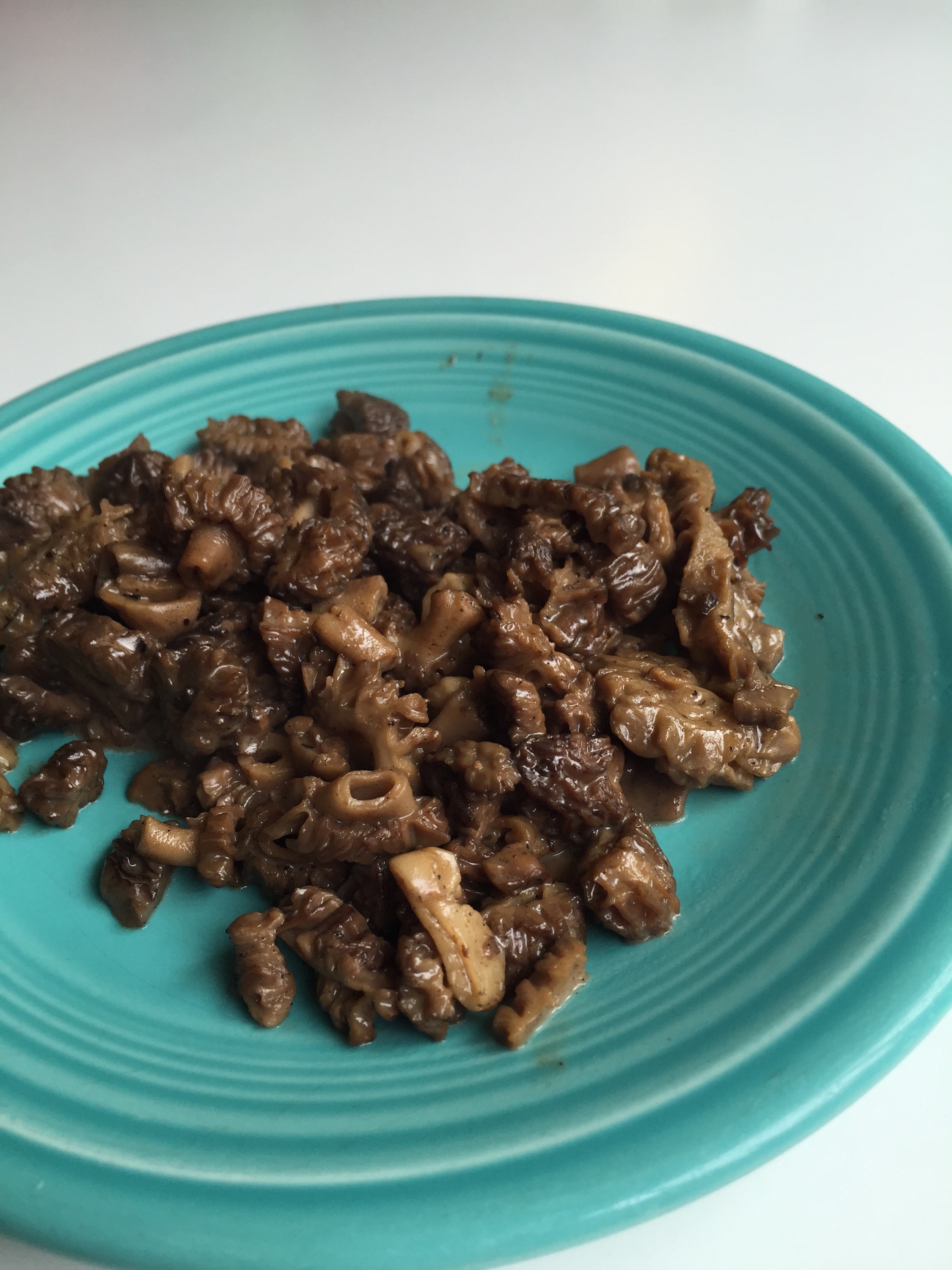
I’m happy with our small haul. I sent my mom home with the majority of our pick because she has the dehydrator. I took home a couple of dozen, cleaned them, sliced them and sautéd them in butter. They had an earthy, mushroomy flavor (surprise!) but an altogether different taste from boletes.
I’ve heard morels grow here in Anchorage and I’m now confident in what they look like so I can add them to my list of foods to search for when I’m out in the woods.
Have you ever picked morels in Anchorage? Tell me about it!
As Part Two of my summertime Alaska blog series, I tried to harvest a few things such as fiddlehead ferns and fireweed shoots, but I only successfully cooked something using devil’s club.
You’ve probably encountered devil’s club in any Alaska forest. It’s pretty much the last plant you want to encounter because it’s covered top to bottom in sharp thorns that can easily embed themselves in your skin; but in the spring the plants produce short buds covered in premature, soft thorns. This part of the plant is edible. Is it good? That’s what I aimed to find out.
I embarked on my devil’s club hunt on a sunny spring day after the birch trees had started budding. I had no trouble finding a thicket of devil’s club up on the hillside. They all had 1-to-3-inch buds emerging from the dry, wheat-colored stalks. I used a gardening glove to pluck them and collected them in a bucket.
This one isn’t quite ready yet. There should be an inch or two of green coming out of the brown sheath.This one is ripe for the plucking!
After getting stuck with thorns a few times I felt as though I had enough to work with. On the drive home my car started smelling like an Alaska forest. The devil’s club buds had a spicy, celery-like scent.
This summer my goal is to gather or harvest at least one plant a month. Usually I gather fiddlehead ferns and fireweed shoots in May, pick wild strawberries in June (I can’t disclose my secret spot!), hunt for boletes in the mid/late summer and harvest berries in the fall.
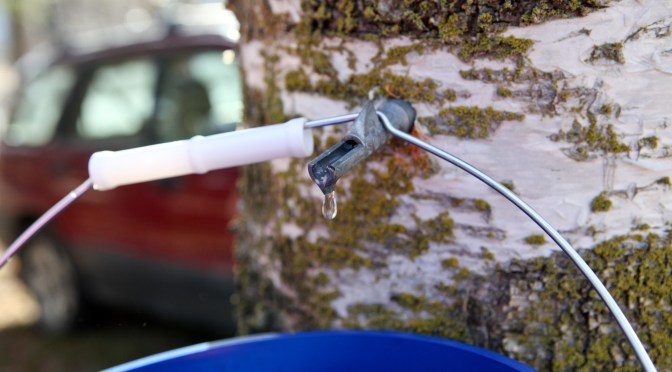
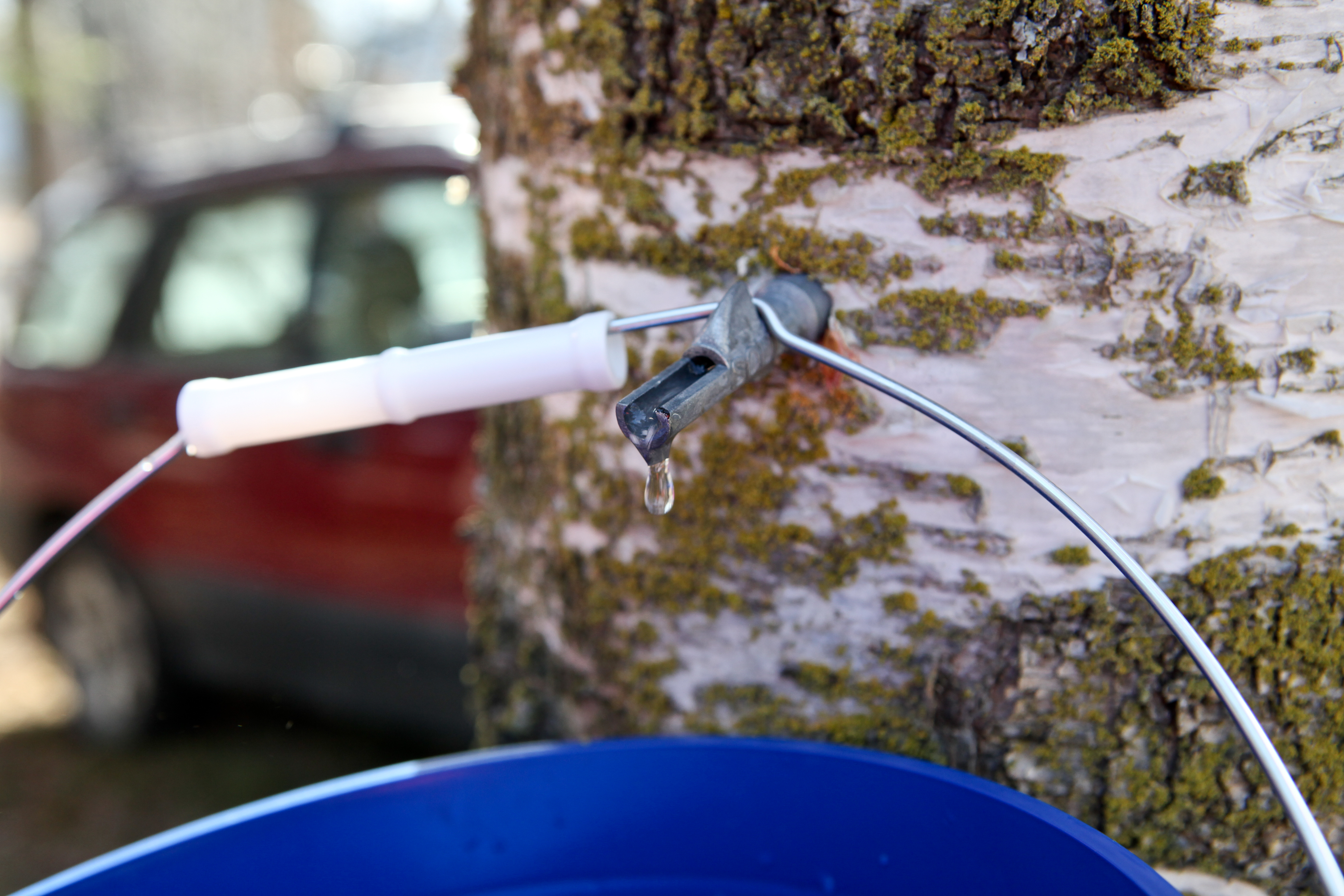
When UAF Cooperative Extension Service tweeted about birch tree tapping in mid-April, I knew I had to start my harvesting season early. I texted my good friend Ivan, knower of all things apian, and he told me I could find spiles, or birch tree taps, at Alaska Mill & Feed. I have several big birches in my yard, so it was worth a try!
With just a little hardware and a whole lot of stove time, you can have your own homemade birch syrup (I still haven’t reached syrup state, but you’ll see what I came up with in the meantime if you read below). I didn’t take step-by-step photos only because they would be pretty boring. It’s a lot of boiling. Follow this handy guide for a complete explanation.
Please keep in mind that I’ve never done this before, so I have no idea whether I’m doing it incorrectly. The instructions below is what worked for us. Let me know if you use a different/better technique!
Birch Tree Tapping in Anchorage
Materials:
2 or more 7/16″ birch tree spiles ($5.99 each at Alaska Mill & Feed)
Boy, sending mail to Belgium takes a while! I’m so thrilled to finally be posting this pattern. I had to wait for it to arrive in my friend’s mailbox before I could publish it. Enjoy!
Last summer an old friend of mine got married on the Greek island of Paros, which is known for its brilliantly white buildings contrasted against the blue Aegean Sea. I wanted to send her a handmade wedding gift that represented the beautiful location of her wedding. Since I have limited artistic talent (I am not a brilliant illustrator as she is), I decided to knit her an ombre scarf. Ombre might still be considered trendy, but I know I’m a little past the height of ombre hype.
I had a difficult time finding yarn that was the right color, so I settled with a “Frozen”-esque ice blue. Elsa wasn’t whom I had in mind when I made this scarf, but I do love the colors anyway.
I wanted to try an unusual stitch pattern instead of doing my basic ribbing or garter stitch. I don’t have a great attention span for stitch patterns that take 14 rows to complete, so I found a lovely pattern that is repeated every 4 rows. This way I can set it down anytime and be certain where I left off. I went with St. John’s Wort Stitch.
St. John’s wort is a flowering plant that is used medicinally as a sort of cureall. It’s supposedly good for treating anxiety, depression and cuts. I made this scarf so my friend can feel cozy and safe, so it’s fitting it is named for a healing, cheer-you-up herb.
I hope my friend is able to think of this scarf as a warm hug from her past. We haven’t seen each other in more than 10 years, so I wanted her to have a little reminder of home and of her happy day in Santorini.
Ariadne sketch by Tamar Levi
Fuzzy Ombre Scarflet
1 hank Heritage Cascade Sock Yarn, color 5630 (or any sport weight yarn in ice blue that is more than 200 yards). I’ll call this color B
1 hank Heritage Cascade Sock Yarn, color 5682 (white). I’ll call this color A.
1 skein Dale Påfugl mohair, color 0010 (or 100 yards of any mohair brand in white). I’ll call this color 1.
1 skein Dale Påfugl mohair, color 6815 (blue). I’ll call this color 2.
With a new year comes New Year’s resolutions, and I’ve decided to join the countless others who resolve to eat more healthily. As a contributor to Anchorage Food Mosaic Project, I was recently asked what my Food Year’s Resolution was. Fewer cheeseburgers was the first thing that came to mind, but also to cut down on carbs and to eat more healthily in general.
My husband and I are trying out the South Beach Diet, which is a low sugar and carb regimen. The first phase is pretty strict, but that doesn’t limit my ability to cook delicious food.
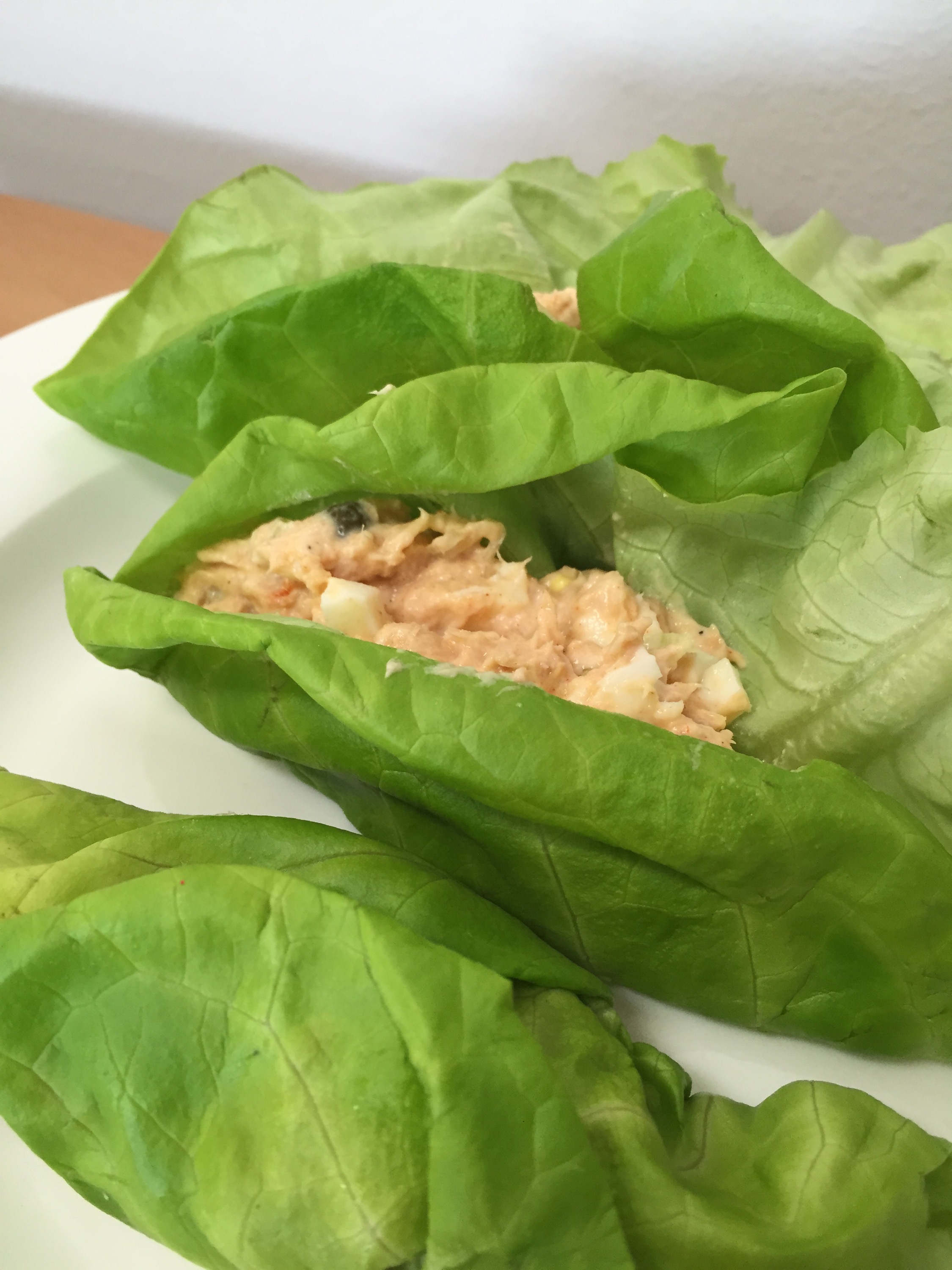
Today’s lunch was quick to prepare and pretty dang delicious. I love me some smoked salmon, but that stuff is expensive. I wanted to make a dish that had the flavor of smoked salmon, but was a little easier on the pocketbook.
This salad recipe is chock full of nutrients and with the use of smoked paprika, it fulfilled my craving for smoked salmon. I purchased my canned salmon at Costco, but if you’re lucky to have an Alaska fisherman friend, you could certainly make this with fresh-cooked salmon!
Smokey salmon lettuce wraps — A South Beach Diet phase 1 recipe

 Continue reading Alaska Weddings: Peter + Philly
















 Alaska Knit Nat