Category Archives: Cooking

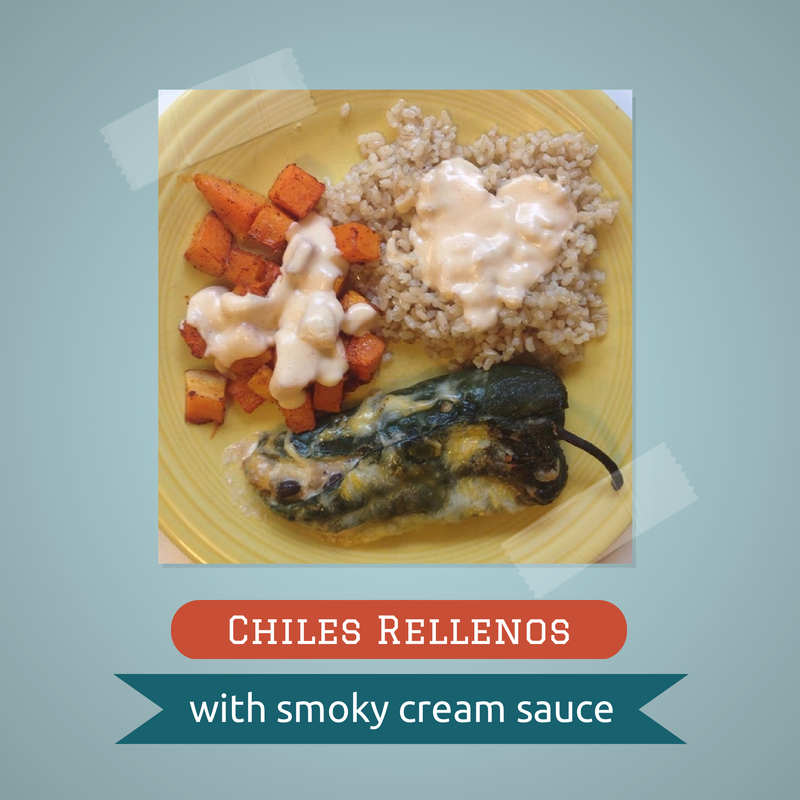
Chiles Rellenos with Smoky Cream Sauce

Chiles Rellenos with Smoky Cream Sauce | Alaska Knit Nat

Ingredients:

7 fresh pasilla or poblano chiles

3/4 lb. ground pork

1 Tbs. taco seasoning

3/4 cup canned black beans, drained

3 oz. cream cheese

1 cup shredded mexican blend cheese plus more for topping

1 can diced green chiles

1/4 cup cream (optional)

black pepper

oil

Chiles Rellenos with Smoky Cream Sauce | Alaska Knit Nat

Directions:

Grill the chiles over high heat till blackened on all sides. Place in a paper bag and let steam for 10 minutes. Gingerly remove the skins and slice open on one side. Let cool completely and carefully remove the pith and seeds. Set peppers aside. Meanwhile, brown the pork in a lightly oiled pan over medium high heat. Add the taco seasoning and break up the meat. Remove from heat and let cool.

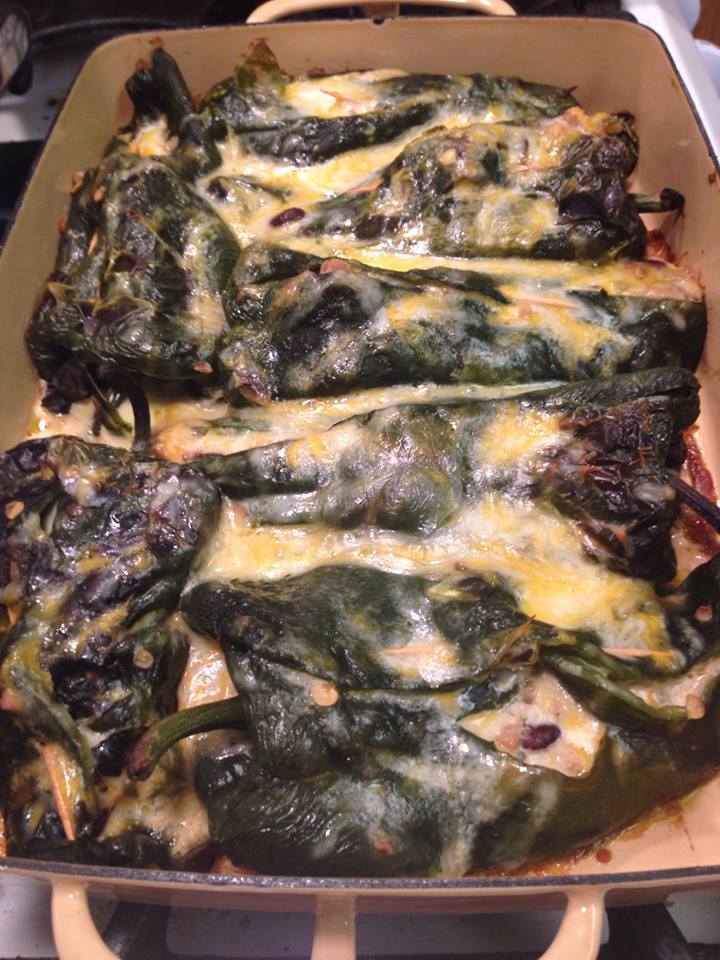
Preheat the oven to 375 degrees. Mix together the beans, pork, cream cheese, Mexican cheese and diced green chiles and season with pepper to taste. Stuff each chile and secure with a toothpick. Place stuffed peppers in a greased casserole dish and sprinkle liberally with more shredded cheese. Pour cream over the chiles and bake, uncovered, for 30 minutes till cheese is bubbling. Serve with brown rice and southwestern roasted butternut squash. Drizzle with smoky cream sauce — recipe below.

Smoky Cream Sauce

Ingredients;

1 Tbs. butter

1 Tbs. flour

2 Tbs. cream

1/2 cup milk

2 Tbs. cream cheese

1/2 cup Mexican shredded cheese

1/2 tsp. smoked paprika

1/4 tsp. garlic salt

1/4 tsp. cumin

salt and pepper to taste

Directions:

Melt the butter in a small saucepan over medium heat. Whisk in the flour and cook for one minute, stirring frequently. Add the cream and milk and whisk till thickened, about two minutes. Turn down heat till just bubbling and add the cheese and spices. Serve immediately. If it’s too thick, add more milk.

Chiles Rellenos with Smoky Cream Sauce | Alaska Knit Nat

Alaska Guide to Boletus Mushrooms

It’s nearly mushroom season in Alaska so I thought I’d repost my boletus mushroom guide from my old blog. With a little knowhow, you can join the foraging movement and become a mushroom hunter.
Alaska Guide to Boletus Mushrooms | Alaska Knit Nat

Here is my DISCLAIMER: I’ve been foraging for mushrooms my whole life and I am positive that what I’m picking is edible. I am not a mushroom expert but I can give you great advice on how to discern boletus mushrooms from inedible ones. Pick at your own risk! Some people experience gastric upset after eating boletes even though they aren’t poisonous. Never eat a bolete unless it’s been thoroughly cooked. When in doubt, throw it out!

Feel free to contact me and e-mail me photos of your finds if you ever have any questions. There are quite a few edible mushrooms in Alaska, but I’m only knowledgable about boletus.

So here we go:

Alaska Guide to Boletus Mushrooms

There are several types of boletus mushrooms and you can find many of them in the Anchorage area. Most are edible and the ones that are poisonous will let you know by their scary color.

The U.S. Forest Service has a great Alaska mushroom guide. I highly recommend taking a look at it.

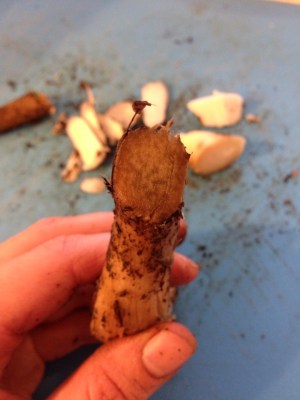
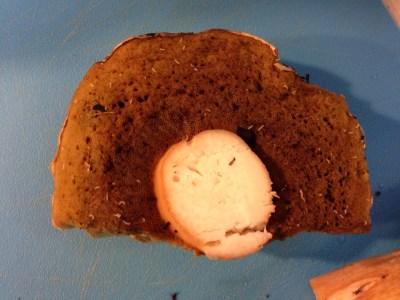
The only inedible boletes I’ve come across in Alaska are boletus luridiformis  and boletus coniferarum. Luridiformis is red, which to me is a signal to not eat it. The coniferarum has yellow flesh that when bruised or cut will rapidly turn inky blue. Keep in mind that many edible types of boletus will oxidize, but not nearly as quickly as the coniferarum turns from yellow to blue. It looks pretty cool, but tastes extremely bitter (but will not kill you if eaten).

*Note: a mushroom enthusiast commented on my old blog that the mushroom in the photo below is edible. I would just avoid it if you find it.
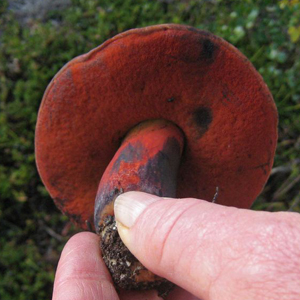
Boletus luridiformis

Ok, now that we have the inedibles out of the way, let’s start becoming mushroom detectives. Before you go out and pick these mushrooms, let me prepare you…

  • You will probably encounter bugs
  • You will probably encounter little maggots (baby bugs!)
  •  You will probably get dirty and wet

You’ve got to get over these factors if you’d like to carry on.

OK? ok….

First, all edible boletes have sponge under the caps instead of gills. Boletes are the only mushroom in Anchorage forests that have sponge instead of gills besides the hawks wing mushroom, which has hedgehog-like spines underneath (and it’s edible if you boil it, but I’ve never tried it). You can exclude any mushroom with gills because it will not be a bolete. This one fact makes bolete hunting reassuring because there is so much you can rule out. There are deceptive mushrooms that really look like bolete caps, but when you turn them over and see gills, just let them be. They tricked you!

Here are the common types of boletes you’ll come across in Anchorage forests:

Aspen Scaber-stalk — these are found in birch and spruce forests, typically around moss, low-bush cranberry and crow berry bushes. They have sienna-colored caps with dirty-looking stems (almost looks like the texture of a terry-cloth towel). The flesh also tends to oxidize and turn black when cut.

*Note: a person commented on my old blog post that the scaber-stalks can cause gastric upset. I have been picking and eating this mushroom most of my life and never experienced upset stomach, but I thought I should let it be known. I don’t care much for their flavor when fresh; I prefer to dehydrate them and add them to soups.
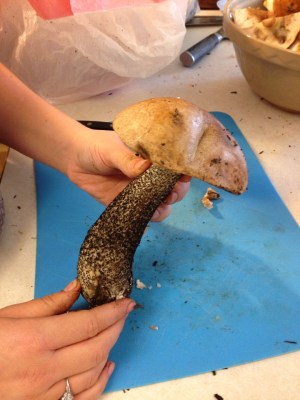
Aspen scaber-stalk
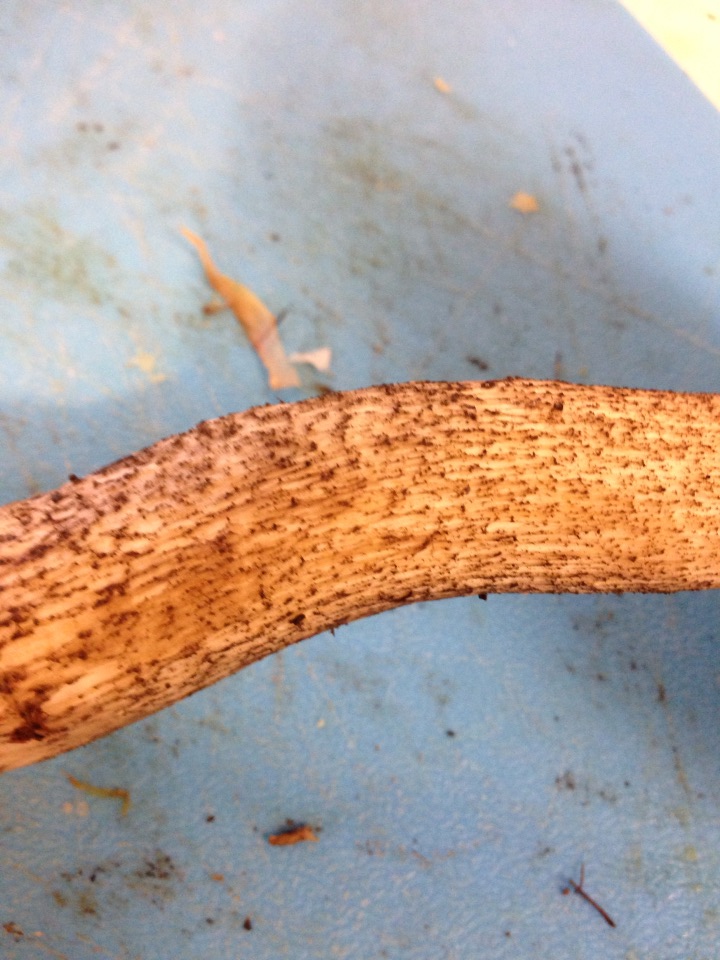
Stem of most forest boletes

Alaskan Scaber-stalk — these look a lot like the Aspen scaber-stalk but darker with a narrower stem. I don’t care much for these and when I find them, I let them be. They tend to get soggy, slimy and buggy really fast.
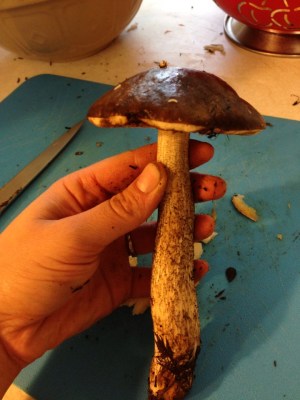
Alaskan scaber-stalk

Boletus Mirabilis — I have never encountered this bolete, but thanks to the folks at the Girdwood Fungus Fair, they have provided me with a lovely photo. I’m so excited to try and find some!

image

King bolete — this is the purest, most prized bolete and is the equivalent of a wild porcino mushroom. These have light brown caps and white stems with no terry-cloth look to them. The sponge will turn yellow with age.

Freaky melded-cap king bolete. Still delicious
King boletes

In addition to the U.S. Forest Service, here is another great site about Alaska boletes.

All right, now let’s set out to find some mushrooms! But where, might you ask? Well, boletes like to grow near spruce roots, birches and in mossy areas. You can often find boletes growing in people’s yards. You usually won’t find them in areas with long grasses and ferns or anywhere with tall vegetation. The trail system in Anchorage is a great place to start. You could also try Thunderbird Falls, Bird Creek and Girdwood.

The best time to pick boletes is from late July to mid-September. Over the years I haven’t found a true rhyme or reason to how boletes grow. Sometimes you’ll have a summer with hundreds of pounds and others you won’t find any. Usually they grow during the rainy and damp times of Alaska summers.

Boletes can grow to be pretty huge, but it’s best to pick them when they are just a couple of days old because bugs love boletes as much as humans do. They will flock to them pretty much as soon as they surface. It’s rare to find a bolete that hasn’t been lived in by a beetle or some sort of fly eggs, but if you pick them early on it doesn’t affect the quality or taste of the mushroom. I’ll show some photos later.

This large bolete was literally teeming with insects and maggots. Didn’t take this one home!

Fresh boletes should have firm stems and caps, but it’s ok if the cap is slightly soft. If you find a really squishy bolete, let it be because the bugs have laid claim to it. Sometimes you’ll find a bolete that’s firm on the cap, but when you look underneath it looks like bugs have taken it over. Not always true! Sometimes the bugs just get into the sponge part of the mushroom, which can be easily removed. Break the cap in half. If the flesh is white and has no holes in it, then keep it. Baby boletes are the best. Their cap and stem are both firm and delicious. They also look totally phallic. I just had to put that out there.

I recommend field dressing your mushrooms as you go. This means bringing a pocket knife along and whittling away the dirty root. I’m lazy and often don’t do this. It just means I’ll have more trash to throw out at home.

Boletes are sturdy so you can collect them in plastic grocery or garbage bags, five-gallon buckets, or if you’re feeling whimsical, in a lovely basket. It’s up to you. Most will say that mushrooms should never be stored in plastic bags (I can see Laurie Constantino shaking her head). I find it easier to tote large quantities of mushrooms around the forest in a plastic bag and it doesn’t seem to affect the quality of my mushrooms. Do not store your boletes in plastic bags for long periods of time. This will create too much moisture and cause them to rot.

When you find a good bolete, pick it by the base of the stem, not by the cap, as you will probably break off the cap and tear away the flesh by accident.

The great thing about picking mushrooms is they literally pop up overnight so many people could pick the same spot and still find a good share. You can usually tell if another bolete hunter has been in the area by the discarded caps and overturned trickster mushrooms. On a recent quest we covered the same ground as another hunter and still came out with nearly 40 pounds of mushrooms!

Once you’ve collected your mushrooms, you’ll have to process them. Here’s how it goes:

Start by whittling away the root of the mushroom to remove any soil. If you come across any bug-eaten mushrooms, either toss them or cut into the stem or cap to see if it’s salvageable. Sometimes the bugs will have only gotten to half the mushroom, so why waste the whole thing? Once you’ve removed the big pieces of dirt, you can run each mushroom under cold water and lightly scrub with a nail brush to remove excess dirt. Only rinse them if you plan to use them right away. Rinsing them and then storing them in the fridge may cause them to rot.

Now comes the part where you need to figure out what you’re doing with your mushrooms. They can be stored in the fridge for a couple of days, but you’ll want to prepare them as soon as you can. If you must store them, be sure to keep them in paper bags so they can breathe.

Boletes should not be eaten raw. They will probably give you an upset stomach. If I’m not cooking with them right away I either sauté the mushrooms in butter, vacuum pack and freeze them or put them in a food dehydrator for a couple of days, bag them up or grind them into porcini powder.

Either way, you’ll need to slice them up. This is where you do most of the work. You might find that lots of your mushrooms are bug eaten. I tend to toss caps that are eaten even in the slightest, but really it’s not gonna kill you so this is a matter of personal preference. You’ll be able to tell if the mushroom is too rotten to eat cause it will look totally gross. But as I said before, you can always try and cut away the nasty bits and keep the good bits. I mentioned before that you can remove the sponge. I do this with most mature boletes because the sponge ends up becoming slimy when cooking. With really new boletes, the sponge is firm and doesn’t need to be removed. It’s a bit like getting to an artichoke heart — the sponge will peel off easily and you’ll be left with the yummy cap.
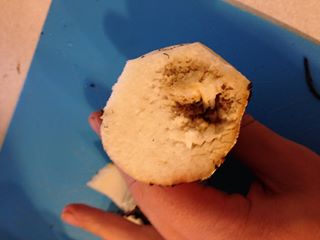
This king bolete stem has been eaten by bugs. Not salvageable
This aspen cap is nasty. Didn’t keep any of it.
This Alaskan stem was soft and dark as soon as I cut into it. It was not good.
This stem was deceiving because it felt great from the outside, but was eaten up on the inside.
This cap had maggots in the sponge, but the actual flesh was just fine.
See? Looks great! Peel off the sponge and you’ll be fine.
This is the inside of a good king bolete. Some parts have been eaten by a  bug, but I wasn’t horrified by it so I kept it.
This Alaskan bolete has oxidized. It’s fine to eat!
This is a fresh king cap. The sponge is thin and firm. It doesn’t need to be peeled off.

Once your boletes have been processed the world is your mushroom! Boletes are great in soups and sauces, but your best bet is to do a Google search for recipes for porcini. If you’ve decided to dry your mushrooms, they will need to be reconstituted when you’re ready to use them. Boil a couple of cups of water or chicken broth and pour over the dried mushrooms in a bowl. Let sit for 20 minutes and reserve the steeped water for your soup. It’ll deepen the flavor even more.

So, that’s my guide to Alaska boletes. Please contact me if you have any questions, comments or even corrections.

And remember, if you’re not extremely positive about a mushroom, don’t eat it. Better safe than sorry!

For more Alaska mushroom information, check out this short film produced by the Alaska Teen Media Institute for the U.S. Forest Service and this terrific article by Laurie Constantino for Alaska Dispatch.
Wild Porcini Orzo with Grilled Portobello Caps

Last year we picked hundreds of pounds of boletes — wild porcini mushrooms. We dried them and have since not consumed many of them; so before we hit mushroom season this summer we decided we better start using these earthy, flavorful morsels.

Wild mushrooms pair well with risotto. I had a half box of Barilla Orzo pasta, which look like grains of rice. I thought the orzo would taste super with portobello and porcini with a hint of lemon and garlic.

Costco sells a four pack of portobello caps for just a few dollars. I lightly marinated them in oil and vinegar then grilled them over high heat and topped them with roasted bell peppers and chèvre. The fresh arugula salad was the perfect accompaniment to the meal with a simple lemon vinaigrette.

This is a quick meal that’s hearty and vegetarian too.

Porcini Orzo with Grilled Portobello Caps and Baby Arugula Salad | Alaska Knit Nat

Wild Porcini Orzo with Grilled Portobello Caps and Baby Arugula Salad

Serves 3

Ingredients:

4 portobello caps

1 oz. dried porcini mushrooms

4 Tbs. butter

Olive oil

2 Tbs. apple cider vinegar

1 Tbs. balsamic vinegar

1 cup dry orzo pasta

2 cloves garlic

zest and juice of one lemon

1/4 cup Pecorino Romano cheese

1/4 cup crumbled chèvre

3 mini bell peppers

salt and pepper


Directions:

Bring a cup of water to boil. Pour over the dried mushrooms and cover. Set aside for 15 minutes. Remove the stems from portobello caps and set aside. Remove the gills with a spoon. Lightly score the tops of three of the caps with a paring knife. Reserve one cap for the orzo. Combine 1/3 cup olive oil, the vinegars, one minced clove of garlic salt and pepper to a one-gallon ziploc bag. Carefully add the caps, seal and gently toss to coat the caps. Let sit 30 minutes to an hour.

Chop the stems and one portobello cap. Remove the porcini mushrooms and reserve the liquid. Chop the porcini. Set aside.

Porcini Orzo with Grilled Portobello Caps and Baby Arugula Salad | Alaska Knit Nat

Bring a pot of water to boil and cook the orzo for 7 minutes. Drain and set aside. Lightly toss with olive oil so they don’t stick together. Meanwhile, heat the butter and one tablespoon olive oil in a large sauté pan. Add the chopped mushrooms and cook for about 5 minutes until some of the liquid has evaporated from them. Add the lemon zest and one minced clove of garlic. Cook for another couple of minutes, till garlic is fragrant. Add the orzo, 1/4 cup of reserved mushroom liquid and the juice of 1/2 lemon. Toss thoroughly and season with salt and pepper.

Set all burners on your gas grill to high and heat for 15 minutes. Chop the tops off the bell peppers and remove the seeds. Skewer them on a metal skewer. Turn grill burners to med-high and set the peppers and the mushroom caps, top side down, on the grill. Cover and grill for about 4 minutes. Flip and grill another 4 minutes. Remove everything from grill and slice the peppers. Serve the caps with sliced peppers and crumbled chèvre alongside the orzo, sprinkled with grated Pecorino Romano cheese.

Porcini Orzo with Grilled Portobello Caps and Baby Arugula Salad | Alaska Knit Nat

For the salad: Top baby arugula with sliced cherry tomatoes, blueberries and crumbed chèvre. Squeeze fresh lemon on top and drizzle on extra virgin olive oil. Season with salt and pepper.

How to Cook Perfect Beans

Taco night is always a big hit in our family and one of the most requested ingredients from our son is beans. Sure, canned beans are convenient and inexpensive, but there’s often a bit of sodium in them and when you reheat them, they can easily be overcooked.

Many are hesitant to cook dry beans due to lack of experience and convenience, but with a little planning and minimal effort, you can easily cook creamy, flavorful beans to accompany many food genres. And they are much cheaper than canned beans!

How to cook perfect beans | Alaska Knit Nat

Perfect Beans

Makes about 3 cups

Ingredients:

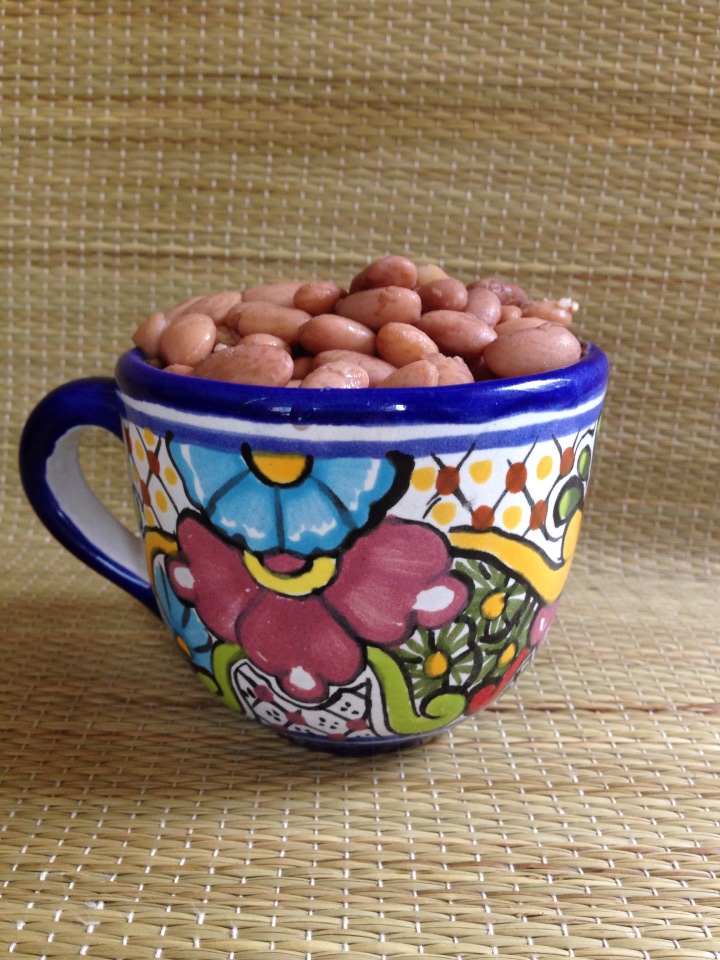
One cup of dried beans such as pinto, great northern or black

1 Tbs. salt

water

How to cook perfect beans | Alaska Knit Nat

Directions:

The morning you want to have beans for dinner, toss your dry beans into a mesh strainer and rinse with cold water. Add beans and salt to a medium saucepan. Fill with water so pan is about 2/3 full. Cover and let sit all day, about 7-9 hours.

Put pan on stove, still covered, and bring to a boil. Reduce heat and gently simmer beans for 1.5-2 hours. Be sure it’s not at a full rolling boil as the beans can get torn up if overly disturbed. Drain and serve.

*Beany tidbit: If your beans appear shriveled after soaking them it means they are past their prime. They will still taste all right but you may want to buy new beans next time.

How to cook perfect beans | Alaska Knit Nat

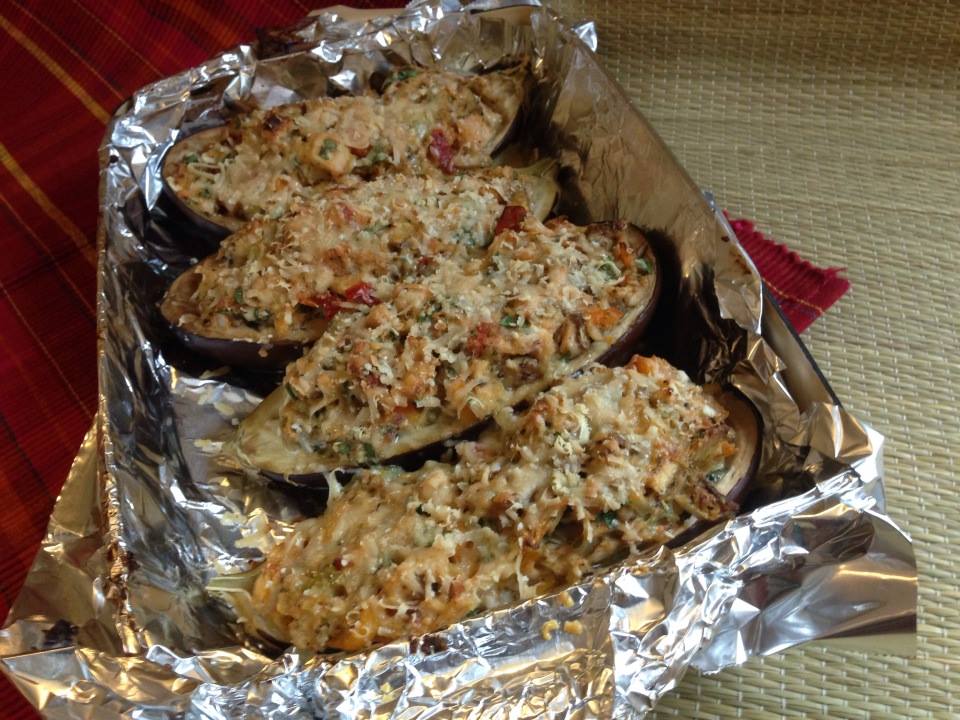
Chicken-stuffed Eggplant

Eggplant is a foreign food to me. I’ve only cooked with it once before when I made eggplant parmesan a long time back. They looked so irresistible today at Costco — so purple and shiny without a single flaw. I added a $5 rotisserie chicken, mini heirloom tomatoes and mini bell peppers to my cart and knew I’d be able to throw something together.

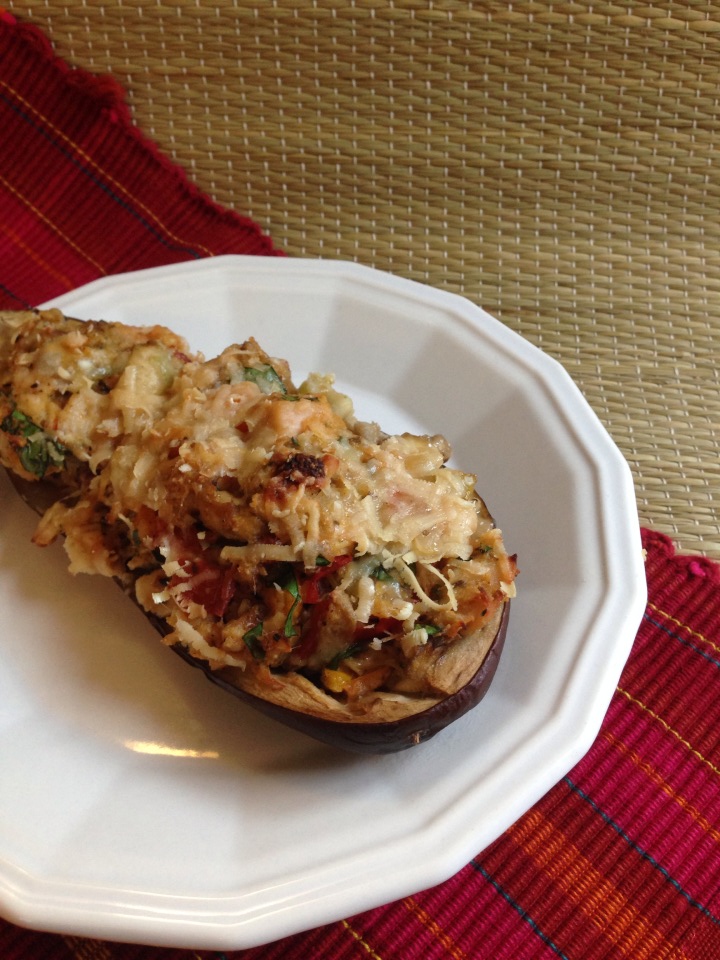
I made stuffed eggplant almost like a meatball recipe. They turned out flavorful and not too soggy, thanks to a quick technique inspired by America’s Test Kitchen.

Chicken-stuffed Eggplant | Alaska Knit Nat

Chicken Stuffed Eggplant

Serves 2-3

Ingrdients:

2 medium eggplants, sliced down the middle

2 Tbs. olive oil

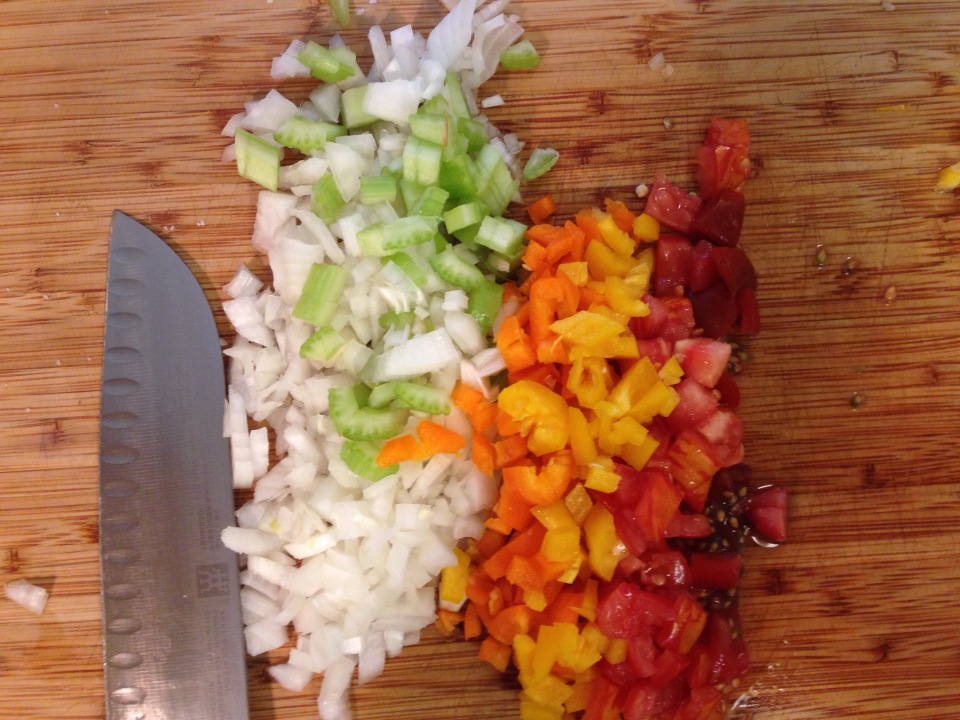
1/2 onion, chopped fine

3 mini orange and yellow bell peppers, chopped fine

1/2 stalk celery, chopped fine

1/4 cup diced tomatoes

3 cloves garlic, minced

2 tsp. dried basil

1 tsp. dried oregano

1/2 tin of anchovies, minced (about 3 filets)

1 egg

1/2 cup cooked chicken, diced

2 Tbs. fresh parsley, chopped

3 Tbs. Italian breadcrumbs

1/2 cup parmesan cheese, grated

salt and pepper to taste

Chicken-stuffed Eggplant | Alaska Knit Nat

Directions:

Carefully scoop out the flesh of your eggplants without breaking the skin. Chop the flesh into small pieces. Lightly salt the flesh and hollowed out eggplants. Place eggplant shells in a foil-lined casserole dish and set aside.

In a saute pan, heat the olive oil over medium-high flame. Add the onion, peppers, celery and tomatoes and cook till onions are soft, about five minutes. Add the garlic, basil and oregano and cook another two minutes.

In a mixing bowl, combine the egg, chicken, anchovies, parsley, breadcrumbs and sautéed vegetables. Place the eggplant flesh in a microwave safe bowl and microwave for 30 seconds. Pat dry with a paper towel. This removes excess liquid from the eggplant and makes the filling less soggy. Add the eggplant to the mix and salt and pepper to taste. Add 3 Tbs. of parmesan cheese, mix well and add filling to the eggplant shells. Lightly press the filling and create small mounds in the shells if needs be.

Sprinkle liberally with parmesan cheese and bake for 45 minutes or until browned.

Serve with brown rice.

Chicken-stuffed Eggplant | Alaska Knit Nat

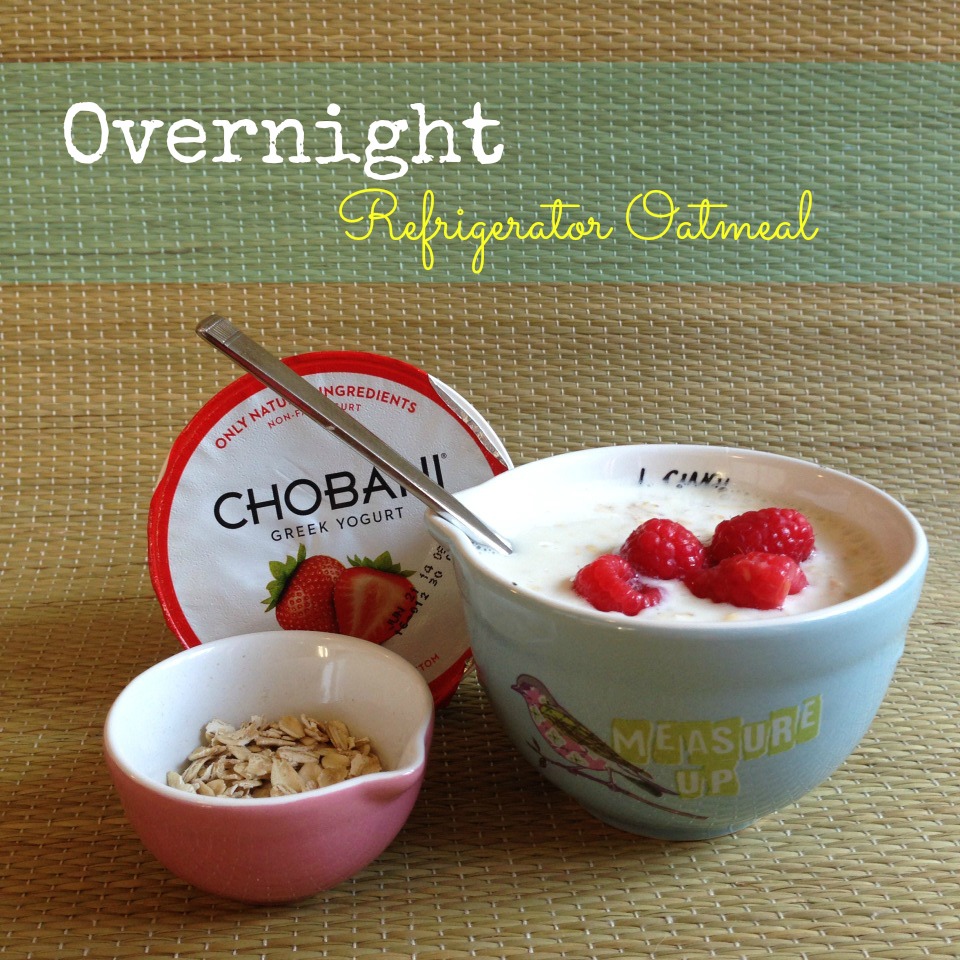
Overnight Refrigerator Oatmeal

I’m trying to eat more healthily these days and thanks to Quaker Oatmeal’s relentless heart-healthy advertising campaigns I am pretty sure oatmeal is on the good-foods list.

I tire of oatmeal. It’s texture and flavor rarely vary and since I don’t own a microwave these days (only because mine broke), oatmeal makes for a crusty, annoying pot to clean every morning.

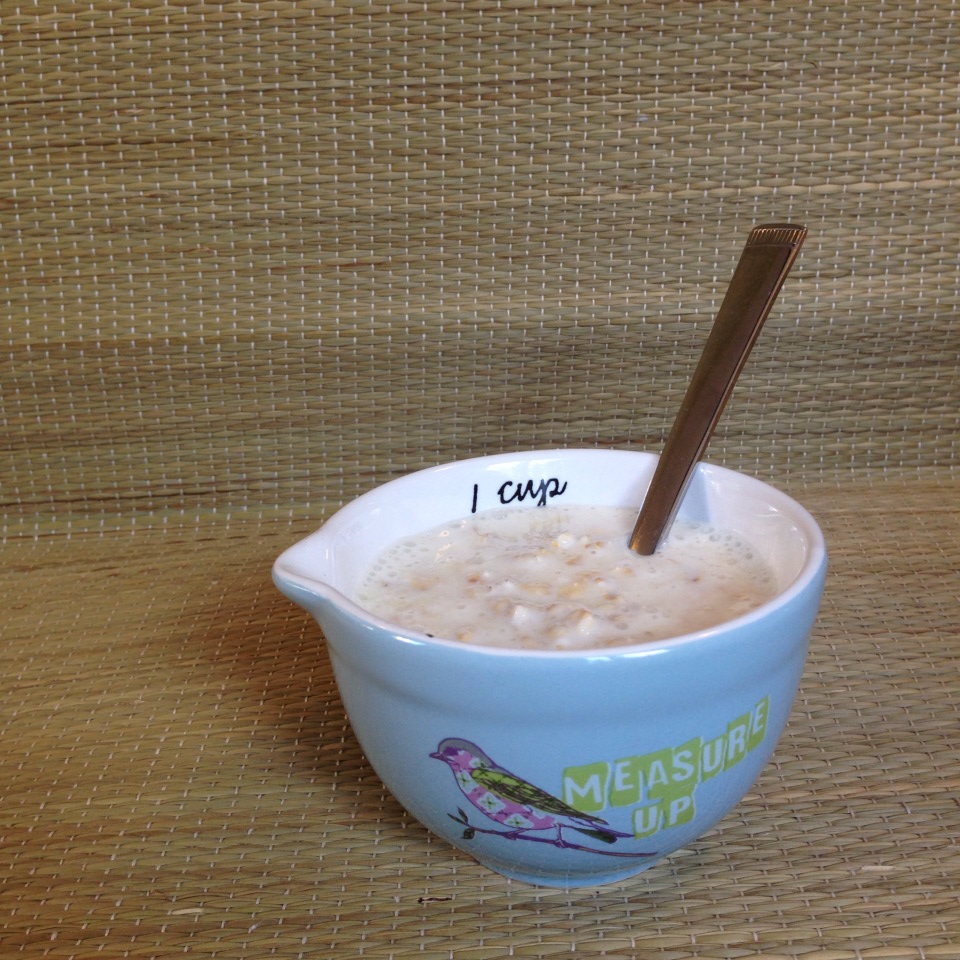
So, I decided to try out the healthy hipster refrigerated oatmeal trend. Look it up on Pinterest and you’ll find endless recipes for this dish, beautifully displayed in glimmering Mason jars. I used a plastic Rubbermaid container, but what I discovered was a simple way to prepare breakfast that was creamy, tasty and healthy. It doesn’t have the same texture as traditional oatmeal, but I was surprised how soft the oats became and how much liquid they ended up absorbing.

Feel free to substitute whatever milkish liquid you prefer, but I went with good ol’ milk.

Overnight Refrigerator Oatmeal | Alaska Knit Nat -- a super simple way to have a unique, healthy breakfast.

Overnight Refrigerated Oatmeal

Serves 1

Ingredients:

1/2 cup old-fashioned rolled oats (not the quick-cook kind)

2/3 cup milk

1 single-serving container of Chobani greek yogurt, flavor of your choice.

Agave nectar or honey to taste

Overnight Refrigerator Oatmeal | Alaska Knit Nat -- a super simple way to have a unique, healthy breakfast.

Directions:

In a container combine the oats, milk and yogurt. Mix well. Cover and refrigerate overnight. In the morning, stir in sweetener of your choice and any other toppings you like such as cinnamon, bananas or berries. Healthy yum!

What is your favorite way to prepare oatmeal? Leave me a comment!

-Natasha

Creamy Potato Salad

We’ve been having an unusually sunny and warm May, which means it’s time for BBQ food. No BBQ is complete without creamy potato salad. This recipe was inspired by one from Cook’s Country Magazine where they incorporate an egg yolk into the dressing. I’m not usually a fan of hard-boiled eggs mingling with my potato salad, but this time it turned out surprisingly well.

I know everyone has a “method” to cooking perfect hard-boiled eggs. My method is to cover the eggs with cold water and pour in a couple of teaspoons of baking soda. Cover and bring to a boil. Uncover and boil for 11 minutes. Then immediately drain and cover with icy cold water. Not only are the yolks perfectly cooked, but the eggs peel easily too.

Creamy Potato Salad | Alaska Knit Nat

Creamy Potato Salad

Serves 4

3 medium yukon gold potatoes, cut into 1-inch cubes

2 hard-boiled eggs, one yolk reserved

2 Tbs. apple cider vinegar

2 tsp. agave nectar or honey

1/2 a celery rib, minced

2 green onions, minced

2 pickles, diced

1/4 cup greek yogurt

2 Tbs. mayonnaise

salt and pepper to taste


Directions:

Toss your diced potatoes into a large pot and cover with water. Add a couple of pinches of salt, cover and bring to a boil. Turn down the heat and simmer till potatoes are just tender — about 8 minutes.

Meanwhile, whisk together the vinegar, agave nectar, and the yolk from one egg. Drain the potatoes and transfer to a bowl. Pour over half the dressing and gently toss to coat. Refrigerate for 30 minutes.

Add the remaining eggs to the remaining dressing and thoroughly mash till the egg whites are small chunks. Add the celery, green onions, pickles, yogurt and mayo. Once the potatoes are cooled, add the remaining dressing. Add salt and pepper to taste. If you prefer your salad even creamier, add a little more mayo.

If you’re looking for a healthier potato salad, why not try this tasty recipe I made with red potatoes? Click on the photo for the recipe:

img_11231

Low-guilt Nachos

I love me some junk food and nachos are near the top of the list. They are quick, cheap and can pile on the calories if you’re not careful. I like to justify mowing down on nachos by using healthier ingredients.

Here’s what I had for dinner:

Low-guilt Nachos | Alaska Knit Nat

And here’s how I made them.


Low-guilt Nachos

Serves 1 hungry person

Ingredients:

A few handfuls of Food Should Taste Good Multigrain Tortilla Chips

1/2 cup low-fat grated cheddar cheese

2 green onions, chopped

1 Tbs. Neufchâtel cheese

1/2 of an avocado

1 Tbs. low-fat sour cream

2 Tbs. salsa

Chopped cilantro

Low-guilt Nachos | Alaska Knit Nat

Here’s my no-brainer secret to making perfect nachos in the oven — bake them, don’t broil them. Broiling sometimes burns the chips before the cheese has melted. So, preheat an oven or toaster oven to 375 degrees. Arrange the chips on a foil-lined baking sheet. Top with green onions and cheddar. Dot the Neufchâtel all around the chips. Bake for about 7 minutes, or until the cheddar is gooey.

Remove from oven and top with sour cream, avocado, salsa and cilantro.

This is just a guideline, of course. You can add whatever toppings you like. Jalapeños, black beans, chicken, tofu — the world is your nacho!

If you’re in the mood for a fiesta, try some of my other recipes, such as:

Chicken Taquitos with Spinach & Wild Rice
Guacamole à la Moña
Guacamole à la Moña

Banana Cupcakes with Dulce de Leche Icing

We never seem to consume an entire bunch of bananas. There’s always those sorry two or three sitting in the bottom of the fruit bowl, waiting to be make into banana bread. I don’t even like banana bread all that much, but I hate to waste the darn things.

I decided to spice things up a bit and use my overripe bananas for something a little more decadent than sliced bread.

I basically just made regular banana bread but put it in cupcake liners and topped it with a sweet and salty icing.

My recipe was inspired by this one from Culinary Couture.

Banana bread cupcakes with dulce de leche icing -- an alternative to boring banana bread

Banana bread:

  • 1/2 cup softened coconut oil
  • 1/4 cup brown sugar
  • 1/2 cup white sugar
  • 2 eggs
  • 1.75 cups all-purpose flour
  • 2 tsp. baking powder
  • 1/2 tsp. baking soda
  • 1/2 tsp. salt
  • 1/2 tsp. cinnamon
  • 1/2 tsp. ground ginger
  • 1/4 tsp. all spice
  • 1/4 tsp. nutmeg
  • 3 overripe bananas, mashed

Banana bread cupcakes with dulce de leche icing -- an alternative to boring banana bread

Icing:

  • 6 oz. softened cream cheese
  • 3 Tbs. softened butter
  • 3 Tbs. Nestle’s La Lechera (sweetened condensed milk)
  • 1/4 tsp. vanilla extract
  • pinch of salt
  • coarse sea salt for garnish

Banana bread cupcakes with dulce de leche icing -- an alternative to boring banana bread

Preheat oven to 350 degrees. With an electric mixer, combine the coconut oil and sugar. Add the eggs and mix well. In a small bowl combine the flour, baking powder, baking soda, salt, cinnamon, ginger, allspice and nutmeg. Add the flour mixture and mashed bananas in intervals to the wet ingredients.

Pour batter into a muffin tin filled with liners or greased well. Bake for about 20 minutes or until a toothpick comes out clean. Let cool completely.

For the icing:

with an electric mixer, combine the cream cheese, butter, La Lechera, vanilla and salt. Beat until smooth and aerated. Frost the cupcakes with a knife or with a pastry bag. Sprinkle coarse sea salt on top of each cupcake.

Banana bread cupcakes with dulce de leche icing -- an alternative to boring banana bread

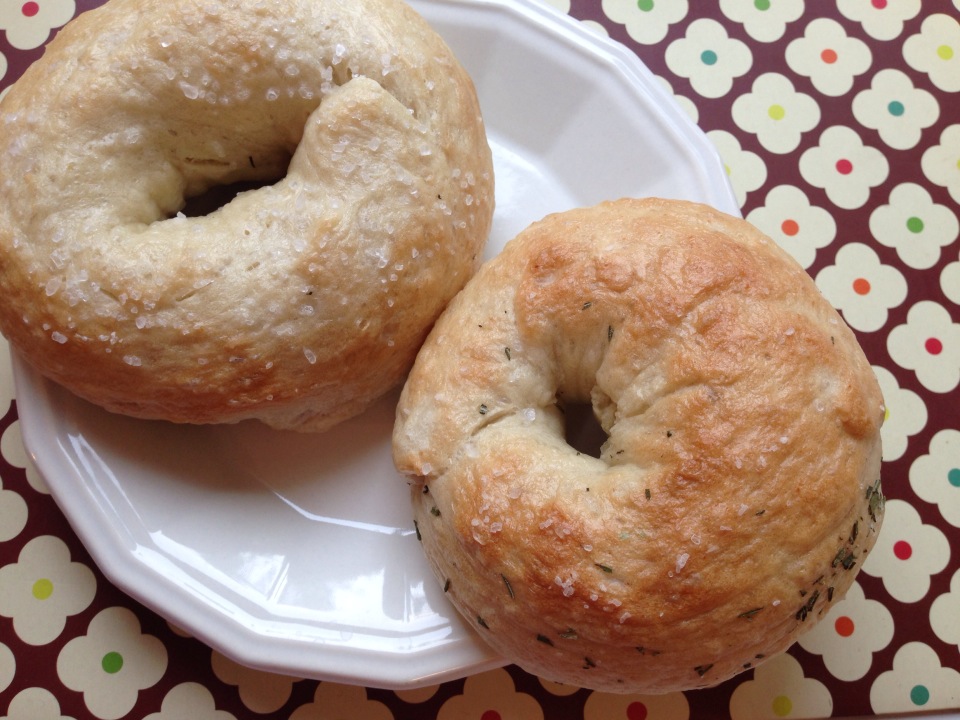
Homemade Bagels

My favorite bagels in Alaska come from LuLu’s in Fairbanks. That’s a six-hour drive from Anchorage and sometimes I crave a good rosemary bagel! I’ve blogged about bagels in the past, but I have to post the recipe I made tonight because it was near perfect. Homemade bagel heaven. Crusty and salty on the outside, soft and chewy on the inside.

The recipe hails from an unassuming corner of the internet — HubPages.com. It contains few ingredients and the steps are simple. I tweaked the ingredients and process ever so slightly, which is why I’m posting it. I will forget how I made them if I don’t!

Homemade Bagels | Alaska Knit Nat

Ingredients:

4 cups all-purpose flour

1 Tbs. sugar

1.5 tsp. salt

1 Tbs. vegetable oil

2 tsp. yeast (not instant rise)

1.25-1.5 cups warm water

2 Tbs. chopped fresh rosemary (optional)

Coarse salt (optional)

Homemade Bagels | Alaska Knit Nat

Directions:

Place all the dry ingredients plus the oil in a Kitchen Aid mixer. With the hook attachment turn the machine onto a medium setting. Slowly pour in the water and wait for it to be fully incorporated into dough before adding all the water. If the dough is too dry, add the remaining quarter cup water. Knead the dough on a floured surface for about five minutes. Place back in the mixer bowl and cover with plastic wrap. Let rise until doubled in size, about 1.5 hours.

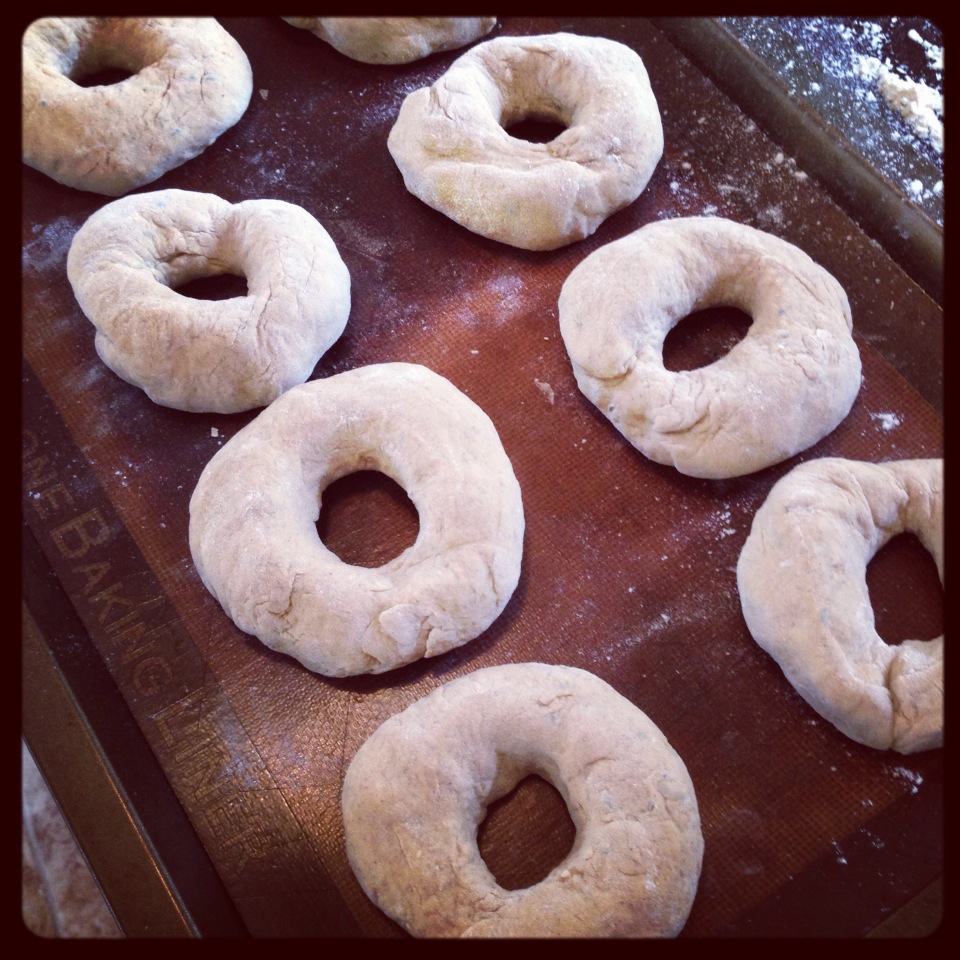
Once risen, remove the dough and split into eight even-sized balls. This is where I incorporated the chopped rosemary. Roll each ball into a snake, about 8 inches long, folding in the rosemary as you go. Overlap the ends to make a bagel shape and carefully roll the the seam part of the bagel back and forth till it’s combined and sealed.

Pumpkin Rosemary Bagels

Form the rest of your bagels and set them on the Silpat-lined or greased baking sheet. Cover with plastic wrap and set aside.

Homemade Bagels | Alaska Knit Nat

Bring a large pot of water to a boil and preheat the oven to 425 degrees. When the water is boiling, gently set a few bagels at a time into the pot, being sure not to overcrowd. Boil for one minute, then flip the bagels and boil another minute. Using tongs, remove the bagels and place them back on the baking sheet. Sprinkle liberally with coarse salt. Boil the remaining bagels. Place baking sheet in the oven and bake for 20 minutes, turning the sheet around halfway through. Let cool completely.
Slice, toast, butter and enjoy the bagely goodness.

Homemade Bagels | Alaska Knit Nat