
All posts by alaskaknitnat

Welcome to Alaska Knit Nat! I was born and raised in Anchorage and have always had a passion for making useful things, whether they are eaten, knit, crocheted, sewn or randomly glued and assembled. I received my bachelor’s degree in French and journalism from the University of Alaska Anchorage and work almost full time at a nonprofit and way over time as a mom.

Apple Cranberry Sauce

Cranberry sauce always seems like the dish that gets most forgotten about at the Thanksgiving table. The tart cranberry – who needs that when you’ve got rich gravy, juicy turkey, creamy mashed potatoes, and buttery stuffing?

I agree with Samin Nosrat that cranberry sauce is a necessary part of the Thanksgiving menu as it’s one of the only acidic dishes to make an appearance. It cuts through the buttery, the creamy and the richness. It also is the most beautiful dish to accentuate your holiday table with a ruby-red glow.

You could easily open up a can, slide it out onto a platter and call it a day, but with minimal effort you could have a gorgeous side dish that’s sure to delight your Thanksgiving guests.

I add apple to my recipe because it counterbalances the tartness of the cranberries and it’s my foolproof method to ensure the sauce thickens. The apples become the same color as the cranberries so no one will even realize they are there.

I use foraged lowbush cranberries (also called lingonberries) but you can use the cranberries from the grocery store and it works the same way.

Easy Cranberry Sauce with Apples

Serves 6-8
Prep & Cook Time: 20 minutes

Ingredients:

  • 12-14 ounces cranberries, fresh or frozen
  • 2 cups finely diced apples (peel the apples first)
  • 1 cup sugar
  • 2 tablespoons maple syrup
  • A pinch of salt
  • 1/3 cup apple cider
  • 1 cinnamon stick

Directions:

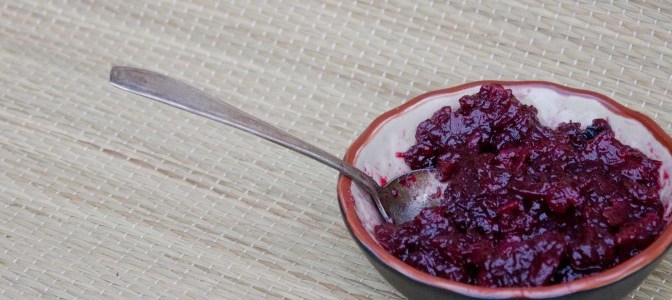
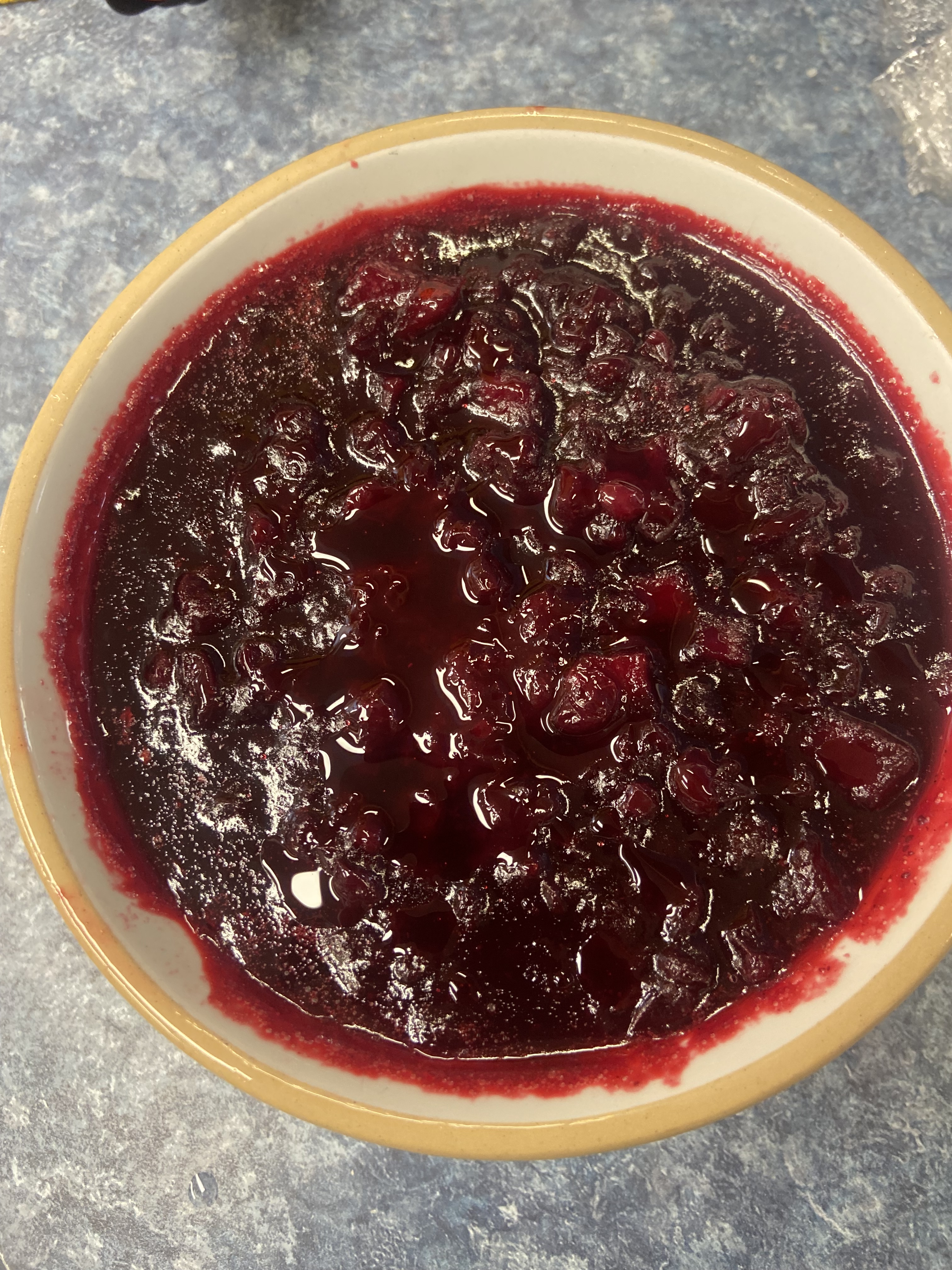
Add all the ingredients to a pot and heat over medium high, stirring all the while. When it comes to a simmer, turn down the heat and cook until the cranberries have popped and the apples are soft, about 15-20 minutes (till it looks like jam). Gently smash the berries with a wooden spoon against the side of the pan as they simmer. At first it’ll seem like it’s never going to look like cranberry sauce and then it transforms and becomes deep red and sort of glossy.

Let cool, remove cinnamon stick, transfer to an airtight container, and store in the fridge till ready to serve.

My Favorite Thanksgiving Stuffing

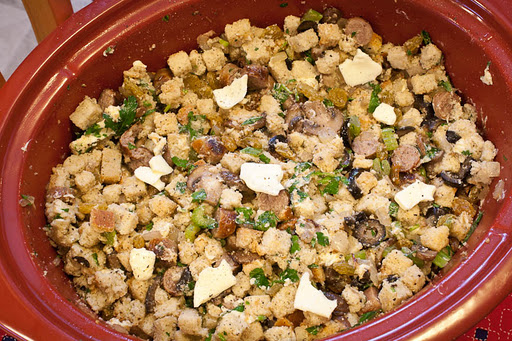
My dad’s stuffing recipe has been a family tradition for as long as I can remember. Many years ago I took over making the stuffing and now it’s technically considered dressing because we don’t stuff the turkey anymore and I prepare it in a slow cooker. Not only is this less likely to cause a food-borne illness it also makes the turkey cook faster and frees up oven space. The slow cooker makes the stuffing fluffy and moist – you’d never know it wasn’t resting inside the cavity of a bird for several hours!

If you don’t have a slow cooker, I provided oven instructions at the end of the recipe.

Happy Thanksgiving!

-Natasha

Daddy O’s Thanksgiving Stuffing

Serves 8-10
Prep time: 30 minutes
Cook time: 4-5 hours

Ingredients:

  • 1 onion, chopped
  • 3 celery stalks, chopped
  • 6-8 ounces sliced crimini or button mushrooms
  • 1.5 packets of breakfast sausage links
  • 1 cup cup golden raisins
  • 1 can of medium black olives, drained and chopped
  • 14 oz. bag seasoned bread cubes (or two boxes of Mrs. Cubbison’s since there are fewer cubes in the boxes)
  • 1/2 cup finely chopped parsley
  • Salt and pepper, to taste
  • 3/4 stick of butter
  • About 1 cup chicken stock

Directions:

Start making this when you’re ready to eat breakfast. This way you can eat a couple of sausage links with some eggs while the other ones are cooling.

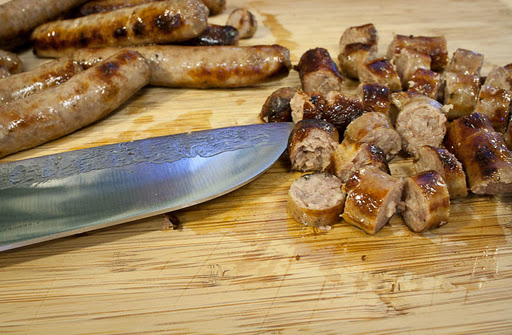
Brown all the sausage links in a big sauté pan. Once they are cooled, chop them into little rounds.

Secret ingredient: meat

Add 2 tablespoons butter in the sauté pan and heat on medium-high. Add the celery, onion and mushrooms and cook till everything is softened, about 7 minutes.

In a very large mixing bowl, add the breakfast sausage, celery, onion, mushrooms, bread cubes, raisins, olives, parsley, salt and pepper. Mix thoroughly with your hands (they are truly the best tool for this).

Cut the remaining butter into little cubes and mix into the stuffing. Periodically pour in the chicken stock between mixing so everything is well incorporated. You don’t want to overdo it with the stock as it can make everything soggy, so splash some in here and there until the cubes are moistened but not saturated.

Spray the inside of your slow cooker with cooking spray and add the stuffing. Dot with a little more butter if you have some.

Cover the slow cooker and turn it to low. Let it cook for 4-5 hours. Don’t remove the lid until you’re good and ready because it takes a long time to reheat a slow cooker.

When dinner is ready, transfer to a pretty serving dish, reserving any extra in the covered slow cooker to keep warm.

Oven method: Follow the same instructions using a large Dutch oven and bake at 275F for 2-3 hours, stirring occasionally. 
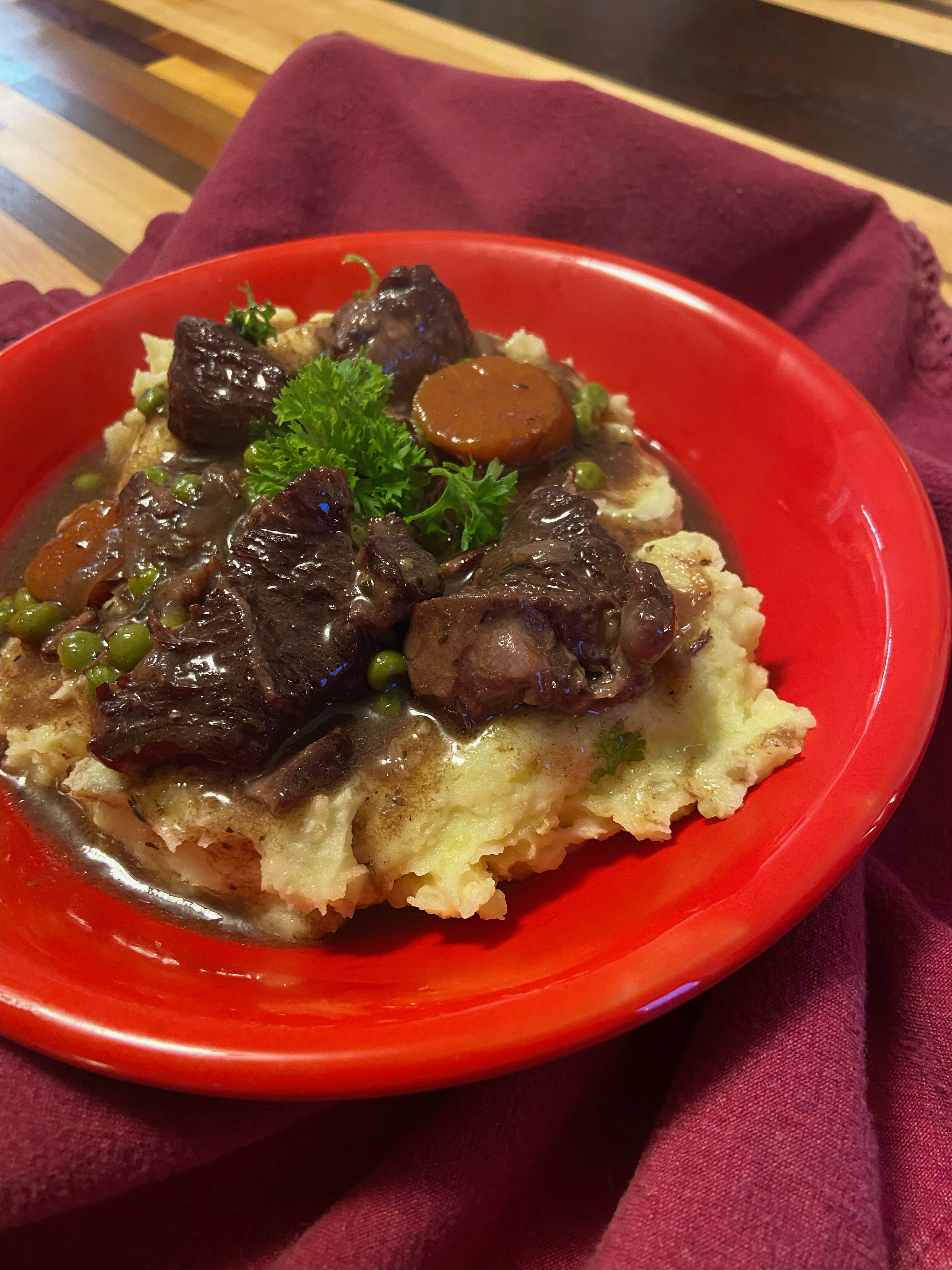
Beef Stew with Anchovies & Thyme, Revisited

Years ago when I was a newlywed trying to impress my husband with my cooking skills I found a recipe for a lamb stew in a random cookbook and would make it often using beef instead. He really loved it and I thought I did too. I even blogged about it, but I stopped making it and eventually forgot about it.

A few months ago my husband asked me about that dish and why I never make it anymore. He requested I make it again. I was surprised to find my hastily written blog post about it and when I read through it I realized how much I’ve learned as a cook in the past 15 years. My original recipe doesn’t cook the flour – I just toss it in with the wine and stock. It only calls for braising the stew meat for 30 minutes. No wonder I remember this dish as being tough and difficult to digest. It needs to be slow cooked in the oven like a proper stew so the flavors can meld and the meat can get nice and tender!

So with my seasoned chef’s hat securely on my head, I set to reimagine this recipe and make it more palatable but with the same flavors my husband yearned for. I turned to the stew queen herself, Julia Child, whose boeuf bourguignon recipe is pretty much considered the holiest of stew recipes.

I’ve hybridized her recipe with mine. And I quite like it!

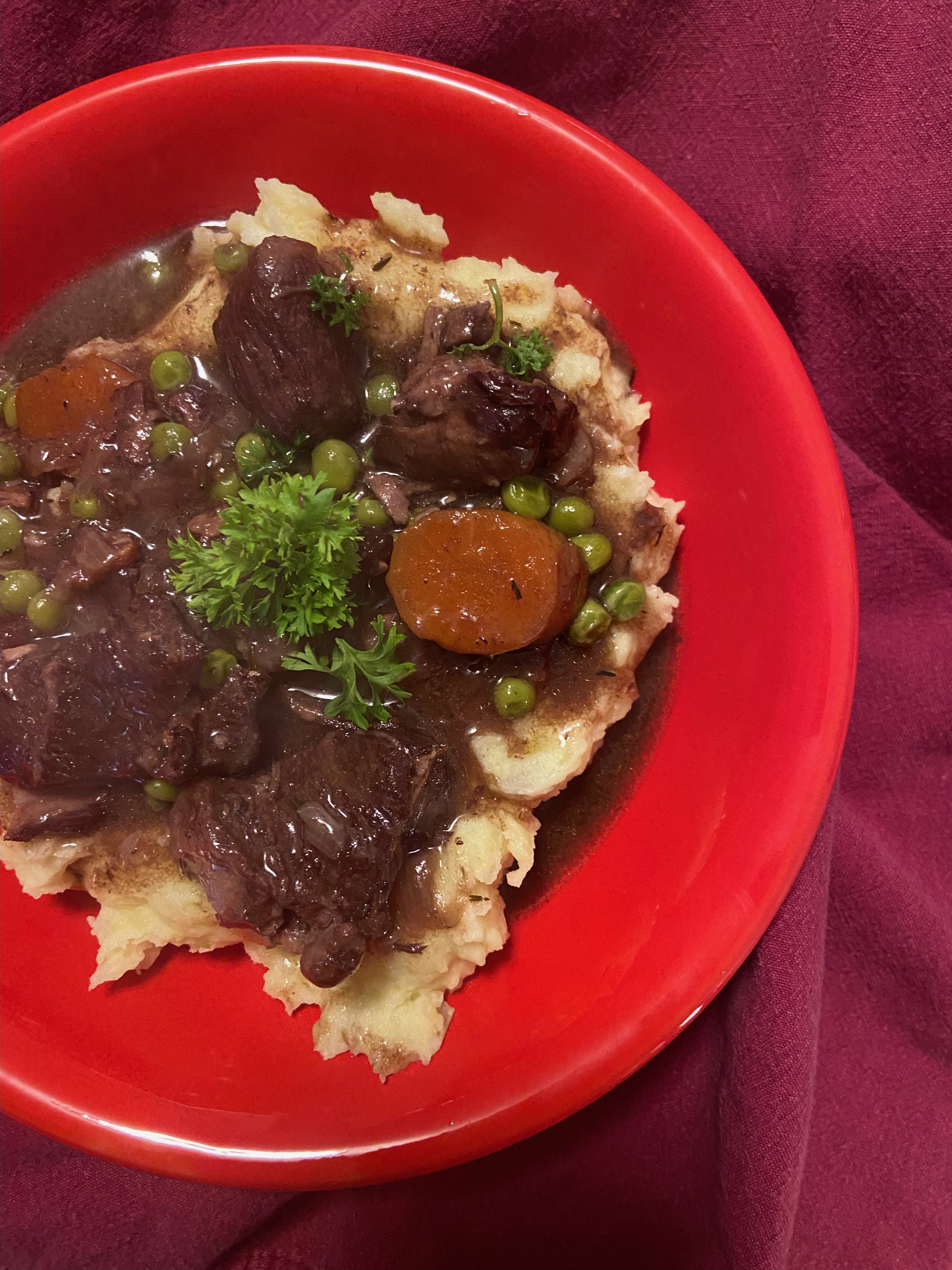
Beef Stew with Anchovies and Thyme

Serves 4
Total prep & cook time: 3.5-4 hours

Ingredients:

  • 6 ounces bacon, cut into 1-inch pieces
  • 1 tablespoon cooking oil
  • 2-3 pounds beef chuck, cut into 2-inch pieces
  • 1 medium carrot, roughly sliced
  • 1 medium onion, roughly chopped
  • 1 teaspoon salt
  • black pepper, to taste
  • 2 tablespoons flour
  • 2 cups red wine
  • 1 1/2 – 2 cups beef or chicken stock
  • 3 garlic cloves, minced
  • 6 anchovy fillets, minced
  • 1 1/2 teaspoon dried thyme
  • 1 cup frozen peas
  • Parsley, for garnish

Directions:

Preheat the oven to 450F.

Bring 1 1/2 quarts of water to a boil and add the chopped bacon. Simmer the bacon for 10 minutes and then remove bacon with a slotted spoon to a paper towel-lined plate. Dab the bacon pieces dry. This removes the smoky flavor from the bacon so it doesn’t overpower your stew.
In a large enameled Dutch oven, heat the oil. Add the bacon pieces and cook until bacon is browned. Remove with a slotted spoon to a plate. Pat dry the beef pieces and add about 1/3 of them to the Dutch oven. You don’t want to add too many or the pot will cool down and the meat won’t get nicely browned. Brown the beef, turning with tongs till there’s a nice crust on them. Place on the plate with the bacon. Repeat with the remaining pieces of beef in batches till it’s all browned.

Add the chopped carrot and onion to the pot and sauté until onion is starting to brown, just a few minutes. Drain the remaining oil from the pot.

Place the bacon and beef pieces back into the pot and add the salt and pepper. Sprinkle the flour all over till the beef is coated in the flour. Place the Dutch oven in the oven for 4 minutes. Remove, stir the beef, and place in the oven for another 4 minutes. Place the pot on the stove and turn the oven down to 325F.

Pour the wine and stock into the pot and add the garlic, anchovies and thyme. The liquid should just cover all the beef pieces, so add more stock if you need to. Bring this to a simmer, then cover and place in the oven for 2 1/2-3 hours or until the meat is falling apart tender.

Remove from the oven and bring to a simmer on the stove over low flame. Skim off any excess fat from the stew. Stir in the frozen peas until they are thawed and heated through. If the stew liquid is too thin, simmer over the stove until some of the liquid evaporates. If the liquid is too thick, add a little more stock.

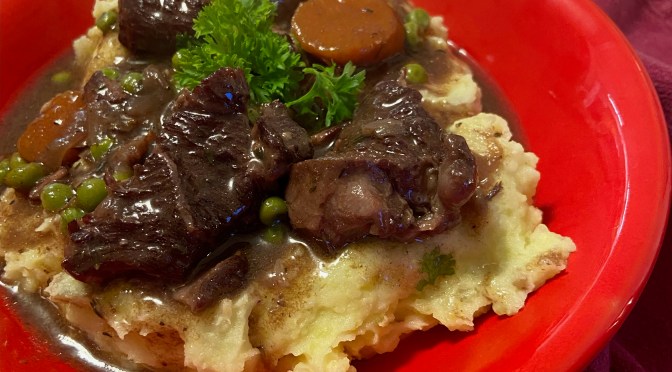
Garnish with fresh parsley and serve with potatoes or egg noodles.

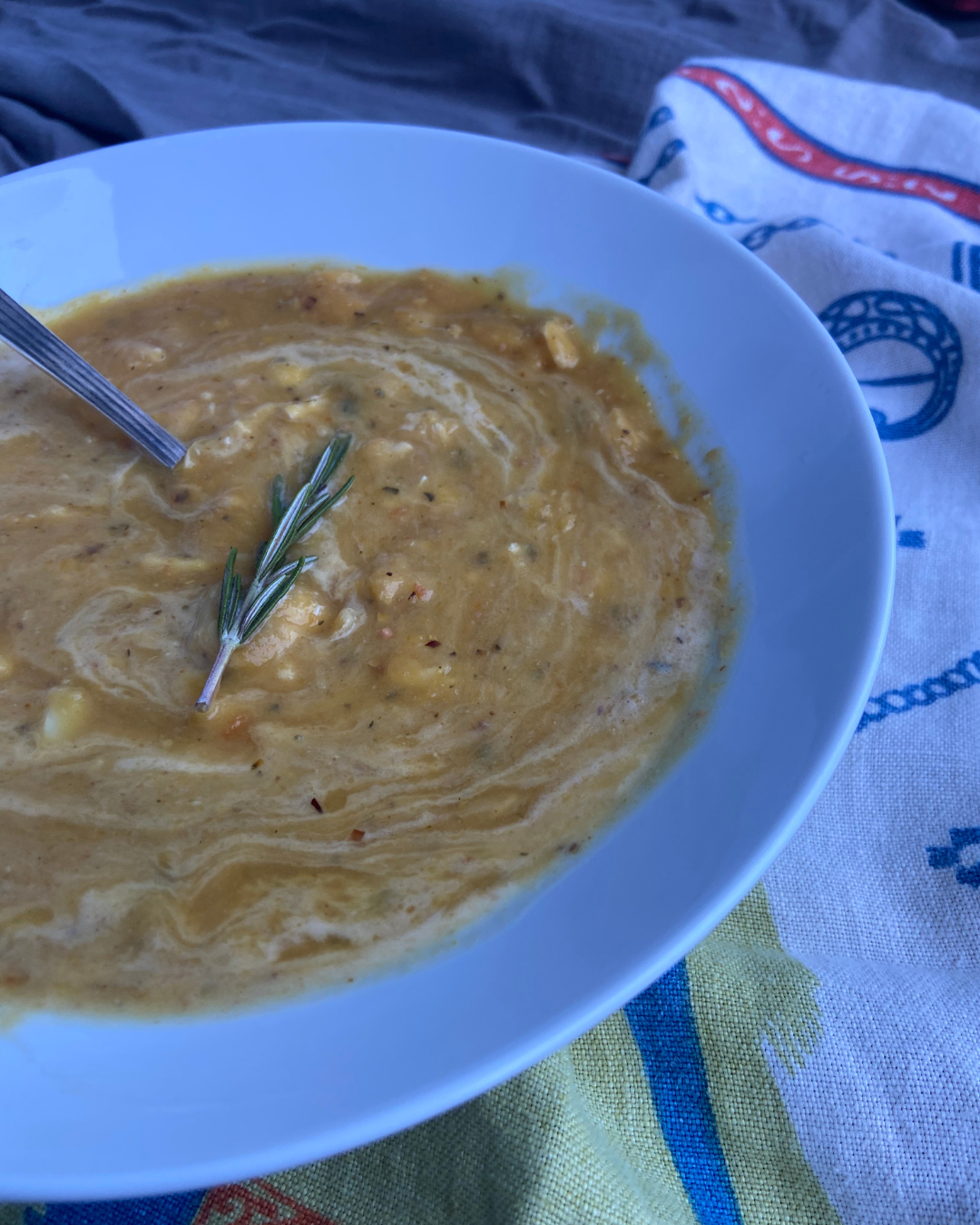
Roasted Delicata Squash Soup with Chicken and Corn

It’s dinnertime yet again and I’ve got a leftover Costco rotisserie chicken taking up space in the fridge. I also picked up some delicata squash, which I never know what to do with. Soup time!

I love inventing soups. I use some pantry staples, rummage around in the fridge for other ingredients and an hour later I’ve got something wholesome, healthy and delicious on the table.

Roasted Delicata Squash Soup with Chicken & Corn

Serves 6-ish
Cook time: 1 hour

Ingredients:

  • 2 delicata squash
  • 1 tablespoon olive oil
  • 1 ear fresh corn
  • 2 tablespoons butter
  • 1 onion, chopped
  • 2 celery stalks, chopped
  • 2 medium carrots, chopped
  • Salt, to taste
  • 1/4 cup white wine (I used sake)
  • 1 bay leaf
  • 1 sprig of fresh rosemary, stem discarded
  • 3 sprigs fresh thyme, stems discarded (or 1/4 teaspoon dried thyme)
  • 4 cups chicken stock
  • 1 can white beans, drained
  • 2 cups chopped leftover rotisserie chicken meat
  • Cream, for serving

Directions:

Preheat oven to 400F. Chop off the ends of each squash and cut them lengthwise. There is no need to peel them. Scrape out the seeds with a spoon. Place the squash halves on a sheet pan and coat inside and out with the olive oil. Bake for 30 minutes or until squash is fork tender.

Meanwhile, chop the kernels off of the corn and set those aside. Don’t toss the corn cob because it goes into the soup!

Melt the butter in a heavy-bottomed 4-quart pot over medium-high heat. Add the onions, celery and carrots. Sprinkle with a little salt and sauté until onions are soft, about 7 minutes. Add the white wine and let it bubble away for a minute or so.

Add the bay leaf, rosemary, thyme, chicken stock and the corn cob. Bring to a simmer, cover, and let simmer for about 20 minutes, until the carrots are soft.

Remove the squash from the oven. Roughly chop the squash and add it to the pot along with the drained beans. Cover again and cook for 10 minutes. Remove the corn cob and bay leaf from the pot and discard.

Remove pot from heat and blend with an immersion blender until it’s a consistency you like. I like mine a little chunky.

Place pot back on the heat and add the chicken bits and corn. Simmer for another 10 minutes. Add salt to taste. Serve with dollops of cream.

Salmon Smashburgers

Everyone has a salmon burger recipe. But THIS salmon burger recipe is really, really good. My friend Matt adapted a Mark Bittman recipe and served them up to my family a few months ago. I coined them “salmon smashburgers” by the way he haphazardly tossed balls of the salmon mixture into a pan and smashed them with a spatula (I cover a potato masher in parchment paper and secure with a rubber band around the handle. This keeps the salmon from sticking to the masher).

These burgers are so good, no bun is needed (but you can certainly add a bun if you’d like). They are moist, super flavorful, and a total hit.

This is also a great way to use the extra salmon meat when you’re filleting salmon. I filleted about 70 sockeye salmon over the past week and I used a serrated grapefruit spoon to scrape away any meat I might have left on the ribs after I filleted each fish.

Salmon Smashburgers

Makes about 4 burgers
Cook time from start to finish: 20 minutes

Ingredients:

  • 1 1/2 pounds skinless, boneless salmon
  • 2 teaspoons Dijon mustard
  • 3 scallions
  • 1/2 cup panko
  • Juice of half a lime
  • 1 tablespoon capers
  • salt and pepper, to taste
  • 2 tablespoons butter
  • Arugula, for serving
  • Sriracha mayo, for serving (See recipe below)
  • Lemon or lime wedges, for serving

Sriracha mayo:

  • 1/3 cup Kewpie mayo (the non-American kind with MSG is the best)
  • 2 tablespoons Sriracha (or more to taste)
  • Juice of half a lime
  • 1/2 teaspoon sesame oil

Directions:

Cut the salmon into chunks and place a quarter of it in a food processor with the mustard. Turn on the food processor and and let it run, scraping down the sides if necessary, until it’s a paste.

Add the scallions and remaining salmon and pulse the food processor until the fish is chopped and well combined with the salmon puree. The salmon pieces should be about 1/4-inch big.

Scrape the mixture into a bowl and stir in the panko, capers, salt and pepper. Form into four equal balls and set on a plate.

Combine all the ingredients for the Sriracha mayo and set aside.

Heat a griddle or large frying pan over medium high and melt the butter. When the foam subsides, add each salmon ball, smashing it down so each one is nice and thin. Cook till browned, about 3-4 minutes, then flip and cook the other side for 1-2 minutes.

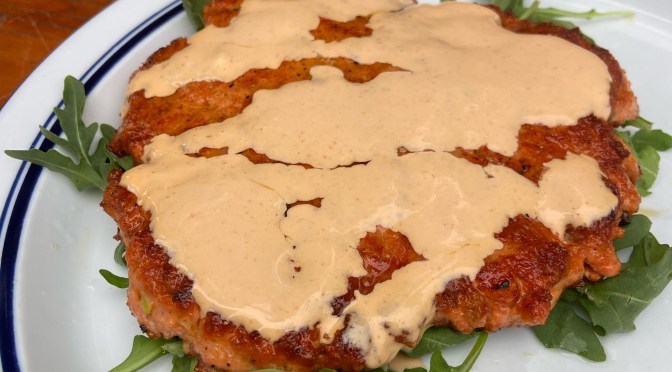
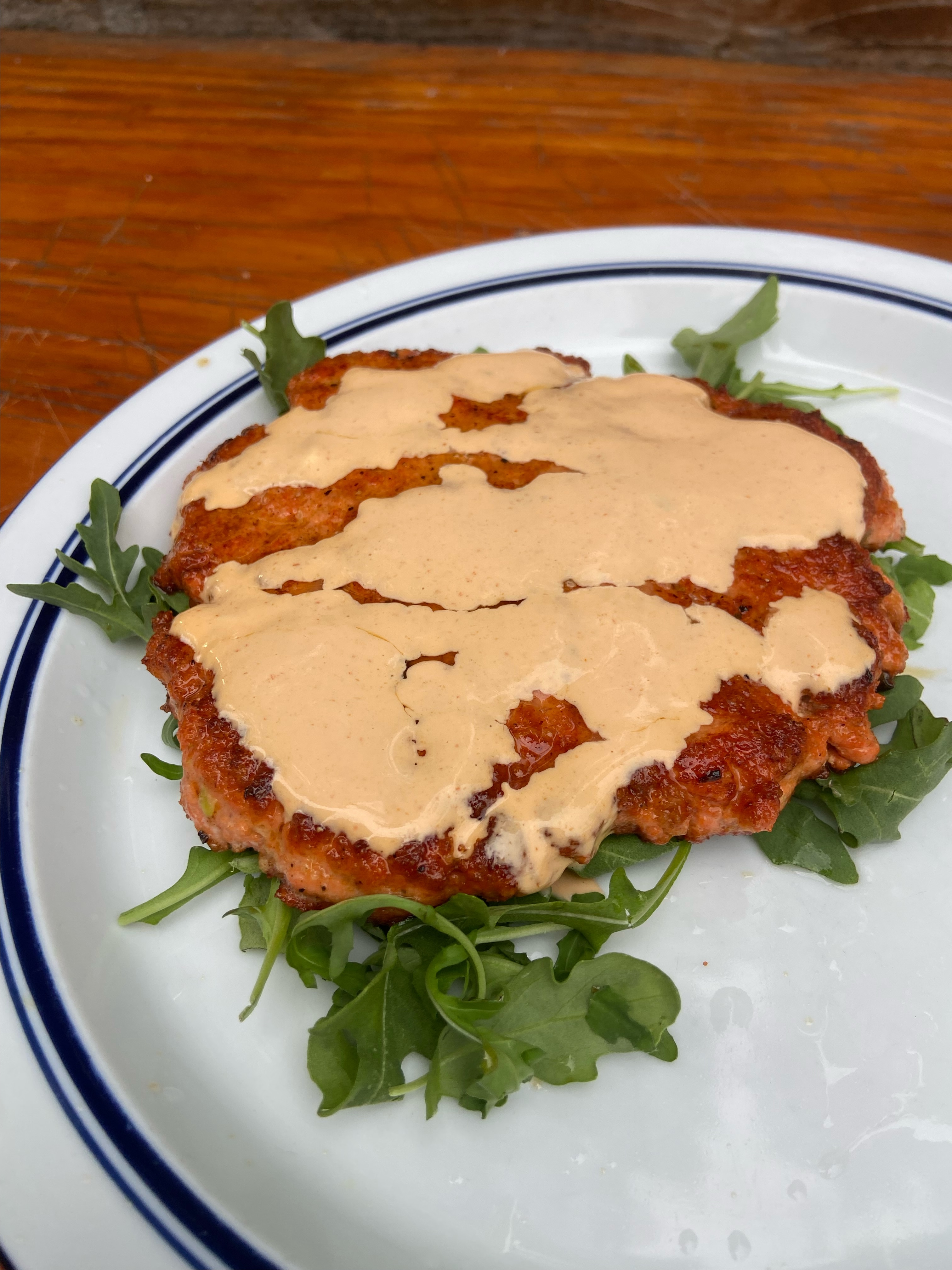
Serve on a bed of arugula and top with Sriracha mayo and a squeeze of lemon or lime.

Salmon smashburgers

The Best Chicken Salad

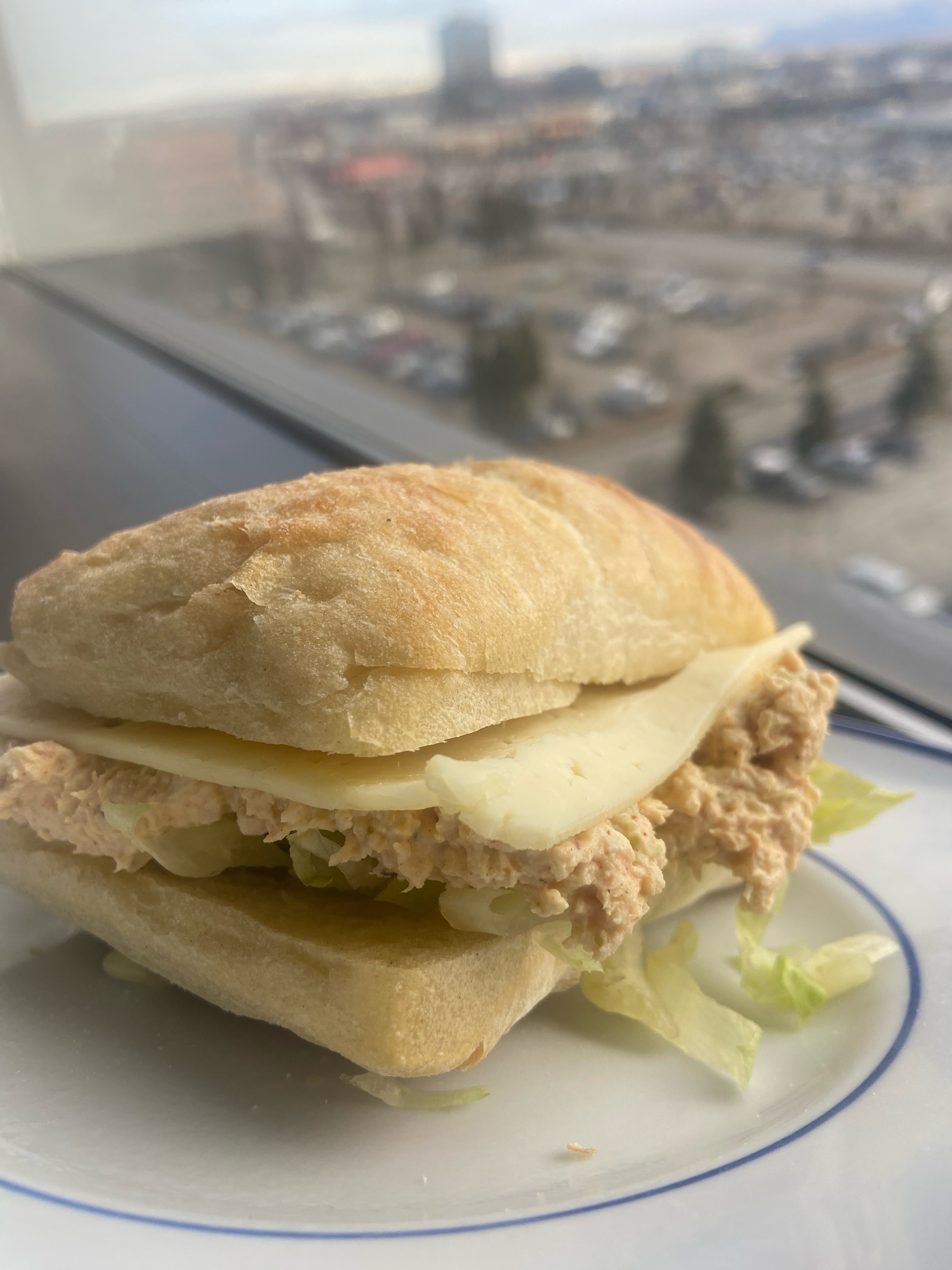
Chicken salad has always been “meh” to me. I don’t mind the flavors, but I’m not a fan of big chunks of cold chicken. It turns out it is mostly a texture thing for me. The other day, the Instagram algorithm suggested a reel from Rachel Halldorson that I had to try. She uses a leftover rotisserie chicken in a creative way and puts the chicken in a food processor. Having a consistent texture in my chicken salad is what does it for me apparently!

I highly recommend her method of making crispy chicken skin to top off a chicken salad sandwich, but I wanted to jot down my version of her chicken salad recipe here so I don’t forget it.

The Best Chicken Salad

Serves 4-5

Ingredients:

  • 2 celery stalks, roughly chopped
  • 1/4 of a medium onion, roughly chopped
  • 1 pound leftover rotisserie chicken meat, chopped into chunks
  • 2 tablespoons Dijon mustard
  • 1/2 cup Duke’s mayonnaise
  • 1 teaspoon white wine vinegar
  • 1/2 teaspoon smoked paprika
  • 1 teaspoon salt, or to taste
  • Freshly ground pepper, to taste

Directions:

Toss the celery and onion into a food processor and pulse till it’s coarsely chopped. Add the chicken and pulse until chicken is finely chopped, but not too fine as to create a paste. Place mixture in a mixing bowl and stir in the mustard, mayonnaise, vinegar, smoked paprika, salt and pepper. It should have the consistency of tuna salad.

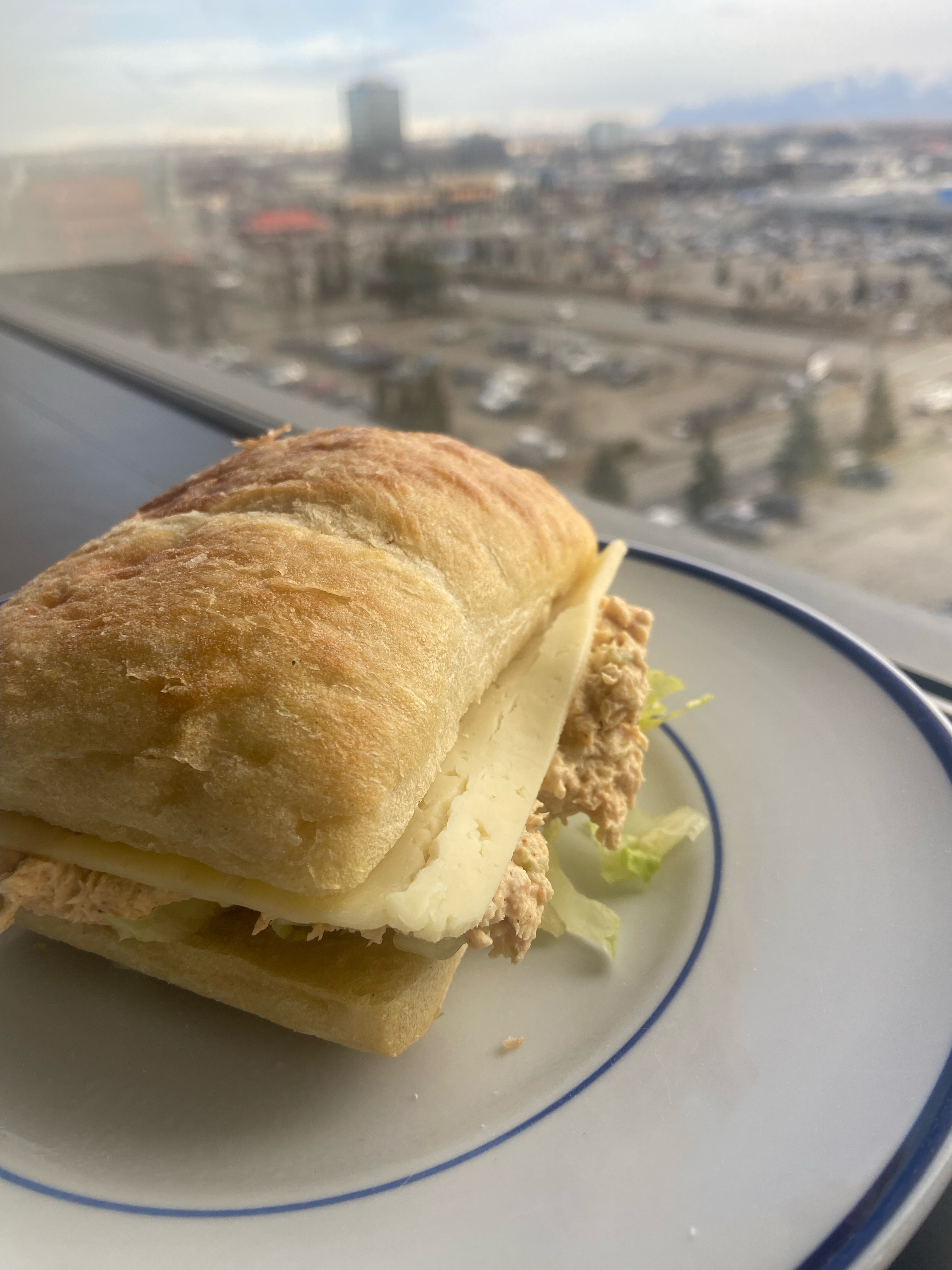
Serve on toasted, buttered bread, havarti cheese, and finely chopped romaine lettuce.

Homemade Russian Pelmeni – Updated

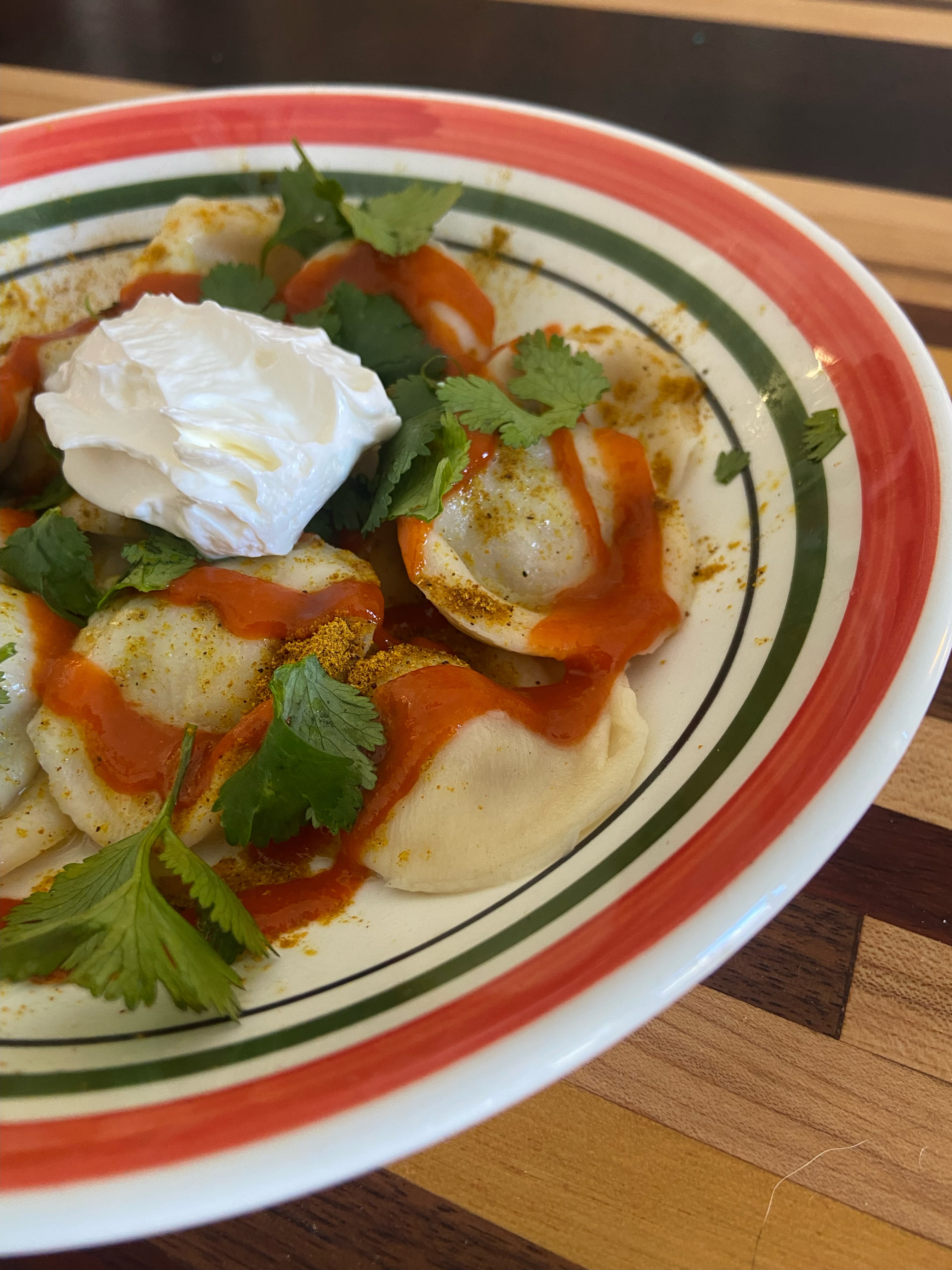
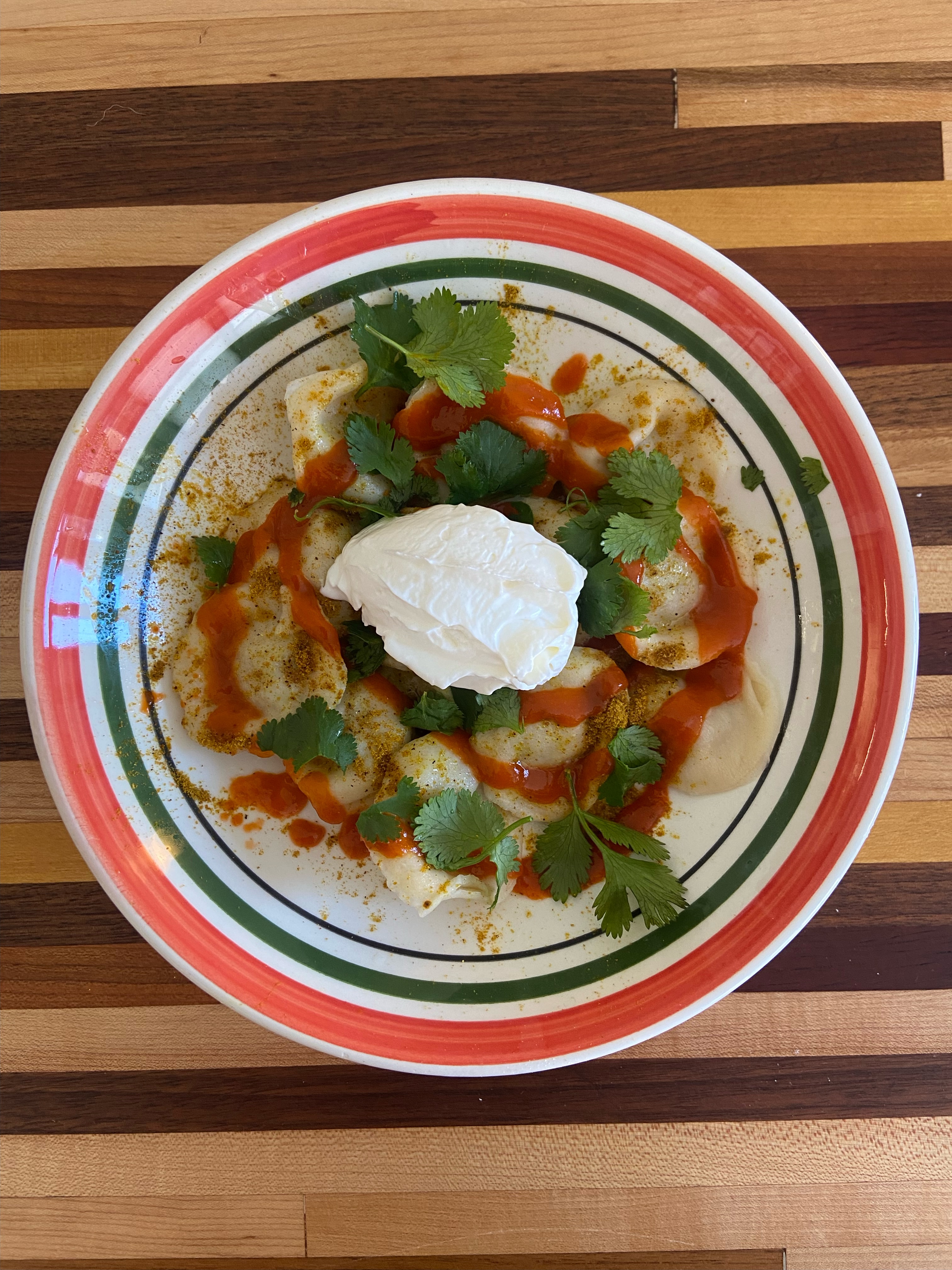
Back in 2011 I posted a recipe for one of my favorite dumpling recipes – pelmeni. This was back before I had all the recipe-writing knowledge I have today, so I wanted to update this recipe for anyone wanting to make these delicious dumplings at home.

It’s super helpful to have a pelmeni mold, but you can always make them using a small glass as a dough cutter and folding them into half moon shapes.

Russian Pelmeni

Makes about 60 dumplings

Ingredients for the dough:
1/2 cup warm water
2 eggs
About 260-270 grams AP or 00 flour, plus more for dusting

Ingredients for the meat filling:
1/2 medium onion, chopped very finely (I recommend using a small food processor)
1 tablespoon olive oil
2 garlic cloves, minced
1 teaspoon curry powder
1/2 pound ground beef
1/2 pound ground pork
1/2 teaspoon salt
Pepper, to taste

For the topping:
Butter
Rice vinegar
Curry powder
Sriracha
Fresh cilantro
Sour cream

Directions:
In a medium bowl, whisk together the egg and water. Incorporate flour till you have a soft, stretchy dough that isn’t sticky to the touch. Knead on a floured surface for five minutes, incorporating flour if it’s still too sticky. Wrap the dough in plastic wrap and let sit for 30 minutes.

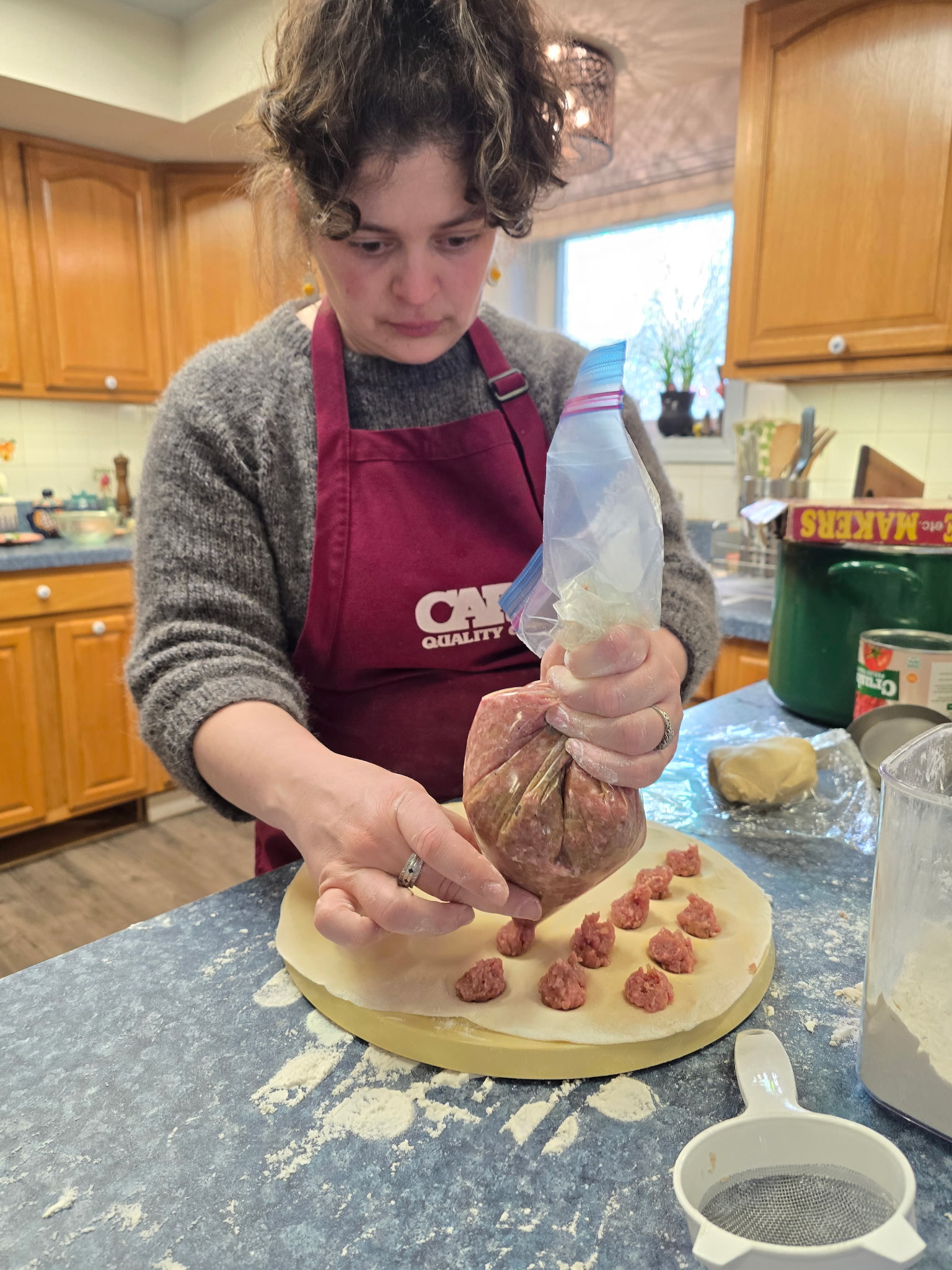
Meanwhile, heat a pan with the oil over medium-high. Add the onions and sauté until onions are soft, about 5 minutes. Turn the heat to medium, add the curry powder and garlic, and cook for 1 more minute. Let this cool off the stove while you combine the beef, pork, salt and pepper in a mixing bowl. Once onions are mostly cooled, add to the meat and combine well. Cook a small sample in your frying pan to sample, if you like, then adjust for salt. Once the meat mixture is seasoned to your liking, place it in a gallon sized zip top bag and cut a small hole in one of the bottom corners.

If you have a pelmeni mold, use 1/4 of the dough and roll out a large, thin, round sheet of dough, incorporating flour if needed so it doesn’t stick. Sprinkle flour over the mold and drape the dough on top. If you don’t have a mold, use a biscuit cutter or the edge of a glass and cut circles out of the dough.

Using your makeshift piping bag, add about a teaspoon of filling to each divot in the pelmeni mold. If the dough seems too dry, you may want to lightly spritz the whole sheet with a water sprayer because you want the other sheet of dough to stick. Roll out another 1/4 of the dough into a large, round sheet and place it on top of the filled mold. Using your rolling pin, gently roll back and forth along the dough side of the mold until the mold starts to pierce through the edges of each pelmeni. Lightly dust a counter with flour and turn the mold upside down to shake/poke the pelmeni out of the mold.

Repeat with the remaining dough to make one more set of pelmeni with the mold.

If not using a mold, add about 1 teaspoon of filling to each cut circle. Crimp closed with your fingers. The dough should be sticky enough to stay closed on its own without additional moisture.

Set each finished pelmeni on a flour-lined baking sheet.

From here you could either boil the dumplings right away or place them in the freezer for later. If you freeze them, make sure to freeze them on the baking sheet before putting them in a zip top bag or container, otherwise they will stick together.

To prepare, bring a big pot of salted water to a boil. Add the dumplings and return to a boil. Cook until dumplings float — about 5 minutes (7 minutes if frozen).

Use a slotted spoon to remove dumplings and place them in bowls. Top with butter, vinegar, curry powder, Sriracha, cilantro and sour cream.

Legit Falafel Mix

I’m usually not one to write more than a few sentences before a recipe, but this one warrants a little explanation.

I am not too familiar with making my own falafel patties. I’ve used a box mix before but that wasn’t worth writing about. The other day my sister told me she had the most delicious falafel at work and asked her coworker for the recipe. My sis came over last week with the recipe and ingredients, but we realized parts of the recipe were unclear so we had to make some guesses.

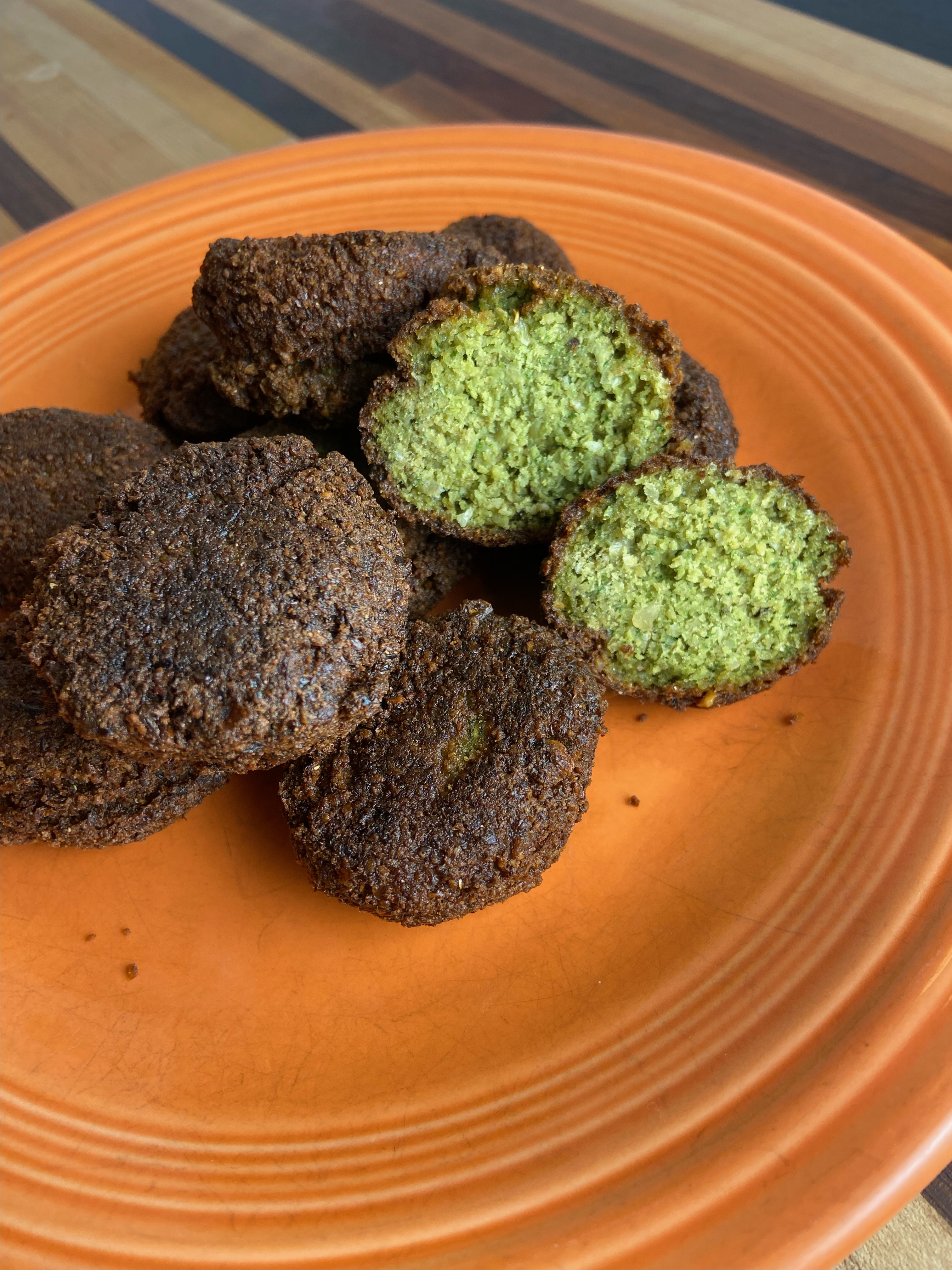
One thing was clear: you have to make falafel from dried chickpeas and not canned chickpeas. I didn’t know this having not grown up eating falafel. But soaking the chickpeas for 12-18 hours is the base ingredient for crispy, flavorful falafel that hold together perfectly. You don’t cook the chickpeas first. Frying the falafel cooks the chickpeas. If you use canned they will not hold together well and will be mushy.

Note: we soaked enough chickpeas for two batches of falafel. You can freeze the remaining soaked chickpeas for another time – it still comes out great!

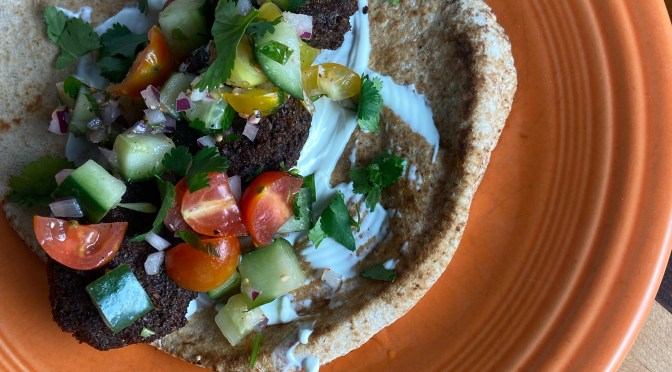
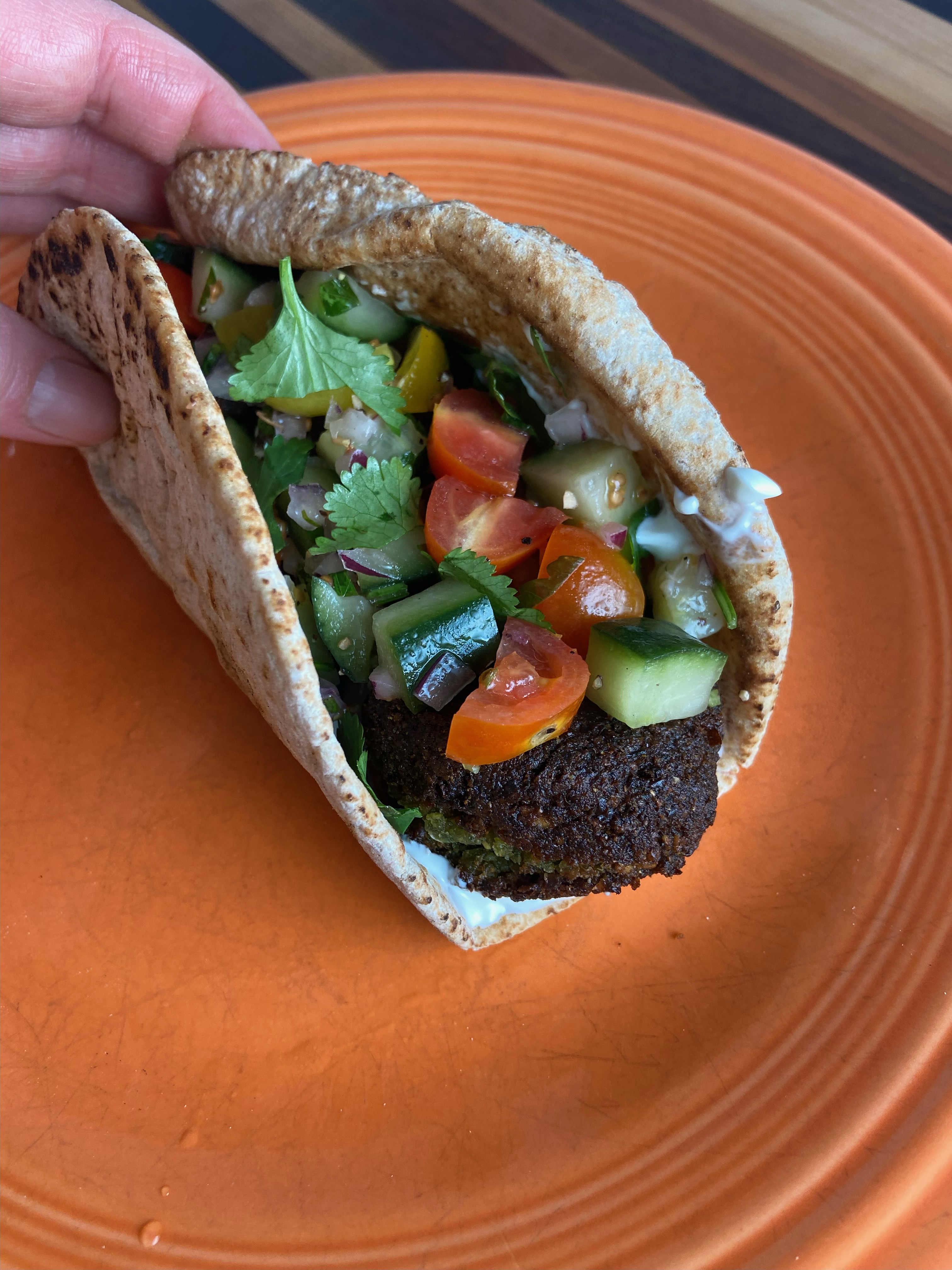
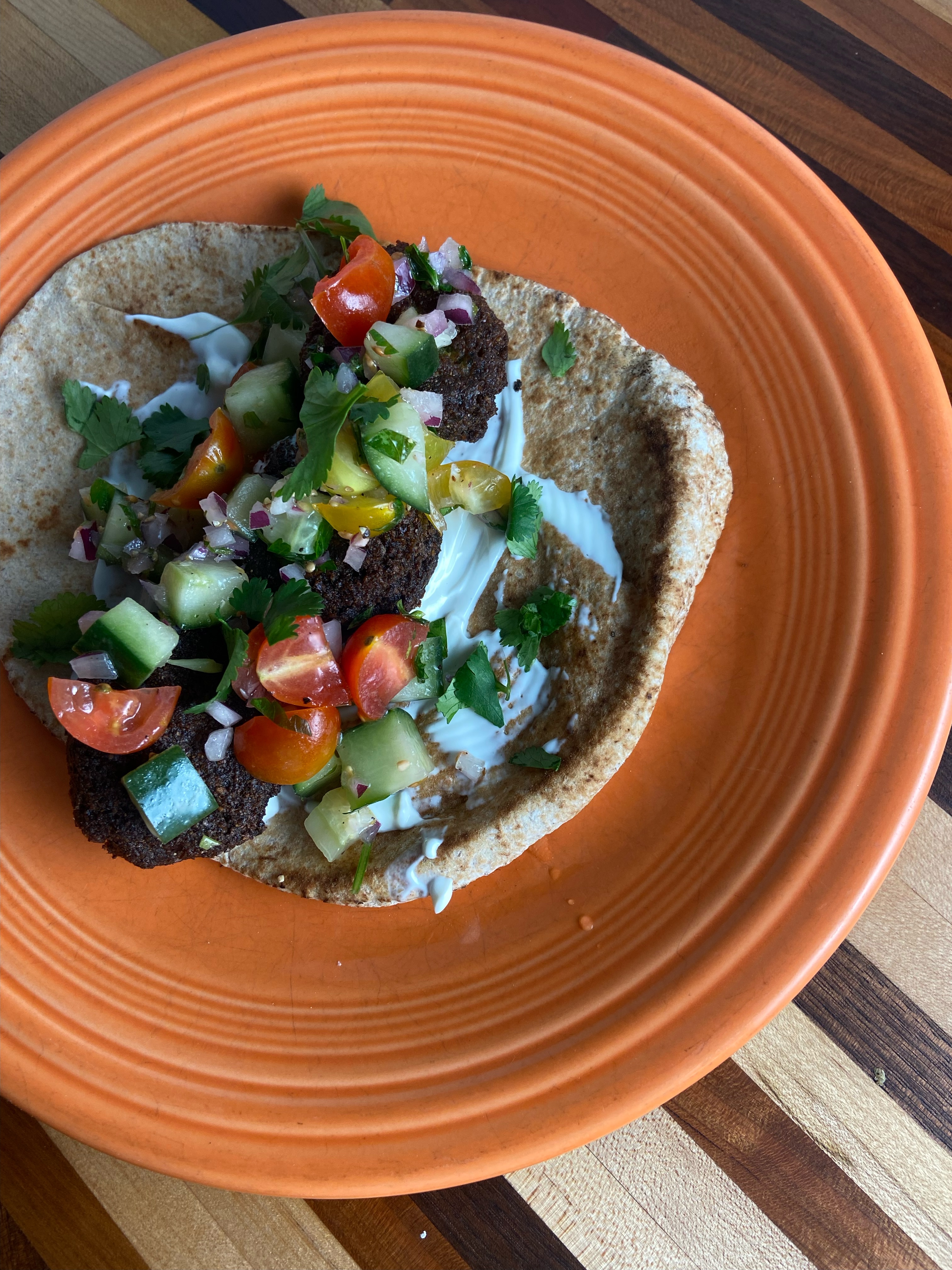
Ok, four paragraphs wasn’t so bad! Here’s how we made the falafel. I included a recipe for a tomato cucumber salad as well.

Delicious Falafel Mix

1 batch makes about 25 falafel patties

Ingredients for the chickpeas (enough for 2 batches of falafel):

  • 2 quarts water
  • ½ teaspoon baking soda
  • 1 pound dry chickpeas

Ingredients for the falafel:

  • ¼ of a leek, roughly chopped
  • 1 pound of soaked chickpeas (NOT CANNED OR COOKED), fully drained
  • ¼ cup fresh cilantro, roughly chopped
  • ¼ cup fresh parsley, roughly chopped
  • 1 celery stalk, roughly chopped
  • ¼ cup chopped onion
  • 2 cloves garlic, roughly chopped
  • Squeeze of fresh lemon
  • 1.5-2 teaspoons salt (or to taste)
  • ½ teaspoon ground pepper
  • 2 tablespoons ground coriander
  • 1 tablespoon cumin
  • A pinch of ground allspice
  • 2-3 tablespoons chickpea flour
  • ⅛ teaspoon baking powder
  • ⅛ teaspoon baking soda
  • Cooking oil, for frying

Directions:

The day before you want to make falafel, you’ll need to start soaking the chickpeas. Fill a pot with the water and add the baking soda. Add the chickpeas, cover, and soak them 12-18 hours. Drain and store in the fridge or freezer until ready to make your falafel.

On falafel day:

Soak the leek pieces in water to remove any grit. Put the leeks and chickpeas in a salad spinner and spin to remove as much water as possible.

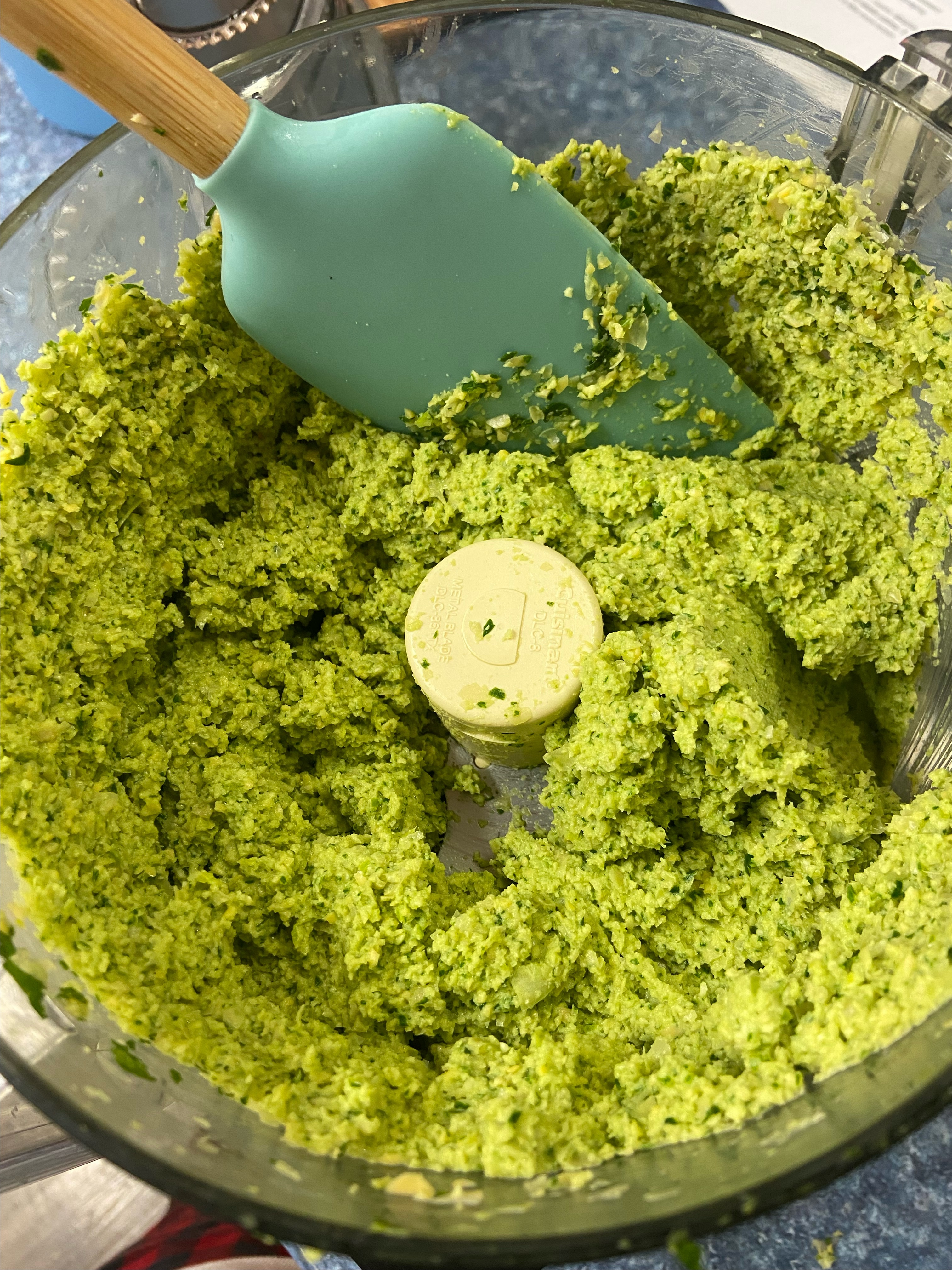
Place the leeks, chickpeas, cilantro, parsley, celery, onion and garlic in a food processor and pulse it until it is paste-like, scraping down the sides with a rubber spatula often.

Place mixture in a bowl and add the lemon juice, salt, pepper, coriander, cumin, allspice, chickpea flour, baking powder and baking soda. Mix well and form into falafel patties. If mixture is too moist, add a little more chickpea flour. If too dry, add a little more lemon juice. The falafel should be sort of wet but should hold together without bits falling off. 

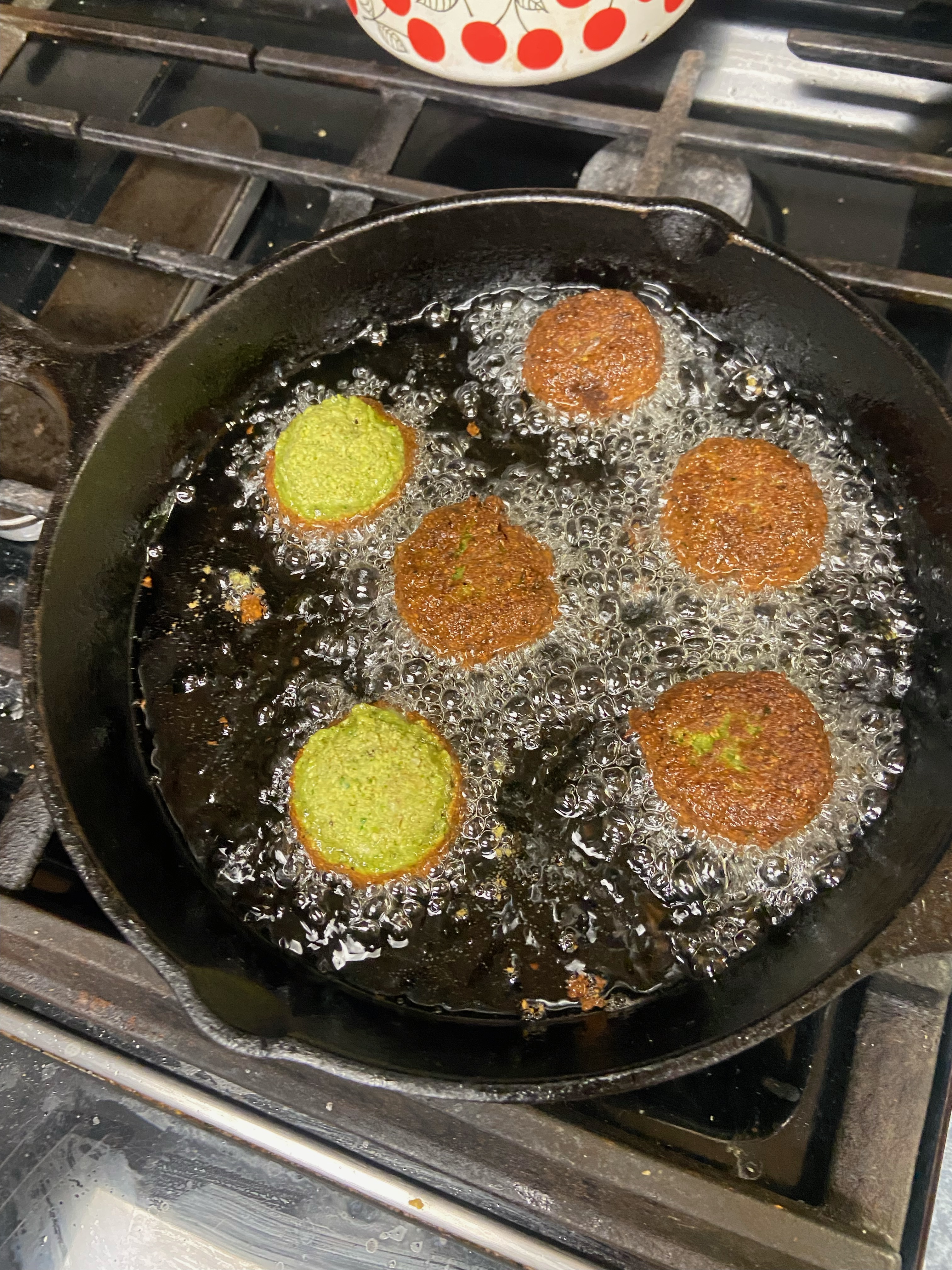
Heat a half inch of oil in a cast iron skillet till about 350F. Fry 6-8 falafel at a time so as not to bring down the heat of the oil. Fry till crispy and dark brown, about 2-3 minutes on each side. Place on a paper towel-lined sheet pan. Serve with all the falafel fixins.

Tomato and cucumber salad

Ingredients:

  • 2 roma tomatoes or 15 cherry tomatoes, diced
  • Half an English cucumber, diced
  • ¼ cups minced red onion
  • 2 tablespoons chopped parsley
  • 1 tablespoon garlic infused olive oil (or plain olive oil)
  • Juice of half a lemon
  • Salt and pepper to taste

Directions:

Combine all the ingredients and place in fridge until ready to serve.

Curried Coconut Creamed Spinach

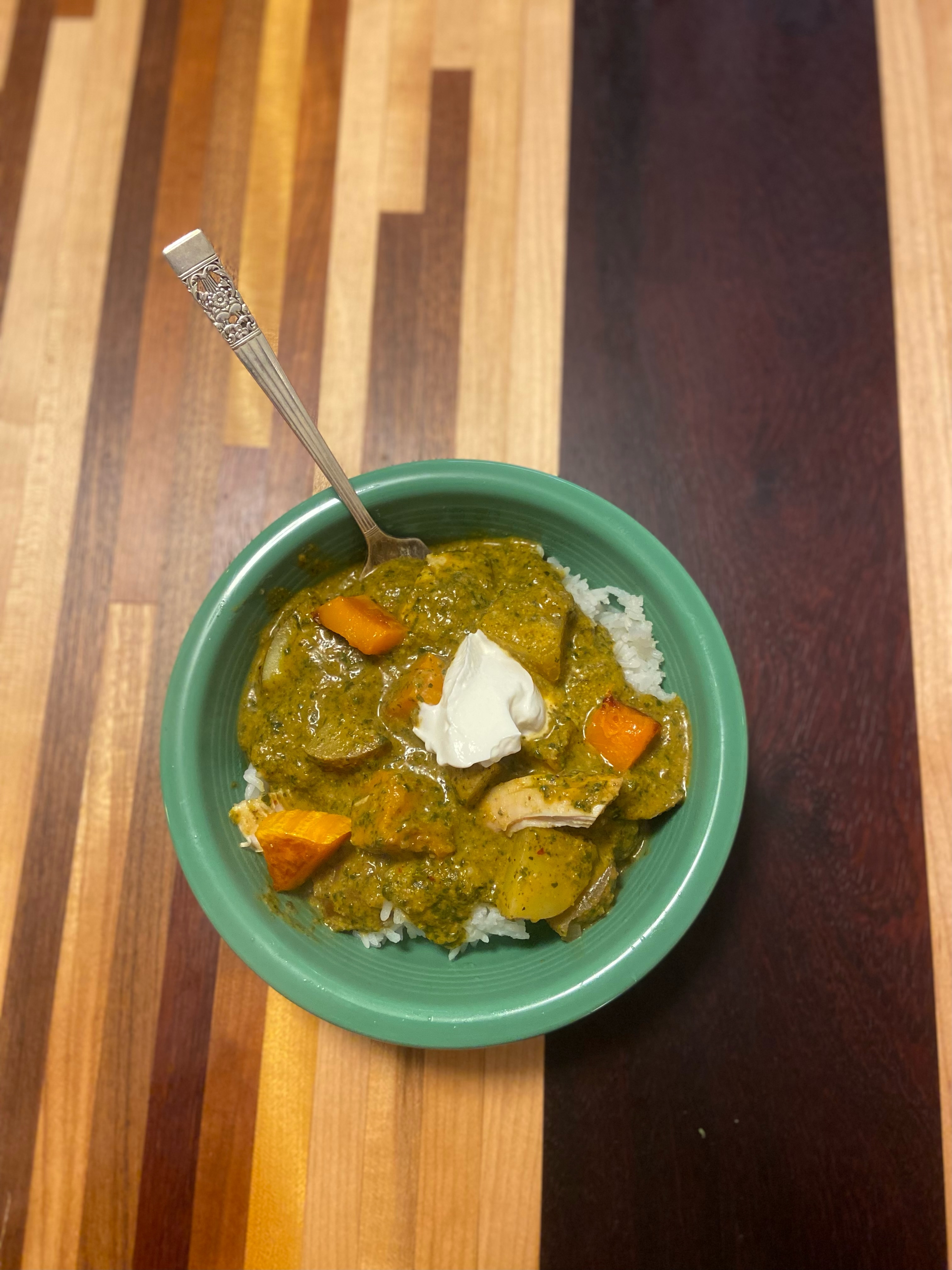
I have very little experience with Indian-inspired dishes, so I’m not sure what to call this meal I made tonight. It was so delicious, though, that I had to jot it down so I could remember it for later.

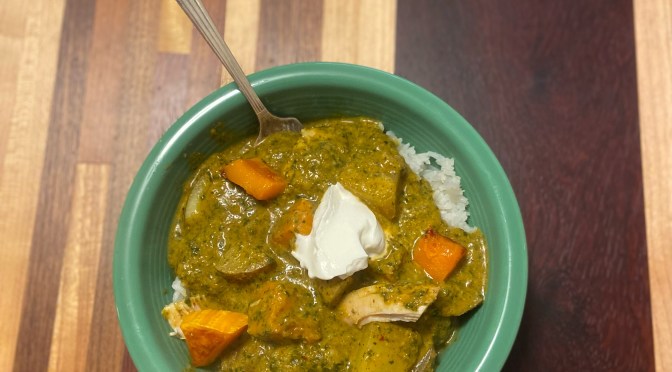
Indian-Style Coconut Creamed Spinach with Squash and Potatoes

Serves 6
Cook time: 35 minutes
(not counting cooking the squash)

Ingredients:

  • 1.5-2 pounds of delicata squash (butternut squash would work too)
  • 1 tablespoon coconut oil
  • 1 onion, chopped
  • 3 cloves garlic, chopped
  • 1, 4-ounce can yellow curry paste
  • 1, 13.5-ounce can coconut milk (the kind in the Asian section of the grocery store)
  • 1 tablespoon tomato paste
  • 8-10 ounces fresh spinach leaves
  • 3/4 cup chicken stock
  • zest of 1 lime
  • salt, to taste
  • 1 pound fingerling potatoes, cut into bite-sized chunks (any ol’ potatoes would do)
  • dollop of cream, to serve
  • lime juice, to serve
  • Rice, to serve

Directions:

Cook the squash however you prefer. I cubed mine, tossed it in olive oil and agave nectar, and roasted it in a 425F oven for 25 minutes. Set aside.

In a medium dutch oven, heat the coconut oil over medium high heat. Add the onions and cook until translucent, about 5 minutes. Add the garlic and cook until fragrant, about 30 seconds. Add the curry paste, coconut milk, and tomato paste and whisk till well combined. Add the spinach leaves and chicken stock and bring to a simmer. Turn down the heat, cover and simmer for about 7 minutes, until the spinach leaves are cooked through.

Remove pot from heat and carefully blend with an immersion blender or place into a blender and return to the pan once it’s well blended. Add the lime zest and salt to taste. Add the potatoes, cover and simmer for about 20 minutes or until potatoes are fork tender.

Add the squash to the pot and stir until everything is mixed well.

Serve over rice with a dollop of cream and a squeeze of lime juice.

Guest Post: Jack’s Lemon Cherry Bread

My son is becoming quite the cook. Over the winter break he did some baking, so I asked him to write down the recipe for his most recent quick bread, inspired by a different Natasha cook of Natasha’s Kitchen.

This simple bread has a lovely hint of lemon flavor that pairs perfectly with the dried tart Montmorency cherries we always buy from Costco.

Lemon Cherry Quick Bread

Makes 1 loaf

Ingredients:

  • ¾ cup + 1 teaspoon granulated sugar, divided
  • 1 teaspoon honey
  • 1/4 cup milk
  • Zest of 1 large lemon
  • 1/4 cup lemon juice, freshly squeezed
  • 1 1/2 cups + 1/2 tablespoon all-purpose flour, divided
  • 1 teaspoons baking powder
  • 1/4 teaspoon salt
  • 6 tablespoons unsalted butter, softened
  • 2 large eggs
  • 1 cup dried cherries

Directions:

Preheat the oven to 350F. Butter a glass loaf pan then dust with flour, tapping out the excess flour.

In a measuring cup, combine 1 teaspoon sugar, honey, milk, lemon zest, and lemon juice. Set aside.

In a medium mixing bowl, whisk together the 1 1/2 cups flour, baking powder, and salt. Set aside.

In a large mixing bowl, cream the butter and granulated sugar on medium/high speed, about 3 minutes. Beat in the eggs, mixing until well incorporated.

Add flour mixture in 2 parts, alternating with the milk mixture and mixing on medium/low speed just until incorporated with each addition. Scrape the sides of the bowl with a spatula as needed.

    Coat the dried cherries in the 1/2 tablespoon of flour and add to the batter just until incorporated. Spread the batter into your prepared pan and bake for 50-60 minutes until golden on top and a toothpick inserted into the center comes out clean. Let cool in the pan for 10-15 minutes then transfer loaf to a cooling rack.